

Choosing the right restaurant ceiling fan size is different from choosing a fan for a bedroom or small living room. A dining area has tables, staff routes, lighting plans, HVAC supply air, kitchen pressure, and guest comfort expectations working together at the same time. If you need a wider starting point before planning a commercial dining room, this ceiling fan size guide can help you compare room size, ceiling height, and airflow logic before applying the extra restaurant checks below.
In a restaurant, a ceiling fan should support comfort without making guests feel wind on their food, napkins, candles, or table settings. The best commercial ceiling fan size depends on the shape of the dining area, the number of seats, ceiling height, table spacing, and how the restaurant ventilation system already moves air. NEBOLA often looks at dining layout first, because the same fan diameter can feel calm in a wide dining hall and too strong in a narrow cafe.
1. Why Restaurant Ceiling Fan Size Needs Commercial Thinking
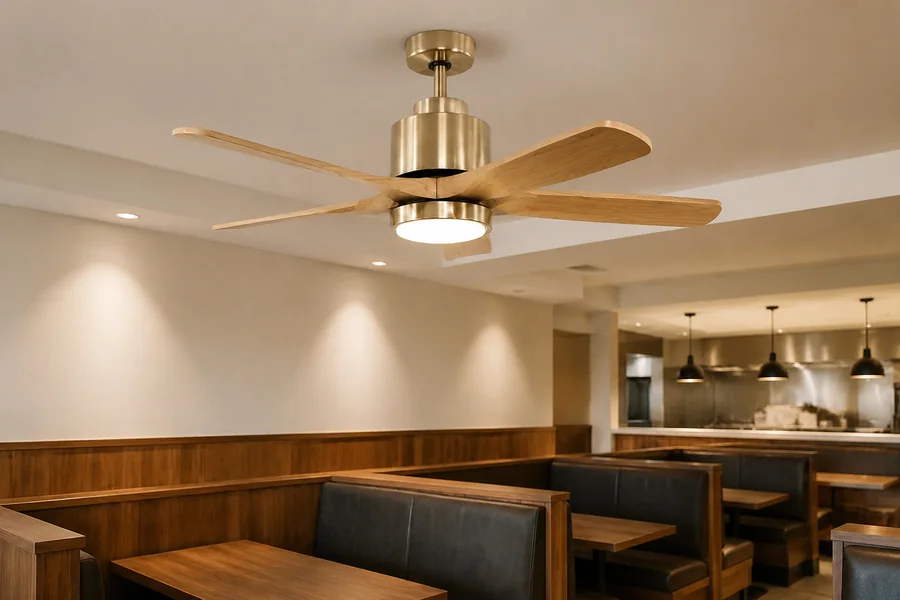
Restaurant ceiling fan size is not a simple square-footage decision. Dining rooms have higher occupancy, longer operating hours, and more comfort variation than many homes. A fan that works well in a living room may feel too direct, too noisy, or visually too heavy in a commercial dining area.
If you are still building the foundation, the guide on how to choose the right ceiling fan size explains the basic sizing mistakes that also happen in restaurants. The commercial layer comes after that: table density, service flow, lighting comfort, and restaurant ventilation balance.
1-1. Dining comfort is more sensitive than home comfort
Guests usually stay seated for a long time, so small airflow mistakes become noticeable. Too little air movement can make the room feel warm and still. Too much direct breeze can cool food too quickly, move table items, or make guests near the fan uncomfortable.
1-2. Commercial spaces operate for longer hours
A restaurant fan may run through lunch, dinner, and cleaning hours. That makes motor quality, noise control, and energy use more important than in rooms where the fan is used occasionally. Commercial ceiling fan size should be paired with a motor that can handle daily operation.
1-3. The fan must work with the dining layout
The best dining area fan size is the one that covers seated guests without fighting the furniture plan. A fan should not hang awkwardly over one table while leaving the rest of the room still. Placement matters as much as diameter.
2. Start With the Dining Area Shape
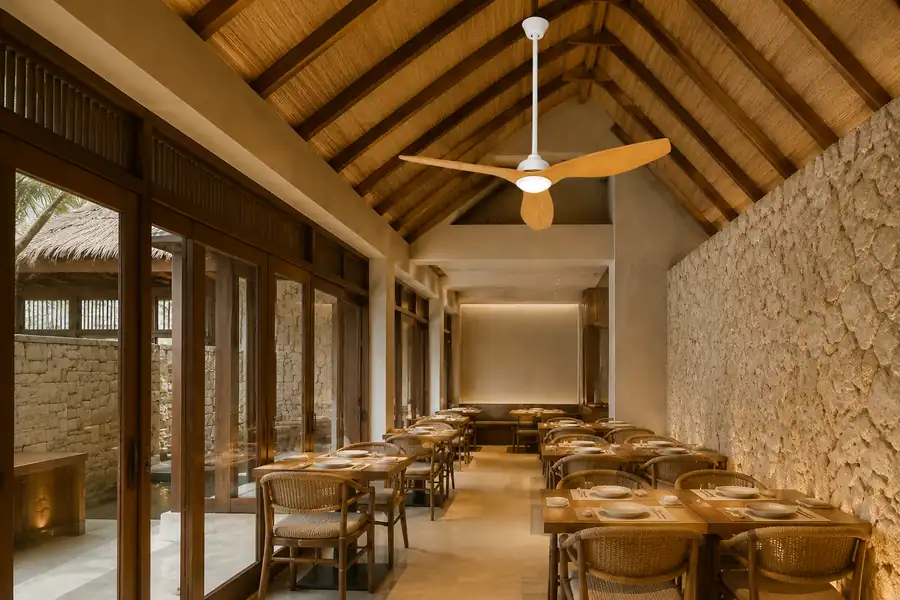
Before choosing a fan diameter, map the room shape and seating zones. A long narrow dining room, square restaurant hall, outdoor covered patio, and private dining room each need a different sizing approach.
The article on what ceiling fan size do I need is useful because it teaches room-by-room thinking. In restaurants, you can use that same method but replace “room” with “active dining zone.”
2-1. Long dining rooms often need multiple fans
One large fan is not always the best answer for a long restaurant. A row of medium fans can give more even air circulation and reduce dead zones. This is especially useful in narrow dining rooms where one oversized fan would look heavy.
2-2. Square dining halls can use larger central fans
A square dining area may work with one larger fan if the ceiling height and table layout support it. In this case, a 60 inch or larger commercial fan can feel balanced, but only if the airflow is not too concentrated over a single table.
For restaurant rooms that behave more like premium lounges or private suites, the best master bedroom and large bedroom ceiling fan size guide can also help as a soft-comfort reference, especially when the space is quiet and seating is spread out.
2-3. Private dining rooms need quieter sizing
Private dining rooms are closer to home spaces in comfort expectations, but they still need commercial reliability. A 42 inch to 52 inch fan may work well depending on room size, ceiling height, and table placement. The fan should feel quiet and discreet.
3. Match Fan Diameter to Seating Coverage
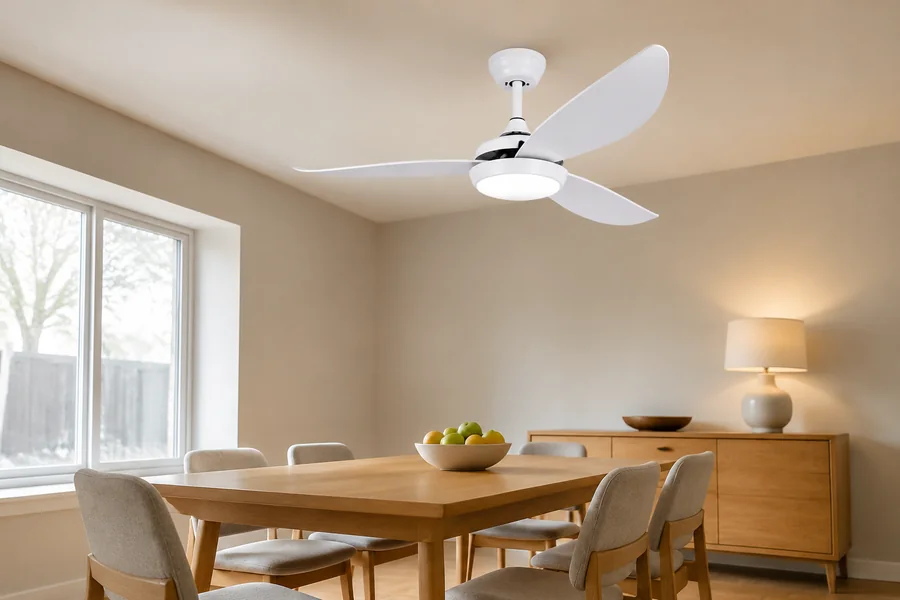
Dining area fan size should follow the seating coverage, not just the total building footprint. A restaurant may have unused corners, a bar area, a host stand, service stations, and walkway space that do not need the same airflow as tables.
For smaller dining zones, the logic in the best small room ceiling fan size guide can help you avoid oversizing. For medium spaces, the comparison between 42 inch vs 52 inch ceiling fan is a useful benchmark.
3-1. 36 to 42 inch fans suit small dining corners
Small cafes, booths, and compact private rooms can often use 36 to 42 inch fans. This range keeps airflow gentle and avoids visual crowding. It also helps when the ceiling has pendant lights, beams, or acoustic panels.
3-2. 52 inch fans suit many standard dining areas
A 52 inch fan is often a flexible starting point for standard restaurant seating zones. It can cover a moderate table group without dominating the room. A model such as an Ultra Thin Ceiling Fan White Modern 52 Inch LED DC Motor can suit interiors where a slimmer profile and integrated light are important.
3-3. 60 inch and larger fans suit bigger rooms
Large dining halls, banquet rooms, and open casual restaurants may need 60 inch or larger fans. Wider fans can reduce the need for too many fixtures, but they require more careful spacing. The guide on why large rooms need bigger ceiling fans explains why bigger spaces need broader airflow coverage.
4. Ceiling Height Changes the Best Size
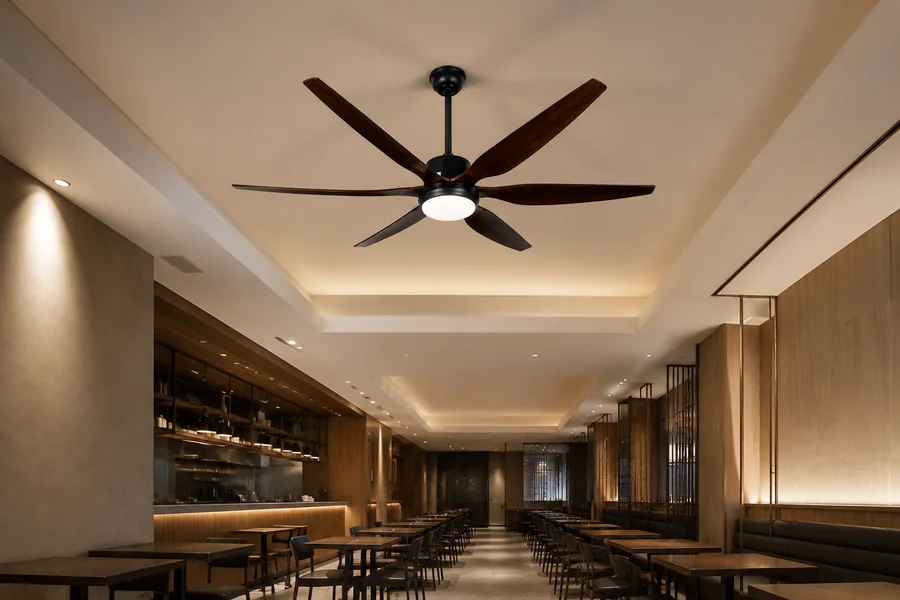
Ceiling height changes how guests feel airflow at the table. A fan mounted too low can feel intrusive. A fan mounted too high may look elegant but deliver weak comfort at seated height.
If your restaurant has high ceilings, low soffits, or mixed ceiling levels, the ceiling fan size for different ceiling heights guide is a practical reference. For low dining rooms, also compare the low ceiling fan size guide.
4-1. Low ceilings need slim or flush profiles
Low restaurant ceilings need fans with limited total drop height. A flush or low-profile design helps protect clearance and keeps the dining area from feeling compressed. Size should stay moderate unless the room is very wide.
4-2. Standard ceilings need balanced blade span
Standard commercial ceilings can often handle 52 inch fans or multiple medium fans. The key is to leave enough distance from walls, beams, lights, sprinklers, and table areas. A fan should look planned, not added after the design was finished.
4-3. High ceilings may need downrods
High restaurant ceilings often need downrods so the fan can move useful air near the guest zone. A larger fan mounted too high can waste airflow above the seating area. The mounting plan should be checked before the fan size is final.
5. Restaurant Ventilation and Ceiling Fans Must Work Together
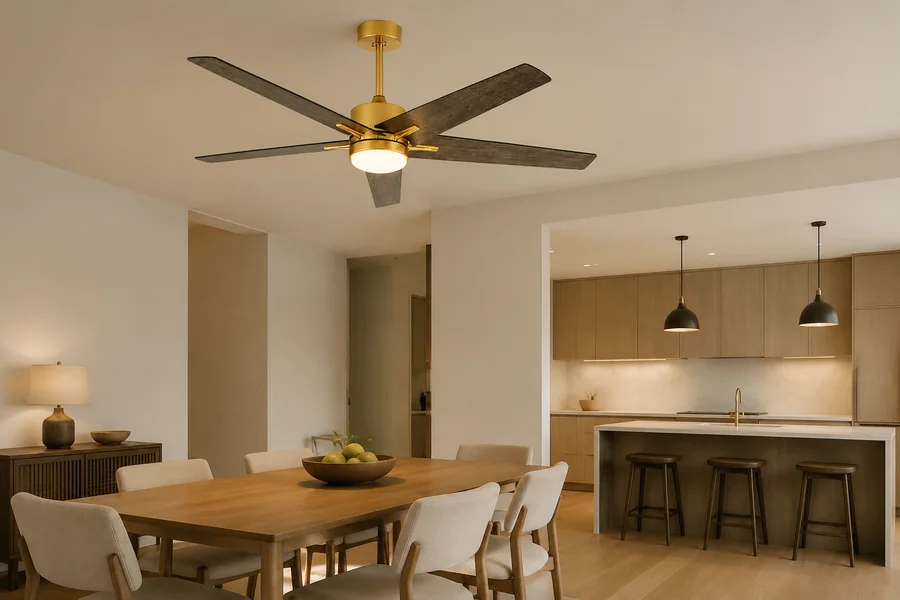
A ceiling fan does not replace restaurant ventilation. It helps move air within the dining space, while the HVAC and kitchen exhaust systems handle fresh air, temperature control, pressure balance, smoke, heat, and odour control.
The EPA indoor air quality guidance is a useful external reference because it explains practical ways to improve indoor air, including source control, better ventilation, and filtration. That is why fan placement in a dining room should support the ventilation strategy instead of disrupting it.
5-1. Avoid pushing kitchen odours into dining areas
Restaurants often rely on pressure balance between kitchen and dining zones. Poor fan placement can disturb local air movement near open kitchens, pass-through windows, or service doors. The ceiling fan should not push odours or warm kitchen air toward guests.
5-2. Do not fight HVAC supply air
If ceiling fans are placed too close to HVAC diffusers, they can create uneven comfort. Some seats may feel drafty while others stay warm. A good layout keeps fans and air supply working in the same comfort direction.
5-3. Use fans for circulation, not exhaust
Ceiling fans help with air circulation, not source removal. Cooking heat, grease, smoke, and strong odours need proper mechanical ventilation. Restaurant ceiling fans should be used as comfort tools in the dining zone.
Need the Right Ceiling Fan for a Home, Project, or Commercial Space?
Tell us your space type, ceiling height, airflow needs, lighting options, certification direction, and order plan. We’ll help match the right solution.
Get a Quote6. Choose Fan Size by Restaurant Type
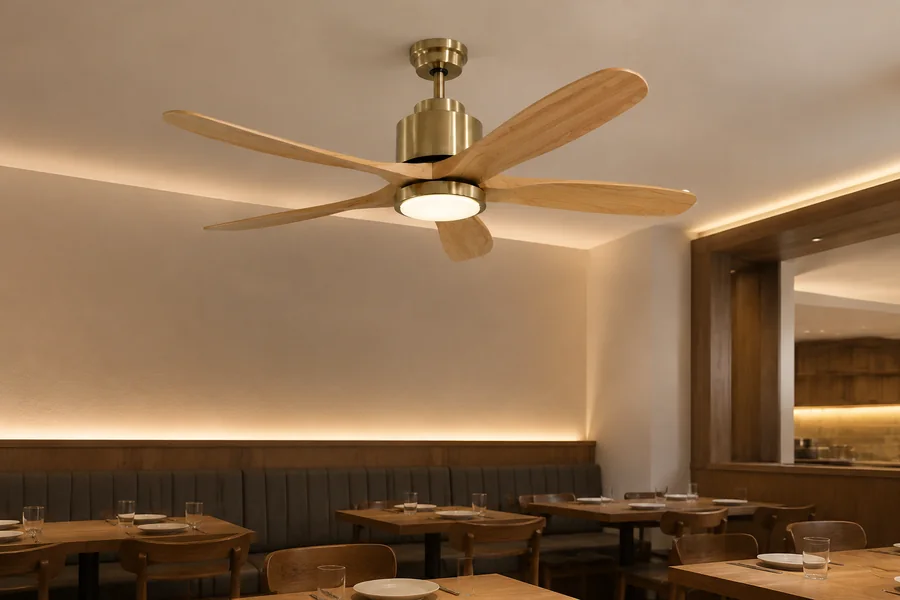
Different restaurant types need different comfort levels. A fast casual restaurant may prioritise durable airflow and quick table turnover. A fine dining room may need quieter, softer movement. A cafe may need compact fans that do not overpower the decor.
The article on living room ceiling fan size can help when a restaurant space feels more like a relaxed lounge. The principle is similar: comfort, furniture layout, and visual balance should be judged together.
6-1. Cafes and small eateries
Cafes often need 36 to 52 inch fans depending on ceiling height and seating density. The airflow should be gentle because customers may sit close to the fan for long periods. A quiet DC motor is usually a better choice than a high-speed fan that feels aggressive.
6-2. Casual dining restaurants
Casual dining spaces often work well with 52 inch to 60 inch fans placed in repeated zones. A 52 Inch Wood Ceiling Fan No Light Supplier can be considered where the restaurant already has separate lighting and wants a cleaner ceiling profile.
6-3. Banquet and large dining rooms
Large dining rooms may need 60 inch, 66 inch, or even larger fans. A Big 66 Inch Wood Ceiling Fan Light DC Motor Remote OEM gives a useful reference for wider dining zones where the airflow target is broader and the visual scale needs to match the room.
7. Noise, Lighting, and Controls Matter in Dining Rooms
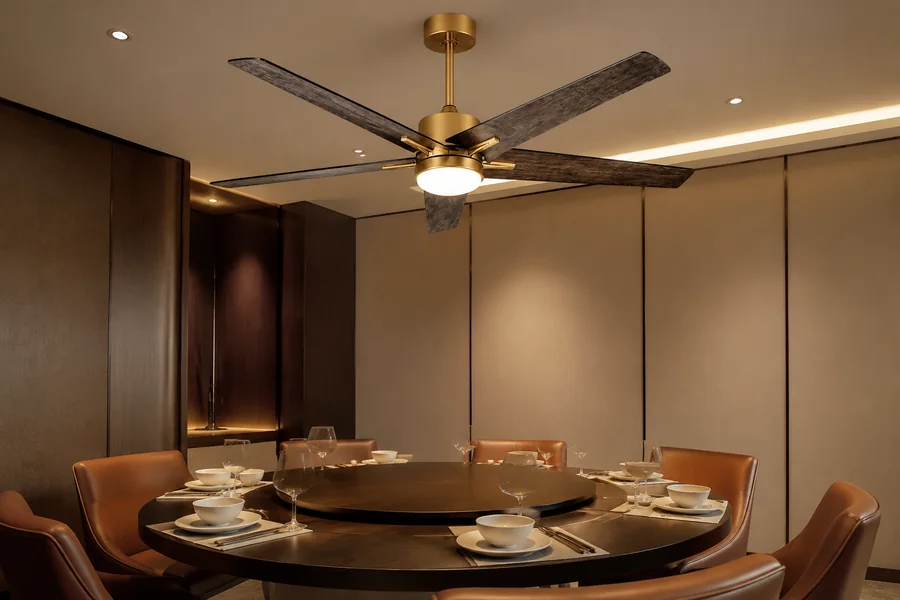
Fan size is important, but a restaurant ceiling fan also needs the right noise level, lighting effect, and control method. Guests may forgive weak style faster than they forgive vibration, buzzing, or uncomfortable light.
If you want to compare airflow claims with real performance, the ceiling fan CFM vs size article is helpful. A bigger fan is not automatically better if the motor, blade pitch, and speed control are not suitable.
The article on does a bigger ceiling fan improve airflow is also useful for dining rooms because it explains why diameter alone cannot guarantee comfort. A restaurant fan still needs the right height, speed, and placement.
7-1. Quiet operation protects the dining mood
Restaurant noise already comes from conversation, music, service movement, and kitchen activity. A ceiling fan should not add a mechanical layer. Smooth motor operation and balanced blades matter more as fan size increases.
7-2. Lighting should not create moving shadows
If the fan includes a light, check how it works with table lighting. Poor light placement can create glare or moving shadows when the fan runs. A decorative option such as a Luxury Gold Wood Fandelier Ceiling Fan Light 60 Inch should be chosen only when the lighting depth, room height, and style all fit the dining area.
7-3. Controls should match daily operations
Restaurant staff need simple control. Separate zones, remote control, wall control, or smart control can help staff adjust airflow between lunch, dinner, and cleaning time. Complex controls that staff ignore are not useful.
8. Covered Outdoor Dining Needs Extra Checks
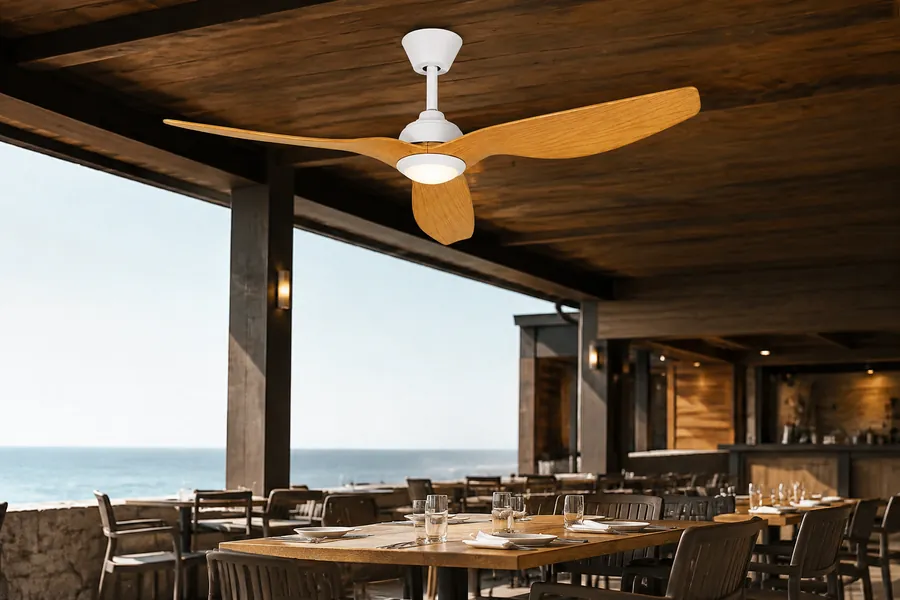
Outdoor dining areas, covered patios, and semi-open restaurant terraces need a different sizing plan. Wind, roof cover, moisture exposure, and open edges change how air movement feels.
If your restaurant includes patio seating, the outdoor ceiling fan size guide is directly relevant. Outdoor dining fans must be selected for the environment, not only for diameter.
8-1. Covered patios may need wider coverage
A covered patio can lose air movement faster than an indoor dining room. A larger fan or more repeated fans may be needed to cover the seating area. The fan should still avoid direct blast over individual tables.
8-2. Porches and terraces need suitable ratings
Do not use a standard indoor fan in a damp or exposed dining area unless the product is suitable for that environment. An Outdoor Ceiling Fans With Lights Oak White can be used as a covered outdoor dining reference when the rating, mounting, and exposure level match the site.
8-3. Gazebo dining needs central airflow
For gazebo-style dining, the fan should sit near the centre of the seating pattern. A single larger fan may work better than several small fans if the structure is round or octagonal. The final choice still depends on roof height and mounting strength.
9. Common Restaurant Fan Size Mistakes
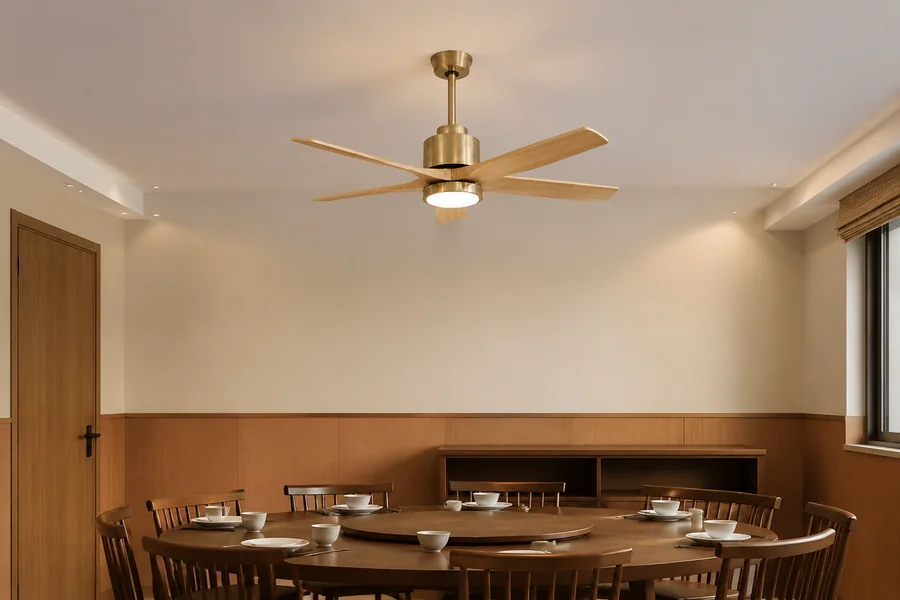
Restaurant buyers often choose by style, price, or one simple size chart. That can create comfort issues after installation, especially when the dining room has mixed seating, high ceilings, or an open kitchen.
The guide on 10 common ceiling fan buying mistakes covers the most common errors. For commercial spaces, the cost of a mistake is higher because one wrong decision may be repeated across many tables or branches.
9-1. Using one fan size for every zone
A restaurant may include booths, central tables, bar seating, private rooms, and patio seating. These areas should not automatically use the same fan size. Each zone has its own airflow need.
9-2. Ignoring seated comfort
Fan height should be judged at seated height, not just standing height. Guests spend most of their time sitting, so airflow should feel soft and even at the table. A fan that feels fine while walking through the room may feel too strong when seated.
9-3. Buying without a range plan
For distributors or chain projects, it is risky to buy one fan diameter for every layout. The article on how a ceiling fan importer can build a size range without overstocking explains why a planned size range is better than guessing.
If the restaurant is part of a hotel, resort, or hospitality complex, the hotel ceiling fan selection guide can help connect dining comfort with guest room, corridor, and public-area planning.
10. Final Restaurant Ceiling Fan Size Checklist
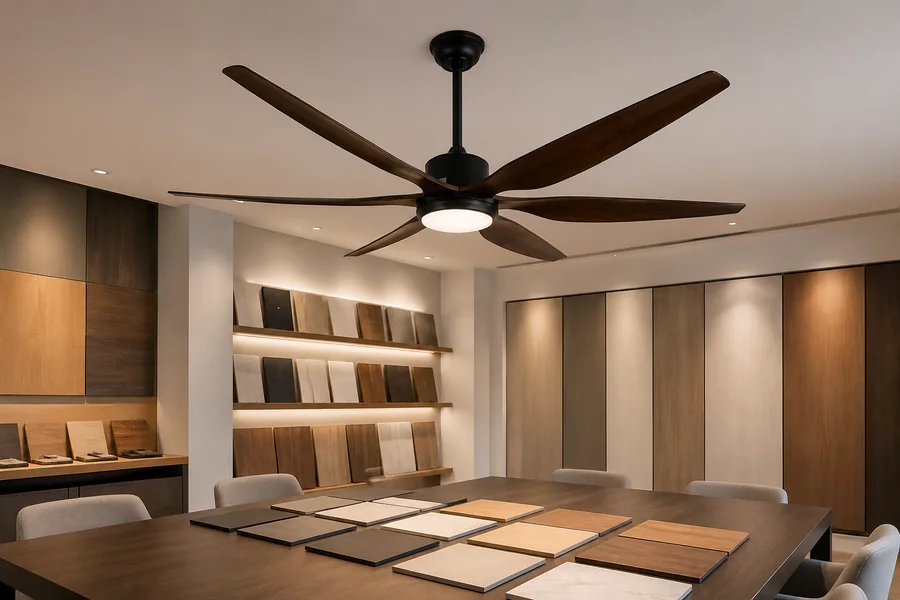
The best restaurant ceiling fan size should match dining area size, ceiling height, table layout, HVAC supply air, kitchen pressure, noise expectations, and lighting design. For many restaurants, 52 inch fans work in standard zones, 36 to 42 inch fans suit compact rooms, and 60 inch or larger fans suit wide dining halls or covered outdoor lounges.
If you are comparing market demand or planning multiple branches, the article on popular ceiling fan sizes in global markets can help you understand why certain size ranges are easier to stock and specify. The ceiling fan size trends 2026 article also shows why quiet motors, smart control, and energy efficiency now matter more in commercial spaces.
10-1. Check the dining zone first
Measure the actual seating zone rather than the whole restaurant. A host stand, bar counter, corridor, or service station may not need the same fan coverage as the table area.
10-2. Confirm height and clearance
Check blade height, light depth, ceiling slope, beams, sprinklers, and pendant lights. A fan that is too low can feel unsafe or visually heavy, while a fan that is too high may not deliver useful airflow.
10-3. Plan for comfort across the whole service day
Restaurant airflow needs can change from empty prep time to peak dinner service. Choose fan sizes and controls that staff can adjust easily. For complex restaurant projects, NEBOLA can help compare size, motor, light, and control options before bulk ordering.
For a broader sizing reference, return to the ceiling fan size guide before finalising a restaurant fan schedule.
Need the Right Ceiling Fan for a Home, Project, or Commercial Space?
Tell us your space type, ceiling height, airflow needs, lighting options, certification direction, and order plan. We’ll help match the right solution.
Get a QuoteFAQ
Is a 52 inch ceiling fan enough for a restaurant dining area?
Yes, a 52 inch fan can be enough for a standard dining zone, especially when the ceiling height and table spacing are moderate. For larger dining halls, multiple 52 inch fans or wider 60 inch plus models may be more suitable.
Should restaurant ceiling fans replace restaurant ventilation?
No, ceiling fans should not replace restaurant ventilation. They help circulate air in the dining area, but kitchen exhaust, makeup air, HVAC, odour control, and code requirements still need a proper mechanical ventilation design.
Is a bigger commercial ceiling fan size always better?
No, a bigger fan is not always better. A large fan may look impressive, but it can feel too strong over tables or too heavy in a low ceiling room. The best size should match seating coverage, height, and airflow comfort.
Can restaurants use outdoor ceiling fans on covered patios?
Yes, restaurants can use suitable outdoor ceiling fans on covered patios if the fan rating matches the exposure level. Buyers should confirm damp or wet location suitability, mounting support, and local electrical requirements before installation.
Do restaurant fans need lights?
No, not always. If the restaurant already has a layered lighting plan, a fan without light may look cleaner. If the fan includes a light, the light should not create glare, harsh shadows, or visual distraction over dining tables.
Can NEBOLA support restaurant ceiling fan projects?
Yes, NEBOLA can support restaurant projects by helping compare fan size, blade span, DC motor options, lighting depth, controls, and order planning. For commercial dining areas, the best solution is usually a small range of sizes rather than one model for every zone.