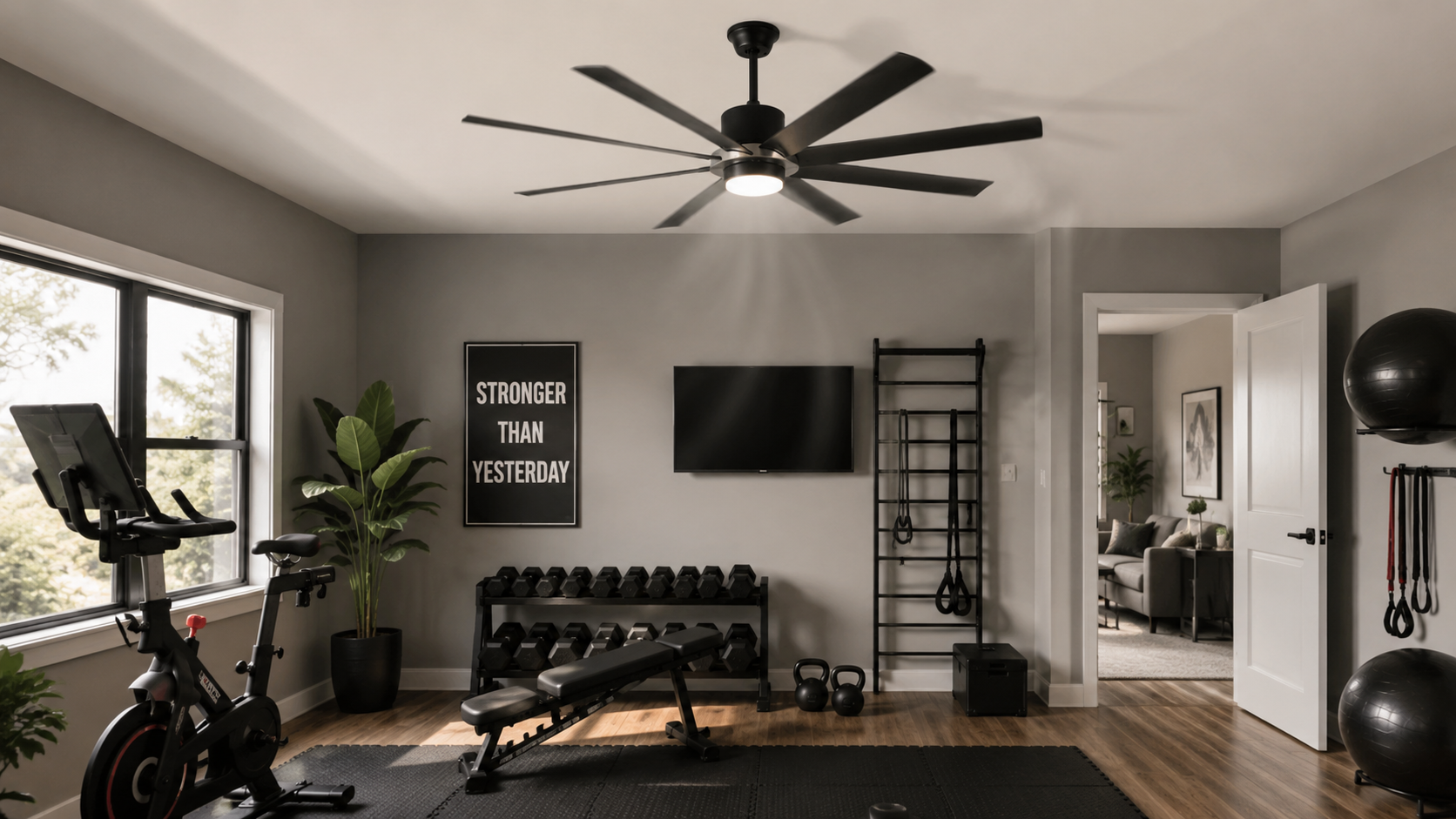



A 56 inch ceiling fan is a useful step up from the most common medium sizes. It gives more reach than a 52 inch fan without moving all the way into very large commercial fan territory.
The best applications are usually larger bedrooms, living rooms, open lounges, hospitality rooms and project spaces where a standard fan feels slightly underpowered. But a 56 inch fan still needs the right ceiling height, room width and low-speed control.
This guide explains where a 56 inch ceiling fan works best, what room requirements matter and how to judge large room fan size without overbuying. For the wider sizing framework, start with the ceiling fan size guide.
1. What Does a 56 Inch Ceiling Fan Size Mean?
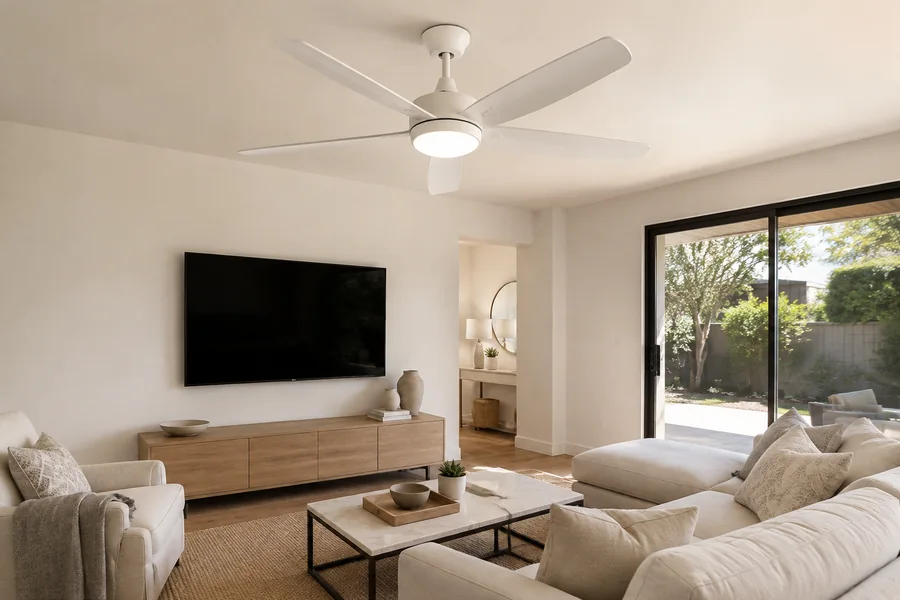
A 56 inch fan has a wider blade span than a standard 52 inch model. That added width can improve coverage, but it also increases visual presence and clearance requirements.
1-1. Is 56 inch considered a large room fan size?
Yes, it is usually considered a large room fan size for residential and light commercial spaces. It is not as large as industrial fans, but it is wider than many standard bedroom and living room fans.
1-2. Does 56 inch always mean high airflow?
No. A 56 inch ceiling fan can still perform poorly if the motor, blade pitch or installation height is wrong. The ceiling fan CFM vs size guide explains why diameter is not everything.
1-3. Why choose 56 instead of 52?
Choose 56 when a 52 inch fan feels close but slightly limited. The 52 inch ceiling fan application guide helps identify that boundary before you size up.
2. What Room Requirements Make 56 Inch Useful?

A 56 inch fan is most useful when the room has enough width, enough ceiling height and a clear central comfort zone. It should not be forced into a room just because higher airflow sounds attractive.
| Application | 56 inch fit | Main requirement |
|---|---|---|
| Large bedroom | Often suitable | Quiet low speed and bed clearance |
| Living room | Often suitable | Central seating zone |
| Open lounge | Sometimes suitable | Zone planning |
| Small room | Usually too large | Visual scale and clearance |
| Light commercial room | Sometimes suitable | Durability and control plan |
2-1. How much clear width is needed?
The fan needs enough distance from walls, beams, cabinets and lighting. If the blade tips sit too close to surrounding objects, the fan may look squeezed even if it can technically be installed.
2-2. Why does furniture layout matter?
A fan should serve where people sit or sleep. The room-by-room ceiling fan size guide explains why the active zone is more important than total square footage.
2-3. What if the room is only slightly large?
If the room is between medium and large, compare 48, 52 and 56 inch choices carefully. The newly published 48 inch ceiling fan room guide is useful when 56 inch may be more than the room needs.
3. How Should 56 Inch Fan Size Match Room Shape?

Room shape determines whether one 56 inch fan can cover the useful area. A fan that is wide enough for a square room may still feel limited in a long room.
3-1. Is 56 inch strong in square rooms?
Yes, it can be strong in square or near-square rooms because the airflow spreads more evenly. The fan can often run at a lower speed, which improves comfort and noise.
3-2. What about long rooms?
Long rooms may need two smaller fans or careful placement over the main zone. A single 56 inch fan should not be expected to solve distant corners if the floor plan is stretched.
3-3. Can 56 inch handle open plans?
Sometimes, but only for one defined zone. If the open plan is truly large, the 60 inch size guide for large rooms may be a better comparison point.
4. Is a 56 Inch Ceiling Fan Good for Living Rooms?
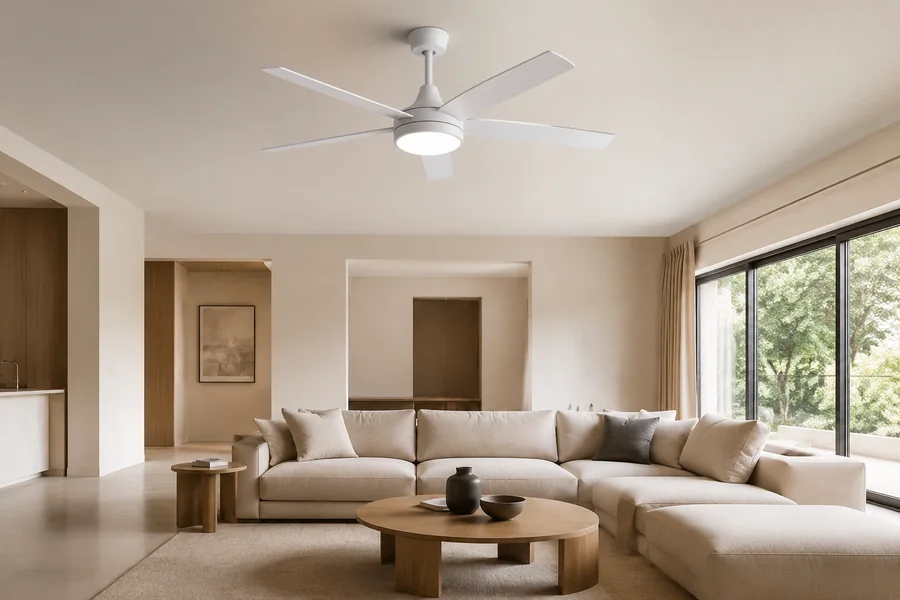
Living rooms are one of the best applications for 56 inch fans. The size can cover a sofa group more comfortably than a standard medium fan.
4-1. When does it fit a living room?
It fits when the seating group is broad, the ceiling is not low and the fan has room to breathe visually. Compare with the living room ceiling fan size guide for room-specific examples.
4-2. Should the fan include a light?
It depends on the lighting plan. A 56 inch walnut drop ceiling fan with LED light can work when the room needs both general light and wide airflow from one central fixture.
4-3. How should low speed feel?
A 56 inch living room fan should feel smooth at low and medium speed. If the fan must run high to be useful, the room may need different placement or a stronger airflow design.
5. Can 56 Inch Fans Work in Bedrooms and Open Plans?

A 56 inch fan can work in large bedrooms and open bedroom suites, but it may be too strong or visually heavy in standard bedrooms.
5-1. Is 56 inch suitable for primary bedrooms?
Yes, for larger primary bedrooms with enough clearance. The master bedroom ceiling fan size guide helps compare when 52 inch is enough and when 56 inch feels better.
5-2. Should 56 inch be used in small bedrooms?
No, not usually. Small rooms often need more compact fans; the small room ceiling fan size guide explains why a smaller diameter can feel more comfortable.
5-3. What about hotel-style rooms?
Large suites, resort rooms and hospitality lounges can use 56 inch when the ceiling and quiet requirements are suitable. The hotel ceiling fan guide gives more project-specific hospitality checks.
6. How Does Ceiling Height Affect 56 Inch Ceiling Fans?
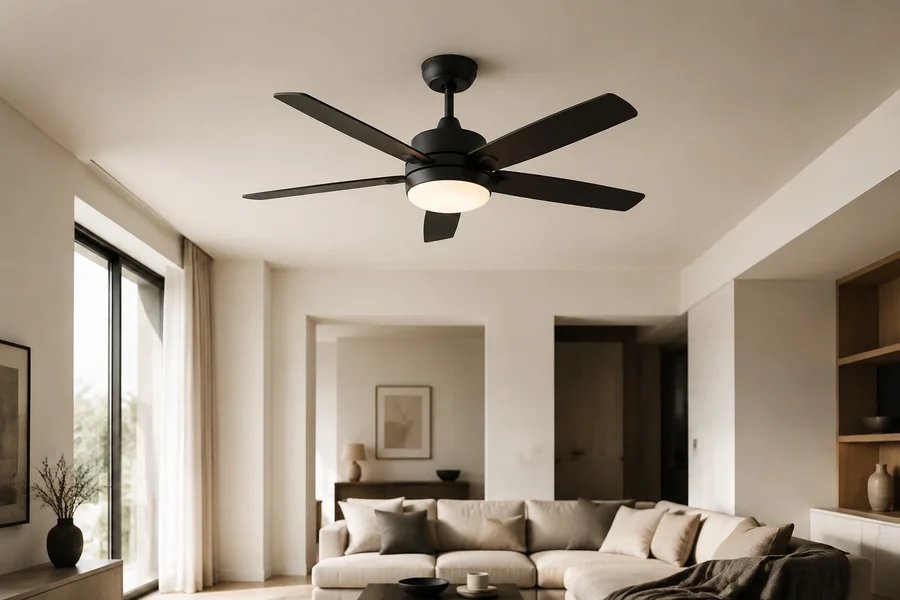
A wider fan needs more attention to installed height. The fan must have enough space above and below the blades to move air safely and comfortably.
6-1. Can 56 inch work on 8 foot ceilings?
Sometimes, but only with a low-profile design that preserves safe clearance. Many 56 inch designs look better and perform better when the ceiling is slightly higher.
6-2. When does a downrod help?
A downrod helps when the ceiling is high enough that the fan would otherwise sit too far above the occupied zone. The ceiling fan size for different ceiling heights guide explains this relationship.
6-3. What if the room has a low ceiling?
Be cautious. A wide fan on a low ceiling can feel imposing even if it clears safety requirements. The low ceiling fan size guide can help decide whether a smaller diameter is better.
Need Help Choosing the Right 56 inch ceiling fan?
Tell us your room size, ceiling height, airflow needs, lighting plan and order quantity. NEBOLA can help match a practical fan light solution.
Get a Quote7. What Airflow and Motor Features Matter for 56 Inch Fans?
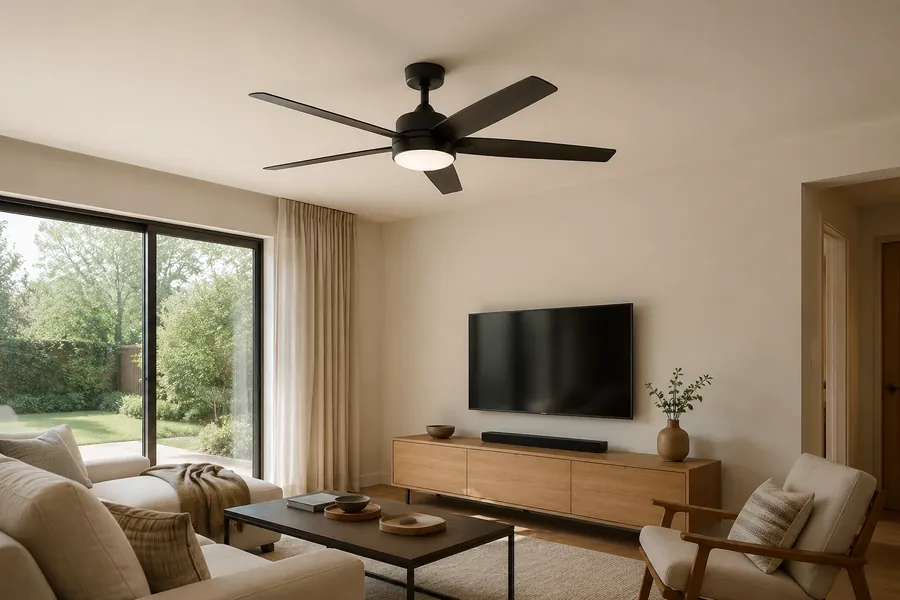
A 56 inch fan should use its extra span efficiently. The best high airflow fan is not the loudest one; it is the fan that moves enough air quietly at useful speeds.
7-1. Should buyers compare airflow data?
Yes. Compare airflow, wattage and speed range together. The ceiling fan airflow by size guide is useful because larger diameter only helps when the fan is engineered well.
7-2. Why are DC motor models useful?
DC motor models can provide smoother speed steps and better everyday control. A 56 inch indoor ceiling fans for DC motor models range can suit buyers who need quiet comfort in larger rooms.
7-3. Should project buyers check efficiency?
Yes, especially when many fans will run for long hours. Ask for airflow data, wattage, noise expectations and control options rather than judging only by blade width.
8. How Does 56 Inch Compare With 52 60 and 72 Inch Fans?
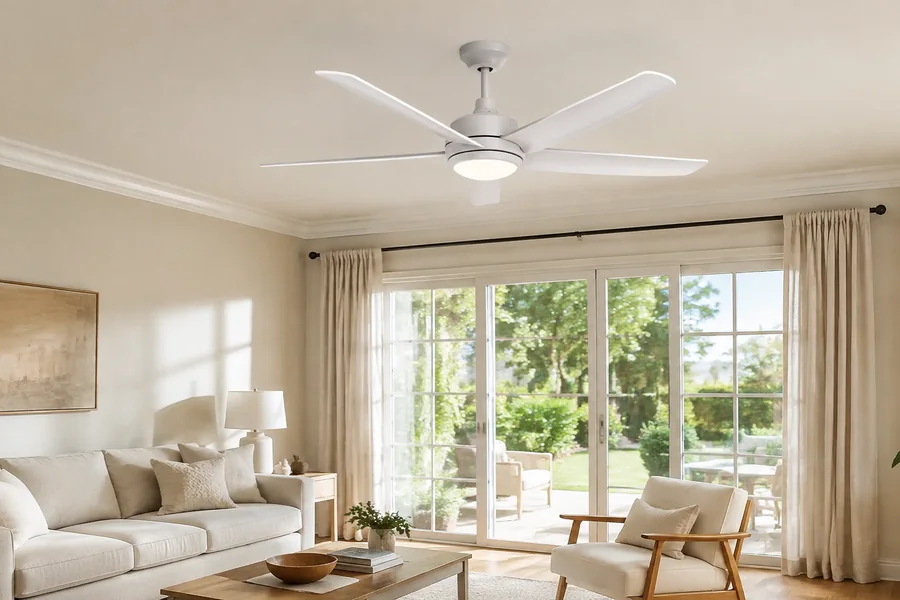
The 56 inch size is a bridge. It is larger than the common 52 inch fan but more restrained than 60 inch and much smaller than 72 inch commercial directions.
8-1. When is 52 inch still enough?
A 52 inch fan is still enough when the room is medium rather than large. Choosing 56 inch in that case may add visual weight without improving comfort much.
8-2. When should buyers move to 60 inch?
Move to 60 inch when the room is broad, high or open enough that 56 inch would still need high speed. The 60 inch size guide for large rooms gives that next-step logic.
8-3. When is 72 inch a different category?
A 72 inch fan is usually a large-space or commercial-style decision. It needs wider clearances, stronger structure and a more deliberate airflow plan.
9. What Mistakes Should Buyers Avoid With 56 Inch Fans?
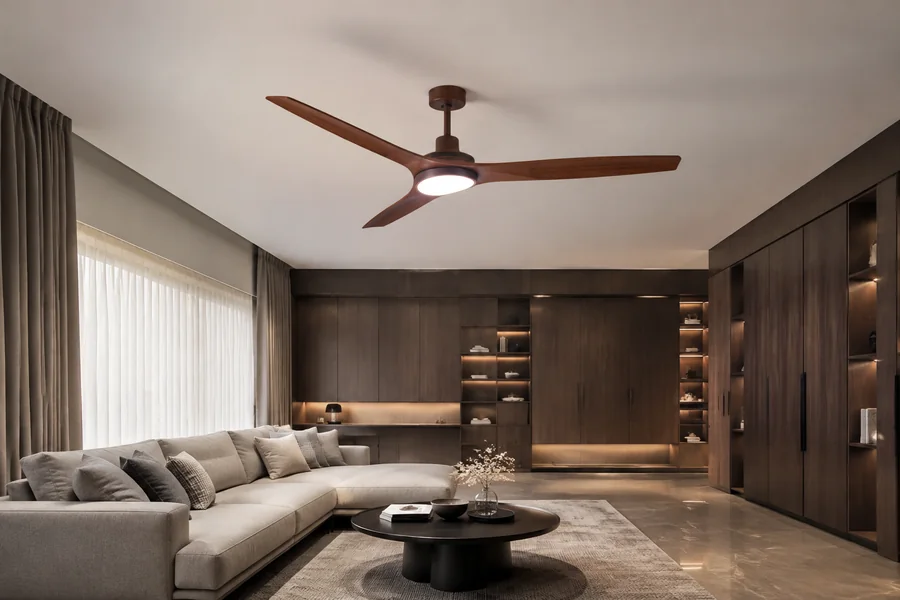
The main mistake is assuming a larger fan always means a better fan. A 56 inch model must still match room size, height, style and control expectations.
9-1. Is oversizing a real risk?
Yes. Oversizing can make a room feel crowded and may create more airflow than people want. The complete ceiling fan size guide helps buyers avoid this kind of sizing mistake.
9-2. Should buyers ignore outdoor and commercial differences?
No. Outdoor, restaurant and office spaces have different airflow and durability needs. Use the outdoor ceiling fan size guide, restaurant ceiling fan size guide and office ceiling fan size guide for those cases.
9-3. Should importers stock many similar 56 inch models?
No, not without clear roles. A 56 inch ceiling fan without light for project ranges can serve one segment, but importers should also compare the ceiling fan importer size range and market demand before expanding SKUs.
10. What Final Checklist Helps Choose a 56 Inch Ceiling Fan?

A 56 inch fan should be chosen when the room genuinely benefits from extra reach. Use the final checklist to confirm that width, airflow and installation all point in the same direction.
10-1. What should homeowners check?
- Room width and active comfort zone.
- Ceiling height and mounting type.
- Distance to lights, beams and cabinets.
- Low-speed noise and motor quality.
- Lighting needs and diffuser comfort.
- Whether 52 inch would already be enough.
10-2. What should project buyers check?
Project buyers should check MOQ, packaging, spare parts, finish options and whether the size fits market demand. The popular ceiling fan sizes and ceiling fan size trends 2026 articles can support range planning.
10-3. How should the final choice be made?
Choose 56 inch when the room is clearly larger than a medium room but does not need a very large commercial fan. The best result is usually a fan that can run quietly at low or medium speed, not one that feels powerful only on high.
For large rooms that stay occupied for long periods, airflow should be treated as part of comfort planning rather than a stand-alone fix. CDC/NIOSH heat stress and air movement guidance is a useful external reference when high airflow fans are considered for hotter work or project spaces.
Before making the final selection, compare the room again with the NEBOLA ceiling fan size guide. It helps confirm whether blade span, ceiling height, airflow and product style all support the same choice.
Need Help Choosing the Right 56 inch ceiling fan?
Tell us your room size, ceiling height, airflow needs, lighting plan and order quantity. NEBOLA can help match a practical fan light solution.
Get a QuoteFAQ About 56 Inch Ceiling Fan Size
Is a 56 inch ceiling fan good for a large room?
Yes, a 56 inch ceiling fan is often good for a large residential room or suite when the ceiling height and blade clearance are suitable. It gives more reach than 52 inch without becoming a very large commercial fan.
Is a 56 inch fan too big for a bedroom?
Yes, it can be too big for a standard or small bedroom. It works best in larger primary bedrooms where the fan can run quietly and does not visually crowd the ceiling.
Can a 56 inch ceiling fan replace a 60 inch fan?
No, not always. A 56 inch fan may suit many large rooms, but very wide, high or open-plan spaces may still need a 60 inch fan or multiple fans.
Should a 56 inch fan have a DC motor?
Yes, a DC motor is often a good choice because it can provide smoother low-speed control, quieter operation and lower running cost in rooms where the fan runs often.
Does a 56 inch ceiling fan always move more air than a 52 inch fan?
No, not always. Blade design, motor quality, speed range and mounting height can make a smaller fan perform better than a poorly designed larger fan.
Should importers include 56 inch fans in a size range?
Yes, a 56 inch fan can fill the gap between common medium sizes and larger commercial-style fans. It should have a clear role in the range rather than duplicate 52 or 60 inch models.