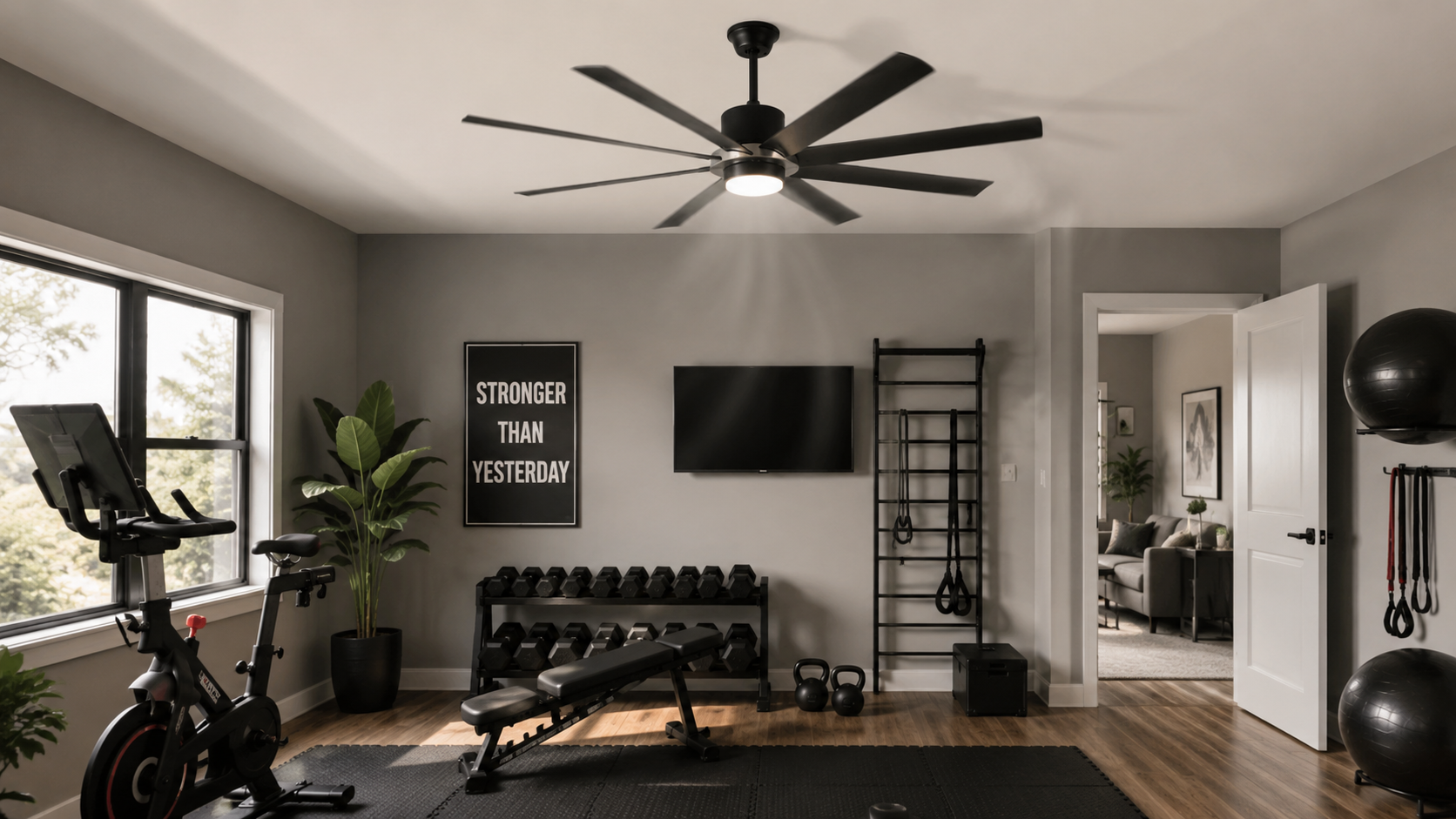


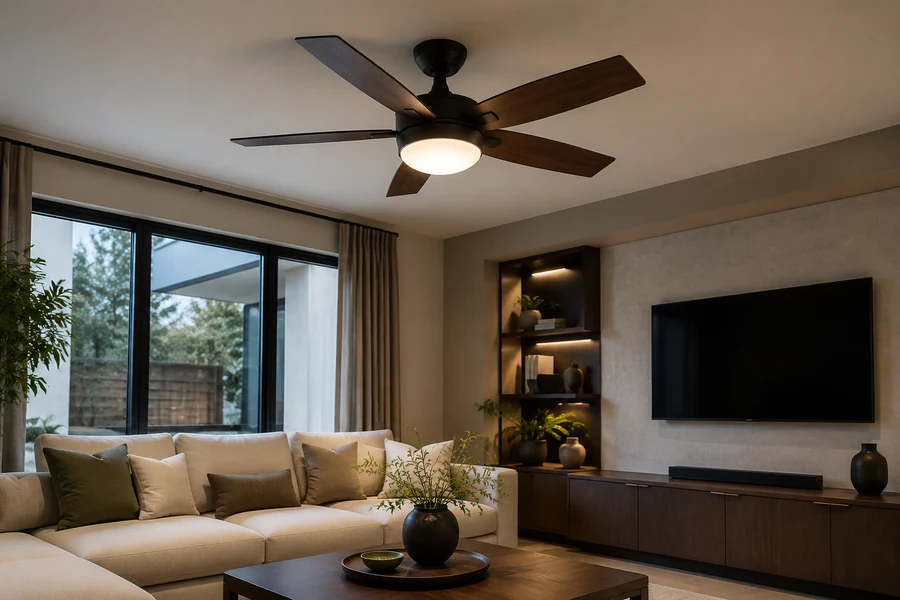
For a living room, a ceiling fan with light is better when the ceiling point must handle both airflow and general lighting. A fan without light is better when your room already has layered lighting, a chandelier, recessed lights, wall lights, or a clean design plan that should keep the fan visually quiet.
The right answer depends on how your living room is actually used. If you watch TV, host guests, read, and walk through the same space, lighting and airflow need to work together without glare, shadows, or visual clutter. Before you compare models, check the overall living room fans direction so the fixture matches the room size and ceiling condition.
When Is a Living Room Ceiling Fan With Light the Better Choice?
When does one fixture solve two needs?
A living room ceiling fan with light makes sense when the ceiling has only one main electrical point and you need both airflow and basic illumination. In apartments, rental homes, and simple renovation projects, this can reduce wiring complexity and keep the ceiling plan efficient.
A fan with light is usually the better choice when the ceiling point has to solve two problems at once. If the room lacks a central light, the fan light can make the space easier to use immediately. It is also helpful when you want one remote or wall control instead of managing separate ceiling fixtures.
The risk is glare. A fan light that is too bright, too cool, or too narrow can make the room feel uncomfortable at night. That is why the better living room choice is not simply a fan with a light, but a fan light with the right diffuser, dimming, and color temperature.
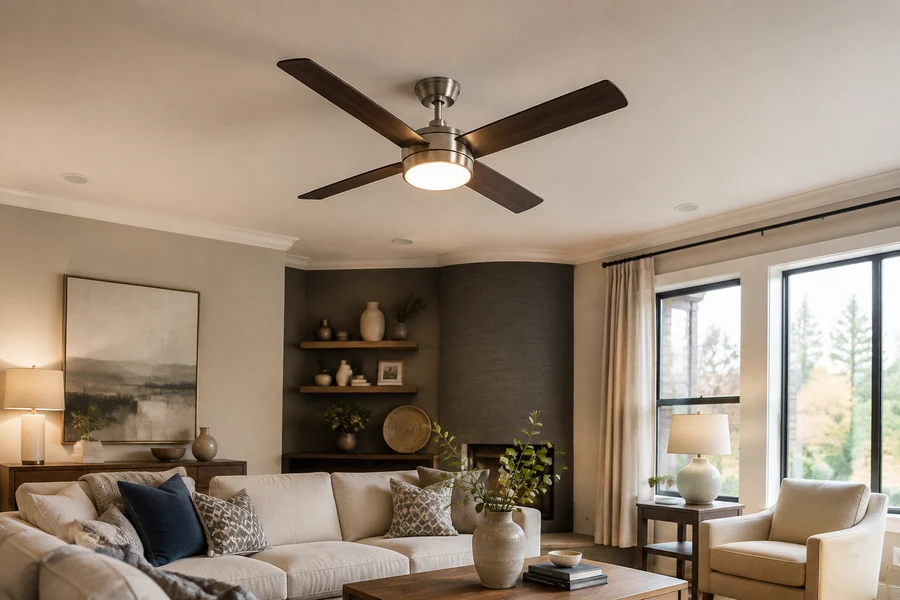
It is also helpful when the room feels dim in the center. A fan light can fill the middle of the room while lamps and wall lights add warmer layers around the edges.
When does an integrated light improve daily use?
If your living room is used for casual reading, cleaning, family time, or evening movement, integrated light gives you quick functional brightness. The key is choosing enough lumen output, a comfortable color temperature, and dimming that does not flicker.
A fan light works best when the living room needs a practical center fixture. If the ceiling has one wiring point and the room lacks strong ambient lighting, combining air and light can make the room easier to finish.
This choice is also useful for apartments and rental projects because it reduces the number of separate fixtures that need to be sourced, installed, explained, and maintained.
The risk is relying on one fixture for every lighting task. If the LED output, diffuser, or dimming is weak, the room may still need lamps to feel comfortable at night.
When Is a Living Room Ceiling Fan Without Light the Better Choice?
When should lighting stay separate from airflow?
A fan without light is often better when your room already has a complete lighting plan. Recessed lights, wall sconces, floor lamps, and pendant lights can create better atmosphere than one central fan light.
A fan without light works best when the lighting plan is already layered. If you have recessed lights, wall lights, table lamps, or picture lights, adding another ceiling light may make the room look busier. In that situation, a clean no-light fan can support airflow without competing with the lighting design.
This choice can also help the ceiling feel calmer. A no-light fan often has a simpler body, which can be useful in rooms with low ceilings or strong decorative elements. The trade-off is that you must be sure the room still has enough practical light after dark.
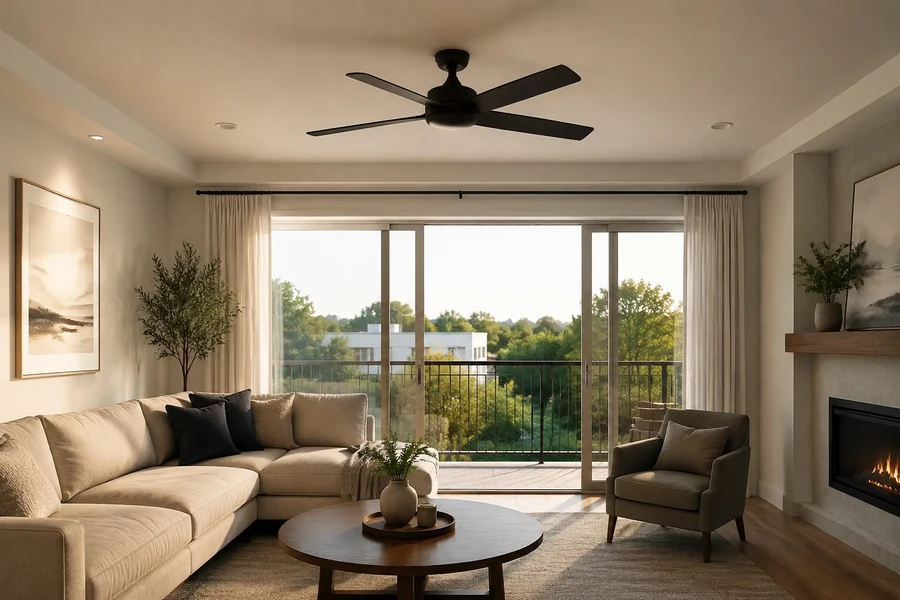
This approach also keeps the fan visually lighter. If your living room has a feature ceiling, decorative beams, art lighting, or a low-profile design concept, a no-light fan can support comfort without becoming the visual center.
When does a no-light fan look more refined?
In modern living rooms, the fan sometimes needs to be quiet visually as well as acoustically. A clean no-light fan can feel more architectural, especially when the room already has good ambient and accent lighting.
A fan without light is usually better when the lighting plan is already complete. Recessed lighting, wall lights, floor lamps, and accent lighting can create a richer room than one central source.
This option can also look more refined because the fan body stays simpler. In a modern or designer living room, removing the light kit may help the fan feel like part of the architecture instead of a compromise fixture.
Before choosing no-light, look at the room after sunset. If the space becomes too dark without a central light, the cleaner ceiling may not be worth the daily inconvenience.
How Should You Compare Lighting Quality Before Choosing?
Why is brightness only one part of lighting quality?
A fan light can be bright and still feel uncomfortable if it creates glare, poor color, harsh shadows, or uneven distribution. Lighting quality depends on how the light supports the room, not only how many watts the fixture uses.
Lighting quality should be judged by comfort, not only brightness. Look at lumens, color temperature, CRI, diffuser shape, and dimming behavior together. A bright light with poor diffusion can feel worse than a softer light that spreads evenly across the room.
Think about TV glare as well. If the fan light reflects on a screen or creates a hot spot on the coffee table, the room may feel less comfortable even when the brightness is technically enough. A good living room fan light should support the room, not dominate it.
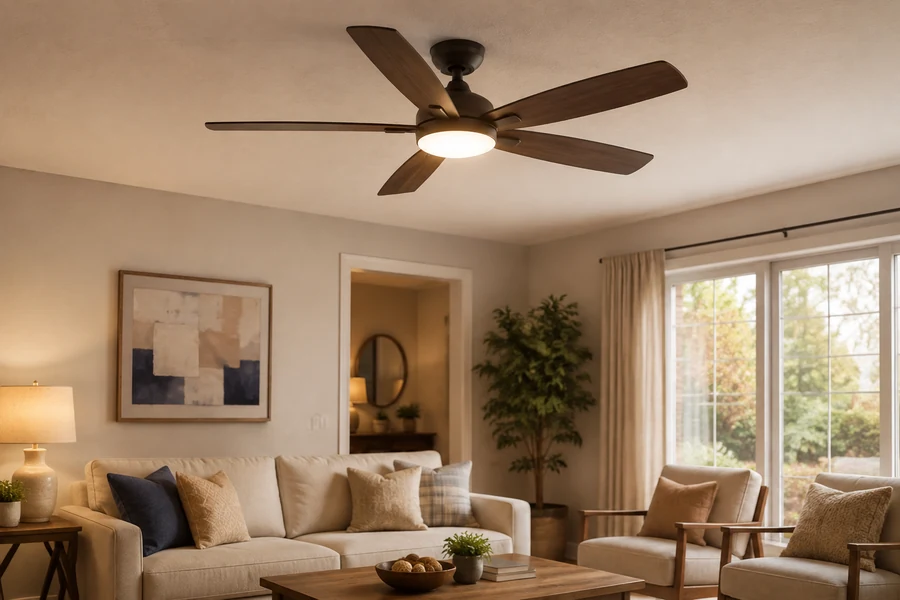
NIST’s solid-state lighting metrology work is a useful reminder that LED lighting should be measured and compared carefully, not judged only by casual brightness claims. That same idea applies to fan lights: you should judge comfort, color, glare, dimming, and task use together.
Which lighting specs should matter in a fan light?
| Spec | Why it matters | Living room advice |
|---|---|---|
| Lumens | Shows visible light output | Choose enough for general use, then layer with lamps |
| CCT | Controls warm or cool appearance | 2700K-3000K feels warmer; 4000K feels cleaner |
| CRI | Affects how colors appear | Look for good color rendering in family spaces |
| Dimming | Controls mood and brightness | Avoid products with visible flicker |
| Diffuser quality | Controls glare | A soft diffuser is better for TV rooms |
Lighting quality is about how people feel in the room. A fan light that is technically bright can still be unpleasant if it creates glare above the sofa or makes wall colors look flat.
For buyers, this means asking about lumens, CCT, CRI, diffuser material, and dimming method together. A single wattage number cannot explain whether the living room will feel warm, balanced, or harsh.
If you are comparing samples, test them at night with the same wall color and seating distance. Lighting flaws are easier to see when the fan light is the main source in the room.
How Do Room Size and Ceiling Height Affect the Choice?
When does a fan light work well on a standard ceiling?
On many standard living room ceilings, an integrated fan light works well because the fixture sits close enough to provide useful illumination. The product should still be sized by the room, not only by the light kit.
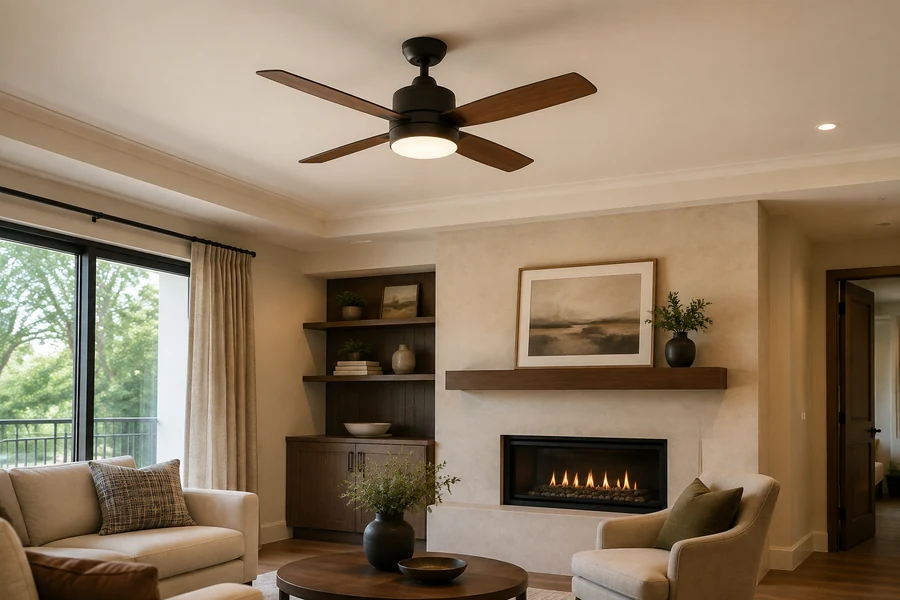
If you are unsure about fan span, compare the 52 inch living room guide and fan size comparison.
When do high ceilings change the lighting decision?
On high, vaulted, or cathedral ceilings, a fan light may sit too high to act as the main room light unless the downrod brings it into a useful zone. Use the high ceiling fan guide, downrod length guide, and cathedral ceiling setup before relying on one fixture for light.
Standard-height living rooms are usually more forgiving because the fan light sits close enough to be useful. In a high or vaulted living room, the light may sit too far above the seating area unless the downrod is planned well.
Room width also matters. A single fan light in a wide living room may brighten the center while leaving corners dim, so lamps or recessed lighting may still be needed.
If the fan is placed above a coffee table or central walkway, integrated light can work well. If it is offset from the main living area, separate lighting may create a better room experience.
A low ceiling usually benefits from a simpler fixture shape. If the fan light hangs too low, the room can feel busy and the light may feel too close to your eyes. In that case, a thinner fan light or a no-light fan with separate lamps may feel more comfortable.
A higher ceiling gives you more freedom, but it also asks more from the light. If the fan light is far from the seating area, brightness and beam spread matter more. A no-light fan can still work, but only if the room already has enough layered lighting.
How Can You Match Fan Style to the Room’s Lighting Plan?
Which fan works when you need light and airflow together?
A white fan with integrated light is a practical direction for bright, clean living rooms that need one ceiling fixture to handle both airflow and everyday lighting. It suits simple interiors where the fan light should feel useful rather than decorative.
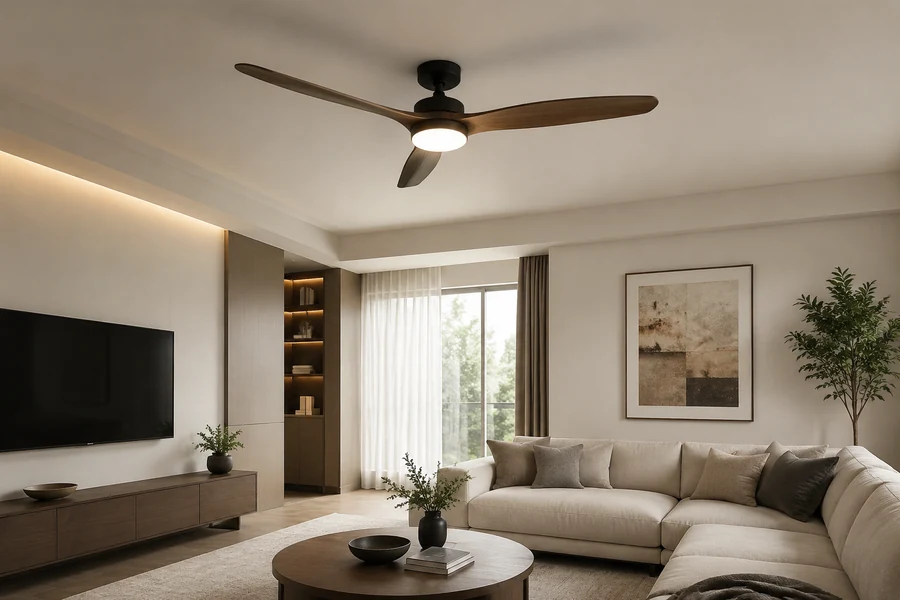
If you prefer the fan to disappear into the ceiling plan, a minimal no-light ceiling fan keeps airflow separate from lighting. For a more decorative living room, a retractable fan light can offer a stronger design statement while still adding ventilation.
How should you choose between these options?
For you, the choice should follow the room type. Rental units often benefit from integrated light because it simplifies the fixture plan. Premium living rooms may prefer no-light fans when designers already control the lighting layers.
When NEBOLA helps buyers choose a product direction, we usually start by asking whether the fan should be the main ceiling fixture or only the airflow fixture. That one answer quickly narrows the model range.
Integrated fan lights are useful for practical residential projects, compact spaces, and buyers who want one remote-controlled fixture. No-light fans are stronger when the lighting design is already handled by other products.
For OEM/ODM planning, the distinction also affects packaging, manuals, certification discussions, LED module sourcing, and after-sales spare parts, so it should be decided early rather than treated as a small style detail.
What Are the Trade-Offs of a Ceiling Fan With Light?
What are the advantages of a fan light?
The main advantage is efficiency of space and wiring. One ceiling point can provide airflow and useful light, which is helpful in compact living rooms, apartments, and simple renovations.
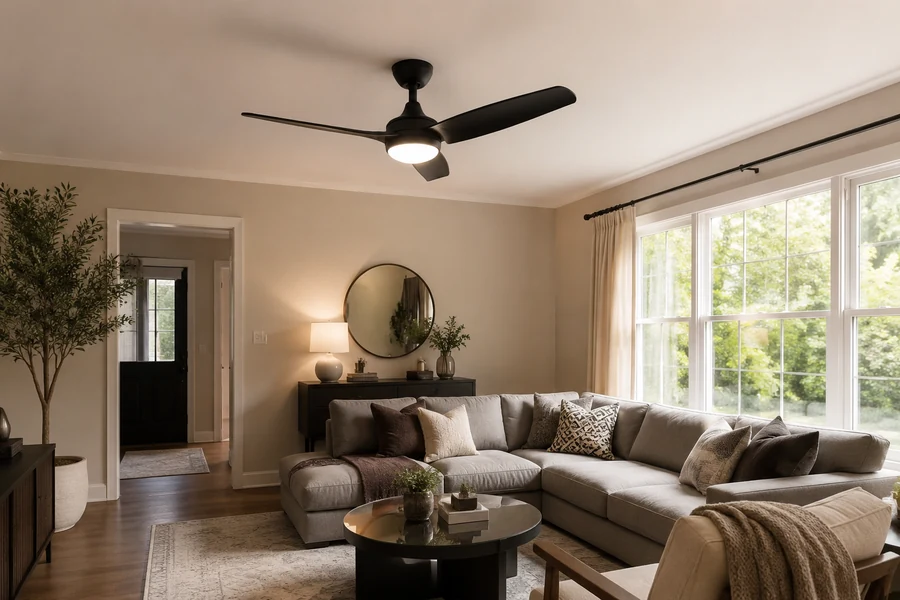
A fan light can also reduce the need for a separate pendant that might hang too low or compete with the fan. This matters when the ceiling is 8 or 9 feet high. Compare the 8 foot ceiling fan guide and 9 foot ceiling fan mount if clearance is tight.
What are the limits of a fan light?
The light may not replace a full layered lighting plan. It can also create glare if the diffuser is poor or if the fixture is directly above a TV seating position. Maintenance can be slightly more involved because the fan includes both airflow and lighting components.
The main trade-off is convenience versus complexity. You gain one fixture that does two jobs, but you also add LED drivers, diffusers, light controls, and possible replacement questions.
A fan light may also influence the room style more strongly than a no-light fan. If the light kit is bulky or overly decorative, it can make the whole ceiling feel heavier.
For product buyers, check whether the LED module and remote settings are easy to explain. A convenient fan light becomes less convenient when the customer cannot understand how to dim, change CCT, or replace parts.
What Are the Trade-Offs of a Fan Without Light?
What are the advantages of a no-light fan?
A no-light fan can look cleaner, feel quieter visually, and leave lighting design to fixtures that are better suited to mood and task lighting. It is a strong choice when the room already has recessed lights, wall lights, or lamps.
The main limitation is flexibility. If the room layout changes later, a no-light fan cannot add overhead brightness by itself. That may matter in rental spaces, multipurpose rooms, or homes where the living room is used for both relaxation and practical tasks.
The benefit is visual restraint. When the room already has enough lighting, removing the light kit can make the ceiling feel more open. That can be the right decision when the fan is meant to disappear into the room and provide quiet airflow.
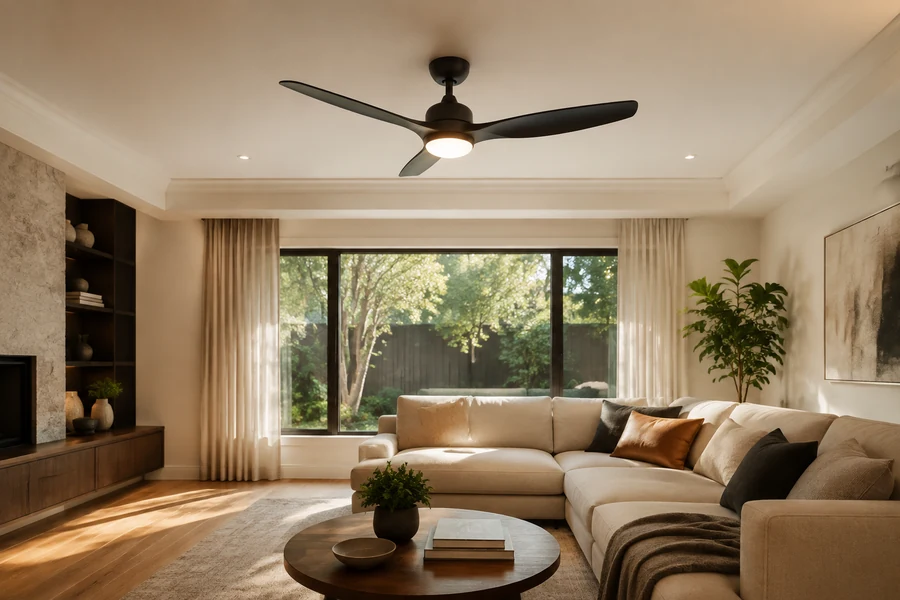
It can also reduce weight and complexity, which may help when you want a simple fan body and fewer components in the ceiling fixture.
What are the limits of a no-light fan?
You need enough separate lighting. If the room has only one ceiling box and no other strong light sources, choosing a fan without light may leave the room too dark or force you to add lamps later.
The main trade-off is design cleanliness versus lighting dependence. The ceiling may look calmer, but the rest of the room must provide enough light for daily use.
A no-light fan can simplify the fan body and reduce some lighting-related service questions. However, it may not suit projects where the customer expects the ceiling fan to replace an old chandelier or central lamp.
If you are selecting for multiple homes or units, check the lighting plan before choosing no-light fans in bulk. A product that works in one well-lit showroom may feel incomplete in a darker living room.
How Should You Make the Living Room Decision?
The best choice is the one that solves the missing job in your room. If your living room already has layered lighting from lamps, recessed lights, or wall sconces, a fan without light can keep the ceiling cleaner. If the ceiling point is the main place for both air and brightness, a ceiling fan with light is usually more practical.
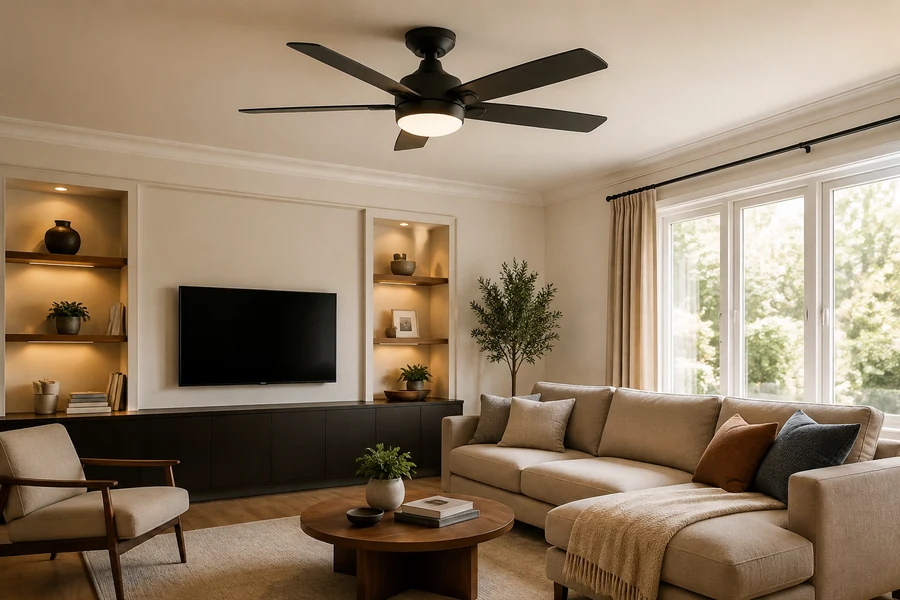
When should you choose a ceiling fan with light?
Choose a fan with light when the room needs central brightness, simple control, or a cleaner renovation plan. This is especially useful in apartments, compact living rooms, and family spaces where you do not want to add extra wiring or multiple fixtures. Just make sure the light is dimmable, diffused, and not too harsh for evening use.
A fan light is not automatically better because it does two jobs. It has to do both jobs well. If the LED module is too dim, too cool, or hard to replace, you may solve the airflow problem while creating a lighting problem. That is why we check lumens, color temperature, dimming, and control method before choosing the style.
When should you choose a fan without light?
Choose a fan without light when your lighting plan is already solved and you want the ceiling to feel quieter visually. For a room where airflow is the only missing piece, a no-light fan can look more intentional. If you are still checking room scale, the living room fans page can help you compare fan style, size, and ceiling fit before you decide.
If you are looking for a better ceiling fan light solution for your room or project, NEBOLA can support you from product selection to customization. We focus on ceiling fan light R&D and manufacturing, helping you find products that match real space needs.
A helpful way to decide is to list what feels wrong in the room today. If the room feels dim, start with a fan light. If the room feels warm but already looks good at night, start with a no-light fan. If both problems exist, choose the fan light carefully instead of assuming any integrated light will do.
You should also think about future changes. A room that may become a rental, family room, or multipurpose space often benefits from the flexibility of an integrated light. A room with a fixed interior design plan may benefit from the cleaner look of a fan without light.
Before you make the final choice, walk through the room as if the fan were already installed. Look at the ceiling line, the TV wall, the sofa area, and the existing lamps. If the fan light would make the ceiling feel crowded, a no-light fan may be better. If the room still feels dark without a central fixture, the fan light is solving a real problem.
The decision should also consider how easy the room is to use by guests and family. A fan with light can simplify daily control when the remote or wall switch is clear. A fan without light can feel more refined when the lighting scene is already planned. Neither choice is automatically premium; the better choice is the one that removes friction from the room.
One last check is control simplicity. If the room is used by different people, the fan and light settings should be easy to understand without a manual. A clear remote, stable dimming, and simple speed control can make a practical fan light feel much better in daily use.
NEBOLA Ceiling Fan Light Support
Need help choosing fan with light or without?
Tell NEBOLA your living room size, ceiling height, and lighting plan, and we can help match a ceiling fan light direction that fits the space.
FAQ
Is a ceiling fan with light better for most living rooms?
Yes, it is often better when the room has only one ceiling fixture point or needs central general lighting, but it is not always better for layered lighting designs.
Should you choose a fan without light if the room already has recessed lighting?
Yes, a fan without light can be a cleaner choice when recessed lighting, lamps, or wall lights already handle the room illumination.
Can a ceiling fan light replace a chandelier in a living room?
Yes, it can replace a chandelier when airflow and practical lighting matter more than a purely decorative focal point, but the style and brightness still need to match the room.
Should a living room ceiling fan with light replace all other lighting?
No, a living room ceiling fan with light should not replace all other lighting in most rooms. It can provide useful general light, but lamps, wall lights, or recessed lights still help create softer evening scenes and reduce glare near the TV.
Can a fan without light work well in a small living room?
Yes, a fan without light can work well in a small living room if the space already has enough separate lighting. If the room has only one ceiling box and very few lamps, a no-light fan may make the room feel unfinished after dark.