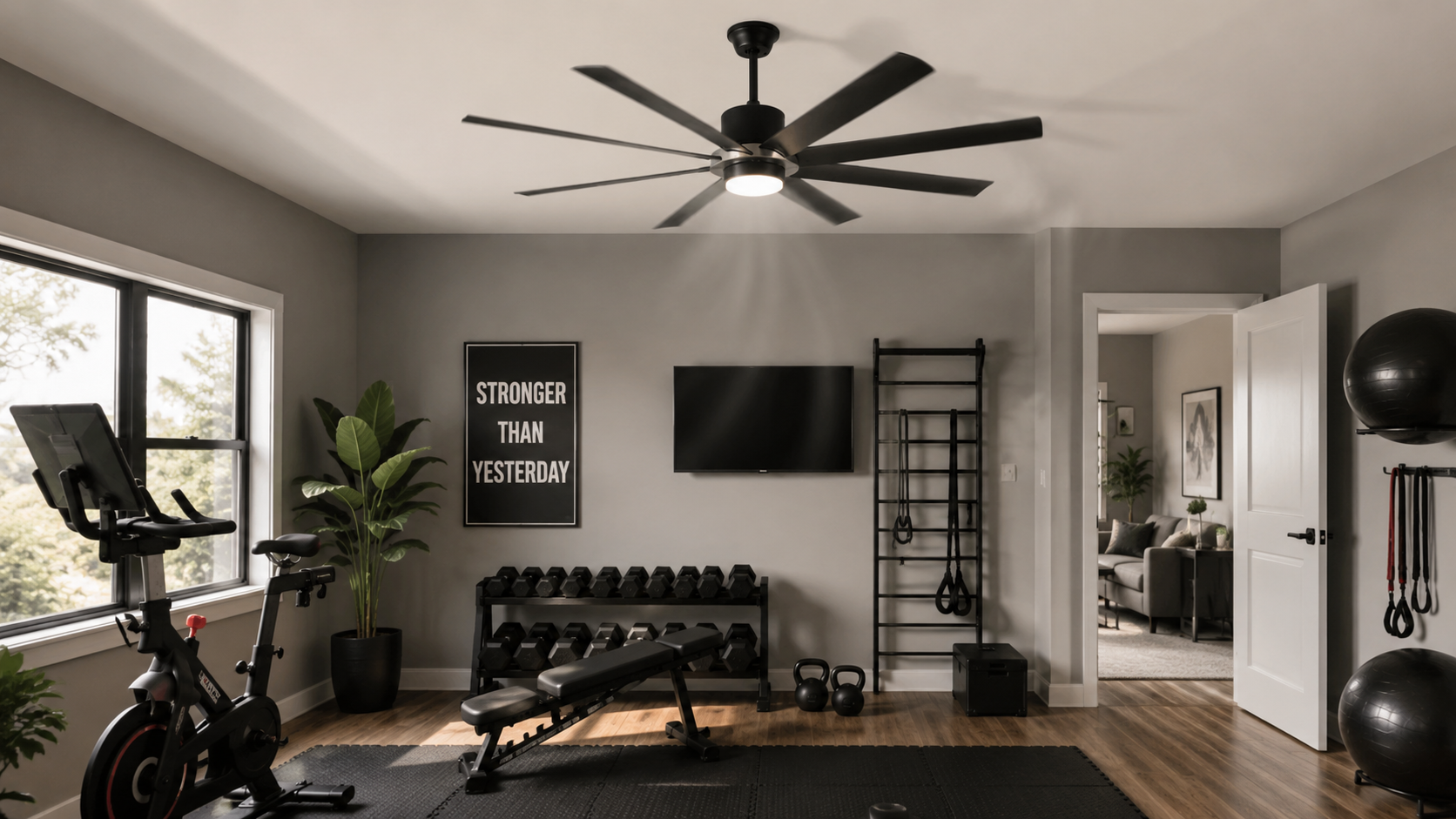


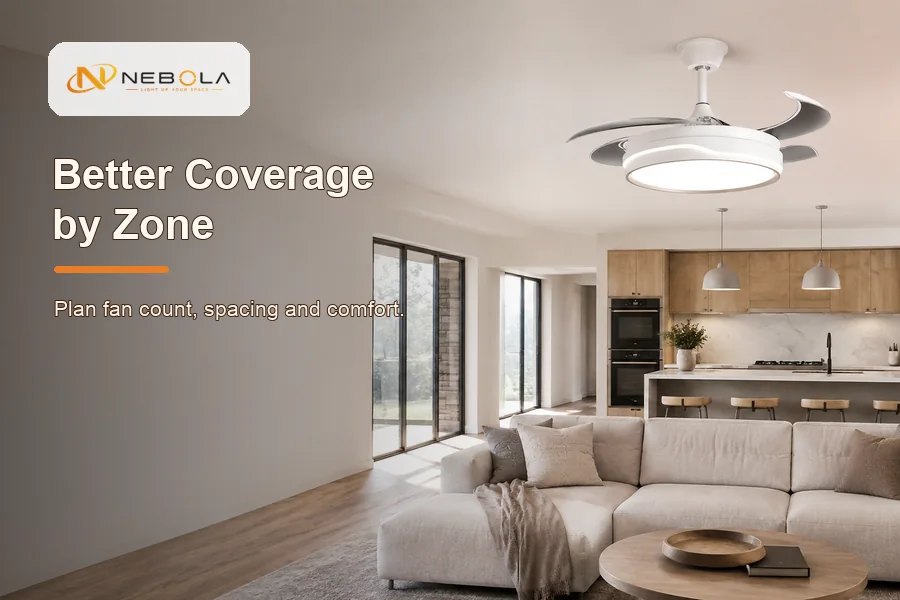
Multiple ceiling fans can make a large room more comfortable, but only when the layout is planned. Adding more fans without spacing, controls and zone logic can create clutter, uneven airflow and unnecessary cost.
The right ceiling fan layout starts with people, not product count. You need to know where people sit, work, eat, walk or gather before deciding whether one large fan, two medium fans or several smaller fans will work best.
This guide explains fan count, spacing, ceiling height, airflow zones and large space cooling decisions for homes, open rooms and commercial-style areas. For the full size framework, start with the ceiling fan size guide.
1. Why Do Large Spaces Need a Ceiling Fan Layout Plan First?

Large rooms often fail when buyers choose fan count too late. They pick a fan size first, then try to force the layout around the product. A better process starts with comfort zones.
1-1. Why is fan count not the first question?
Fan count depends on room shape, ceiling height, activity zones and mounting points. A square great room may use one larger fan well, while a long open room may need two separate comfort zones.
The newly planned open concept ceiling fan size guide is useful for this same reason: a connected floor plan must be sized by zones before product count makes sense.
1-2. Why does one big fan sometimes fail?
One big fan can leave still corners in a long or divided room. It can also create too much airflow directly underneath while people at the edges feel little benefit.
That does not mean one big fan is wrong. It means the room needs to be tested against real seating, work and walking zones before the answer is chosen.
1-3. Why can too many fans also be a problem?
Too many fans can make a ceiling look busy, increase installation cost and create overlapping airflow patterns. In residential spaces, visual order matters almost as much as coverage.
A good layout uses the fewest fans needed to create even comfort. Each fan should have a clear job, its own zone and sensible control logic.
2. How Should You Divide a Large Space Into Airflow Zones?
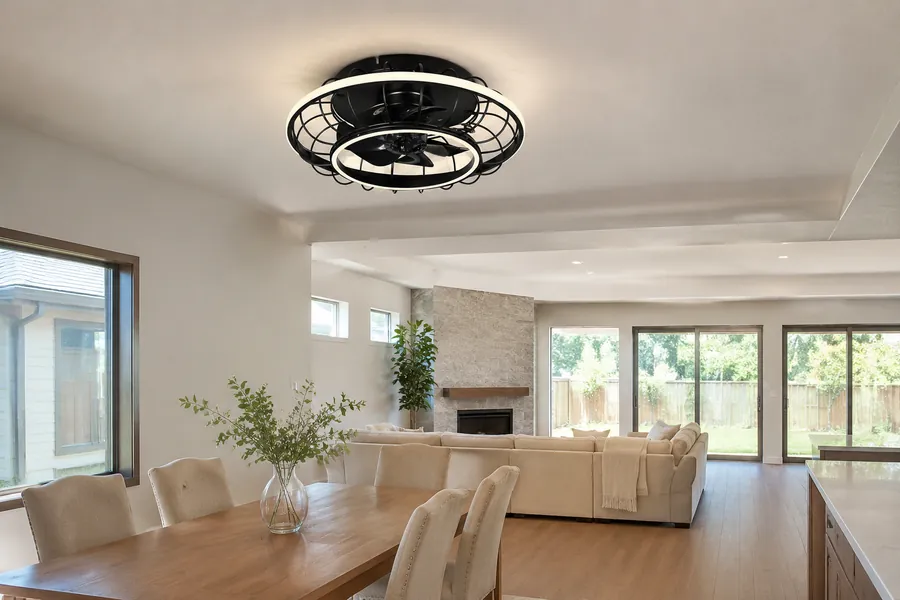
Divide a large space by how people use it. A room may look open, but the comfort needs of a sofa area, dining zone, desk corner and walkway are not the same.
2-1. What counts as an airflow zone?
An airflow zone is an occupied area where people expect comfort. It can be a seating group, workbench, dining table, bed area, hotel lounge, restaurant section or warehouse packing area.
The living room ceiling fan size guide and office ceiling fan size guide show how the same room size can need different airflow depending on seating and work patterns.
2-2. Should pathways count as zones?
Usually no. Walkways need clearance and occasional comfort, but they rarely need dedicated fan coverage unless people stand there for long periods.
This distinction prevents over-installation. A fan should serve people where they stay, not every square foot of the floor.
2-3. How do you map zones before buying?
- Draw the room outline and mark ceiling height.
- Mark fixed furniture, counters, racks or partitions.
- Circle the areas where people stay for more than a few minutes.
- Mark existing electrical boxes and beam positions.
- Decide whether each zone needs shared or separate control.
- Choose fan size after the zone map is clear.
For unusual mixed-use spaces, compare with the garage ceiling fan size guide because workshops and utility rooms often have zone-based airflow needs.
3. How Can You Estimate the Number of Ceiling Fans Needed?
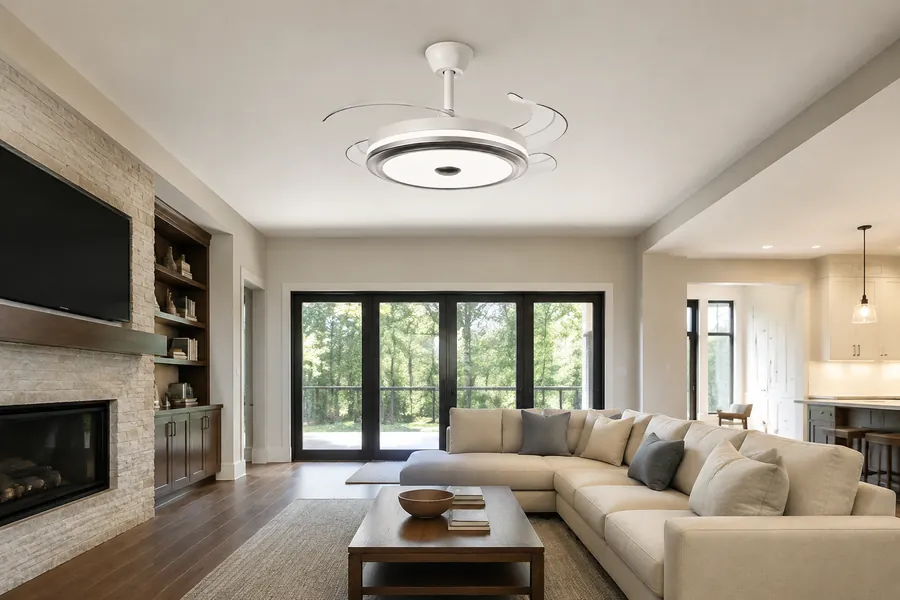
There is no single formula that solves every room, but you can estimate fan count by combining zone width, fan coverage, ceiling height and expected airflow level.
3-1. When is one fan usually enough?
One fan is usually enough when the main occupied zone is central, the room shape is close to square and the fan span can cover the seating or work area without running at high speed.
The 52 inch ceiling fan application guide and 56 inch ceiling fan size guide are useful for deciding when one medium-large fan still fits the room.
3-2. When are two fans usually better?
Two fans are usually better in a long room, a great room with separate seating and dining areas, or a commercial space where people occupy two distant zones.
The fans should be sized for their zones rather than treated as half of the whole room. This keeps airflow comfortable under each fan and reduces dead spots.
3-3. When does a large commercial fan make sense?
A large commercial fan makes sense when ceiling height, structure and room width support one broad air column. A 70 inch industrial warehouse ceiling fan with LED can suit high-ceiling large spaces where residential fan spans are not enough.
For very wide rooms, the 72 inch ceiling fan guide explains when a 72 inch fan becomes a logical step instead of adding several smaller fans.
4. What Spacing Rules Help Multiple Ceiling Fans Work Together?
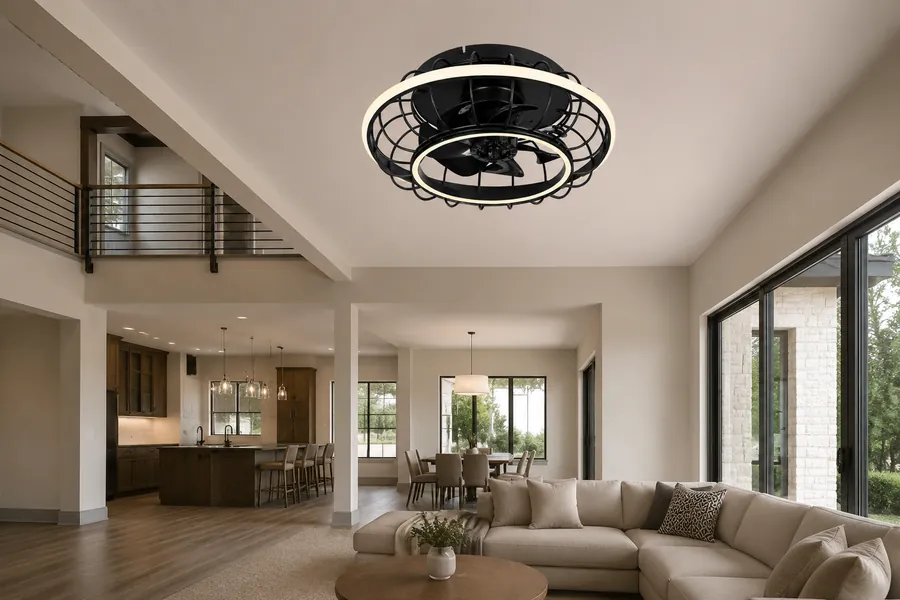
Spacing should avoid both crowding and dead zones. Fans need enough distance from walls, beams, lights and each other so the air columns can work without visual or physical conflict.
4-1. How far apart should fans be?
A practical starting point is to space fans so each one serves a defined zone with some overlap at the edges, but not so much that both fans fight over the same seating area.
Exact spacing depends on blade span, ceiling height and room shape. For a long room, spacing fans along the length usually works better than placing both near the middle.
4-2. How far should fans be from walls and fixtures?
Keep blade sweep clear of walls, beams, pendant lights, sprinklers, open cabinet doors and tall furniture. The motor position is not enough; the entire blade circle needs clearance.
The ceiling fan size for different ceiling heights guide helps check whether mounting depth and blade clearance remain sensible after installation.
4-3. Should fans line up perfectly?
Fans should line up with room function first and ceiling symmetry second. In a commercial lounge or open home, perfect symmetry can still feel wrong if the fans miss the actual seating areas.
Aim for a layout that looks intentional from the main entry and delivers comfort where people stay. Both conditions matter.
5. When Is One Large Ceiling Fan Better Than Multiple Fans?
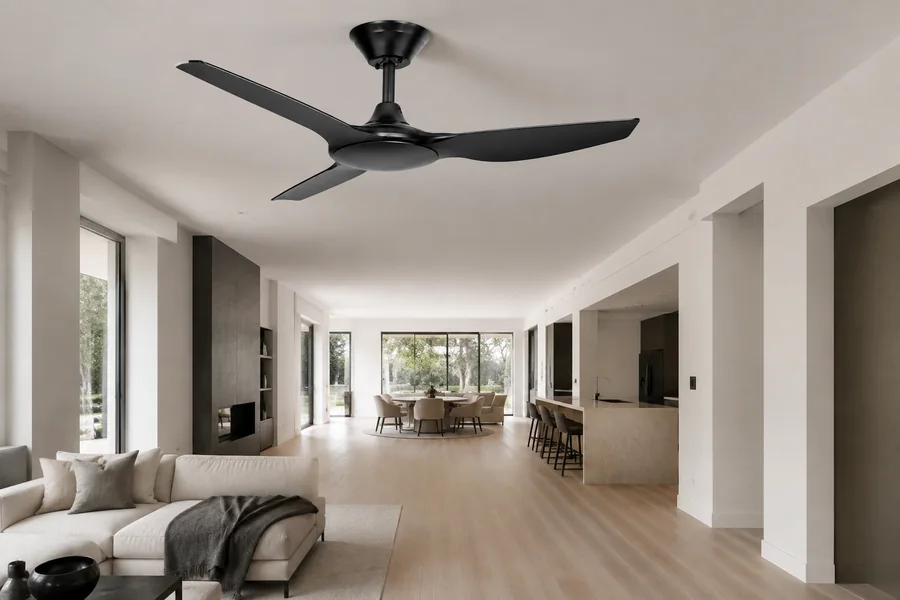
One large fan can be the cleaner solution when the room is open, central and visually simple. It reduces hardware, wiring points and control complexity.
5-1. Which rooms suit one large fan?
Square great rooms, high-ceiling lounges, open lofts and some commercial rooms can suit one large fan. The key is that the occupied area sits mainly within the fan’s useful airflow zone.
The 60 inch guide for large rooms explains why larger blade spans can be more effective than pushing several small fans into one visual space.
5-2. Why can one large fan look better?
A single large fan can create a calm focal point. It may work better with one central seating group, one high ceiling volume or one open hospitality lounge where visual order matters.
A 60 inch gold wood fandelier for wide living spaces can be a useful direction when the space needs both visual presence and broad comfort rather than a dense fan layout.
5-3. What are the risks of one large fan?
The main risks are uneven coverage, over-strong airflow under the fan, visual heaviness and installation limits. If the fan must run fast to reach distant zones, it may be the wrong layout.
One large fan should be chosen because the room supports it, not because it feels simpler during buying.
6. When Are Multiple Smaller Fans Better for Large Space Cooling?
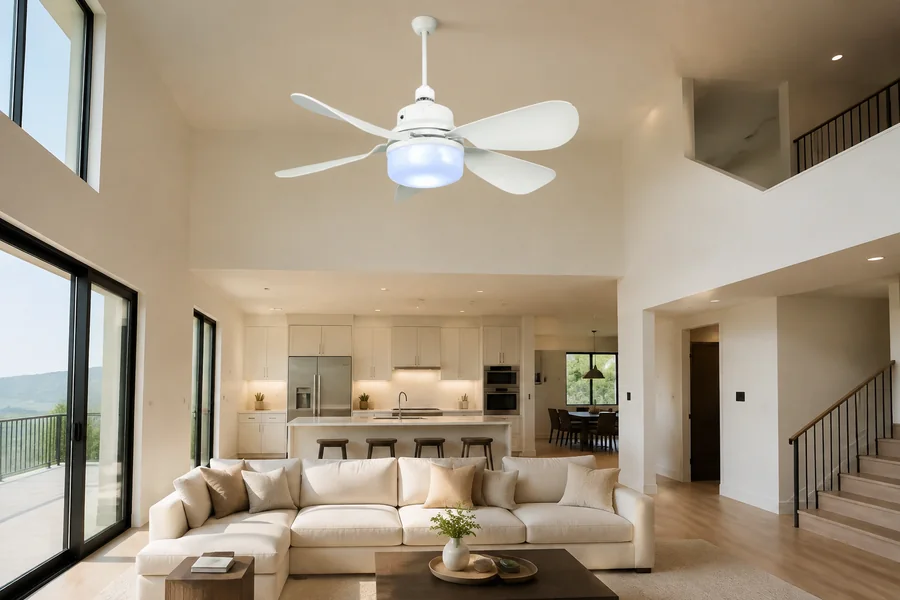
Multiple smaller fans are better when the room is long, divided by furniture, used by several groups or needs different comfort levels in different zones.
6-1. Which layouts benefit from multiple fans?
Long open rooms, dining-plus-lounge plans, large bedrooms with sitting areas, commercial waiting areas and workshop-style spaces often benefit from separate fan zones.
For mixed commercial use, compare with the restaurant ceiling fan size guide and hotel ceiling fan project guide because hospitality comfort depends strongly on zone planning.
6-2. How do separate controls improve comfort?
Separate controls let one zone run while another stays off. This matters when a dining area is occupied at different times from a lounge, or when one side of a room receives more sun.
For smart or remote-controlled models, make sure the controls are simple enough for daily users. Complexity can make a good fan layout feel annoying.
6-3. How do you avoid a crowded ceiling?
Use consistent finishes, similar fan sizes and clean alignment. Avoid mixing many styles in one visual field. If the ceiling already has many lights or beams, fewer larger fans may be calmer.
The best multiple-fan layout should be noticed for comfort, not for visual clutter.
Need Help Choosing the Right multiple ceiling fans?
Tell us your room size, ceiling height, airflow needs, lighting plan and order quantity. NEBOLA can help match a practical fan light solution.
Get a Quote7. How Does Ceiling Height Change Fan Count and Layout?
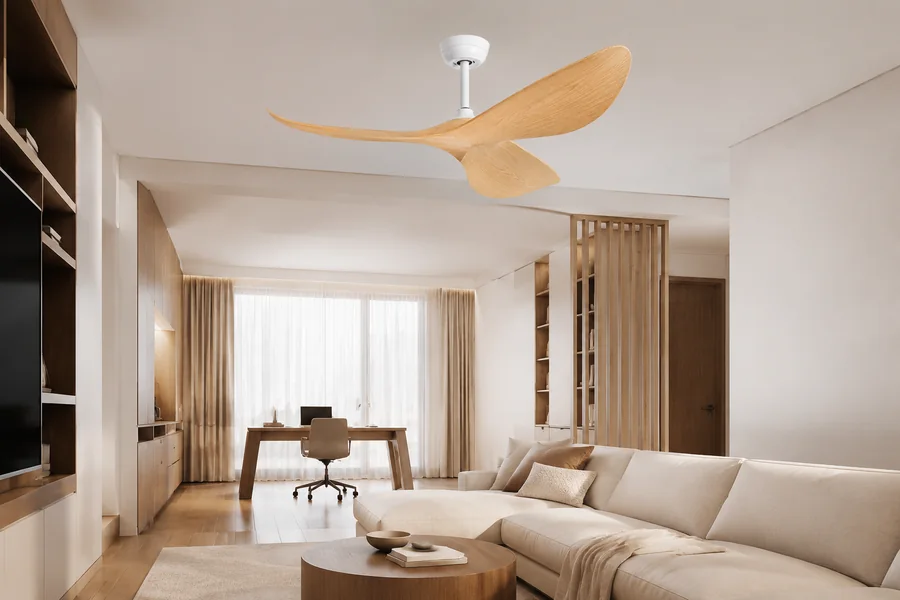
Ceiling height affects both fan size and count. Higher ceilings can reduce felt airflow at the occupied level, while low ceilings limit blade span and fixture depth.
7-1. Do high ceilings need more fans?
Not always. High ceilings may need larger fans, longer downrods or better placement rather than simply more fans. The goal is to bring useful air movement to people, not just move air near the ceiling.
If the room is very tall or commercial in character, compare with the 72 inch ceiling fan guide before assuming residential sizes will cover the space.
7-2. Do low ceilings need fewer fans?
Low ceilings may need low-profile fans and careful spacing. Multiple fans can still work, but only if each fixture has safe clearance and does not make the ceiling feel crowded.
The low ceiling fan size guide is useful when the large space is wide but vertically limited.
7-3. How do outdoor or semi-outdoor large spaces differ?
Covered patios, porches and gazebos need outdoor-appropriate ratings and different spacing logic. Use the outdoor ceiling fan size guide when humidity, wind or weather exposure is part of the project.
Outdoor comfort can change quickly with sun, wind and shade, so fan count should be judged from how the space is actually occupied.
8. How Do Airflow Direction and Controls Affect Large Space Cooling?
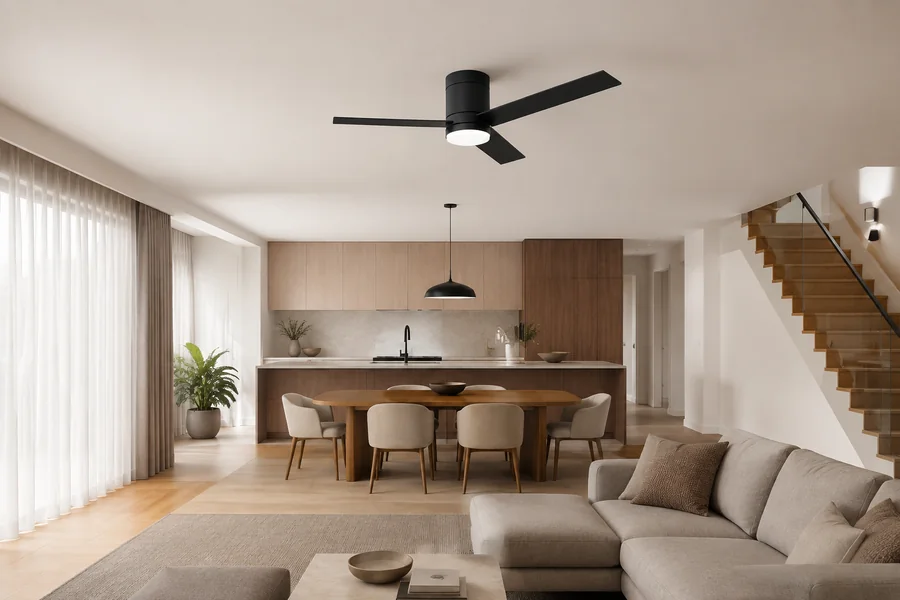
Airflow direction and controls decide whether the layout feels easy to live with. A technically correct fan count can still feel poor if every fan runs at the wrong speed or direction.
8-1. Should all fans run at the same speed?
No. Different zones often need different speeds. A sunny seating area may need more airflow than a shaded dining corner. Separate control makes the layout more flexible.
The ceiling fan airflow by size guide explains why airflow comfort is not solved by diameter alone.
8-2. Why does motor quality matter across several fans?
When several fans run together, motor noise and wobble become more noticeable. Quiet DC motors and stable low-speed control help the whole room feel calmer.
A 56 inch indoor ceiling fan range for large rooms can be a practical product direction when the space needs multiple consistent fans rather than one huge statement fan.
8-3. How should airflow support comfort without replacing ventilation?
Ceiling fans move air for comfort, but they do not replace fresh-air design. Research into natural ventilation and comfort is a useful reminder that air movement, openings and ventilation strategy should be considered together.
In buying terms, this means large space cooling should be coordinated with windows, HVAC, exhaust and occupancy rather than treated as a fan-only problem.
9. What Layout Mistakes Should Buyers Avoid in Large Spaces?
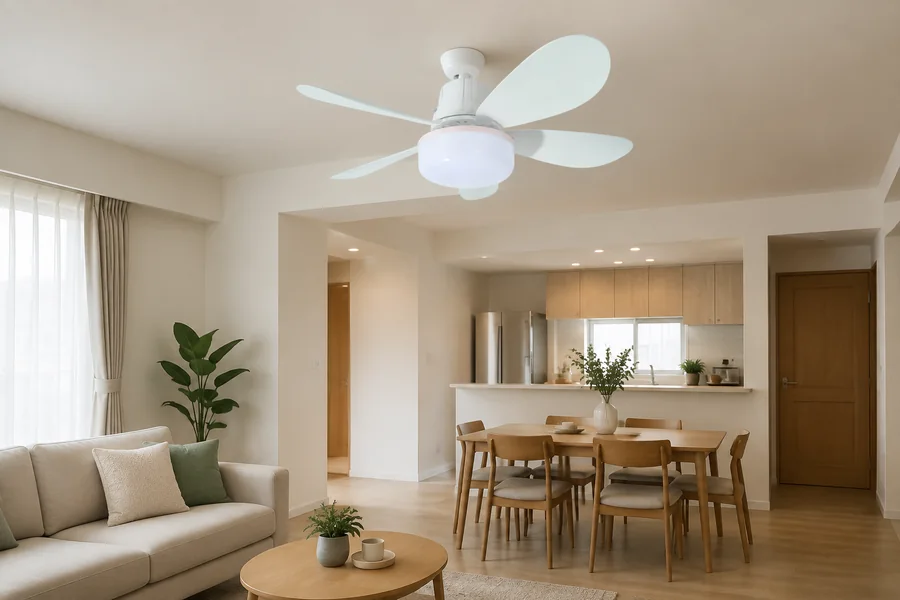
Large space fan mistakes are expensive because they involve more wiring, more product and more visible ceiling hardware. A clear plan prevents rework.
9-1. Is using identical spacing everywhere a mistake?
Yes, it can be. Equal spacing may look tidy on a plan, but it can miss the real occupied zones. Fans should serve people, not only grid lines.
The common ceiling fan buying mistakes guide is a useful reminder to test product decisions against real use before buying.
9-2. Is choosing the same fan size for every room a mistake?
Yes, when the project includes rooms with different widths, heights and functions. A hotel lobby, office, apartment living room and garage workshop should not be forced into one size answer.
For broader planning, compare the ceiling fan importer size range guide with popular ceiling fan sizes guide so the product range supports different room types.
9-3. Should small-room logic be used in large zones?
No. The small room ceiling fan size guide helps compact spaces, but a large room needs wider airflow reach, higher fan stability and better spacing.
If a large space includes bedrooms or private suites, then the master bedroom ceiling fan size guide can help with those separate areas, but not with the entire open hall.
10. What Final Checklist Confirms Fan Count and Layout?
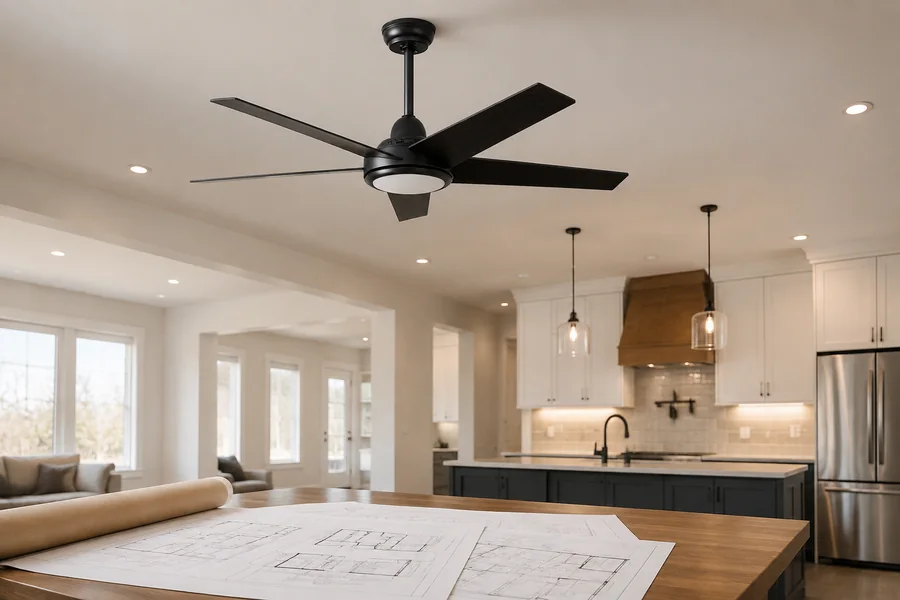
A good ceiling fan layout should feel obvious after installation: each fan has a purpose, each zone gets comfort and the ceiling still looks organised.
10-1. What should homeowners check?
- Draw the room and mark active zones.
- Measure ceiling height and usable mounting locations.
- Check beam, light, cabinet and furniture clearance.
- Choose fan count from zones before product style.
- Compare CFM, motor noise and low-speed control.
- Plan separate controls when zones are used differently.
If the large room includes a kitchen, use the kitchen ceiling fan size guide to avoid airflow problems around heat, cabinets and task lighting.
10-2. What should project buyers check?
Project buyers should check repeated installation needs, spare parts, packaging, motor consistency, remote pairing, lighting options and whether several fans can be controlled clearly in one large space.
The ceiling fan size trends 2026 guide is useful when planning smart controls, high-airflow demand and product range decisions for future projects.
10-3. How should the final answer be made?
Choose one fan when one air column can serve the main zone cleanly. Choose multiple fans when the room has separate zones, long shape or different occupancy patterns. Choose larger commercial-style fans when ceiling height and structure support broad airflow.
The right answer is not the highest fan count. It is the cleanest layout that delivers comfort where people actually spend time.
Before the final purchase decision, compare the plan again with the NEBOLA ceiling fan size guide. It keeps room size, ceiling height, airflow demand, product style and installation limits connected instead of treating fan diameter as a single isolated number.
Need Help Choosing the Right multiple ceiling fans?
Tell us your room size, ceiling height, airflow needs, lighting plan and order quantity. NEBOLA can help match a practical fan light solution.
Get a QuoteFAQ About Multiple Ceiling Fans and Large Space Layout
Do large rooms always need multiple ceiling fans?
No, large rooms do not always need multiple ceiling fans. A square room with one central comfort zone may work well with one larger fan, while long or divided rooms often need two or more planned zones.
Is one large ceiling fan better than two smaller fans?
Yes, one large ceiling fan can be better when the room is open, central and visually simple. Two smaller fans are better when the room has separate seating, dining or work zones that need different airflow.
Can multiple ceiling fans run at different speeds?
Yes, multiple ceiling fans can and often should run at different speeds. Separate speed control helps each zone match sun exposure, occupancy and comfort needs without overcooling another part of the room.
Should multiple ceiling fans be the same style?
Yes, multiple ceiling fans should usually share a similar style, finish and mounting height in the same visual space. Consistency keeps the ceiling organised and avoids a cluttered look.
Does adding more fans always improve large space cooling?
No, adding more fans does not always improve large space cooling. Poor placement can create overlap, noise and visual clutter, so fan count should come from zone planning and room shape.
Should commercial buyers test fan layout before bulk orders?
Yes, commercial buyers should test fan layout, mounting height, controls and noise before bulk orders. A sample installation can reveal spacing and comfort issues that are hard to see from product specifications alone.