

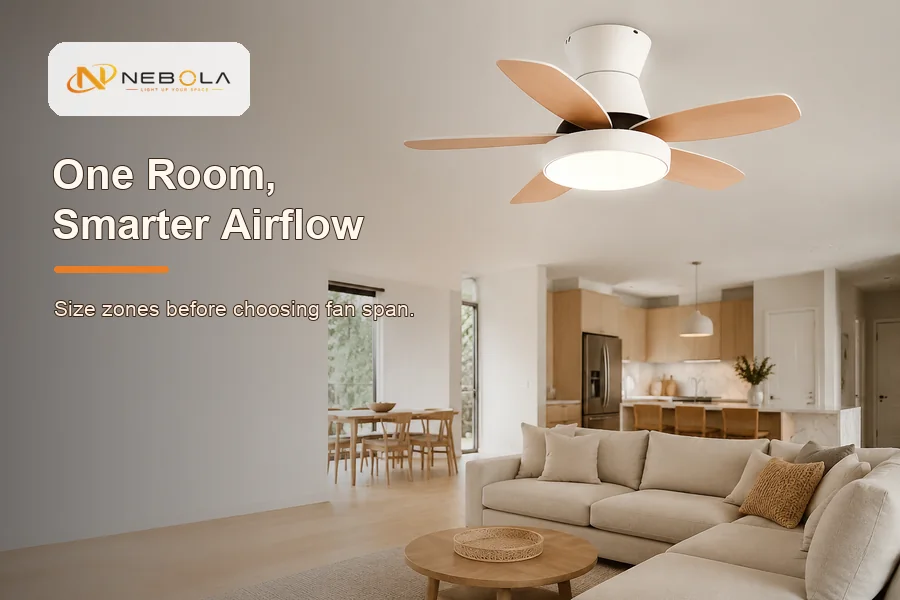
An open concept ceiling fan has to serve a room without the help of walls. The fan may sit above a living area, but its airflow can affect a dining table, kitchen island, walkway or desk in the same visual space.
That is why open space fan size should not be chosen from square footage alone. You need to understand the active comfort zone, ceiling height, sightlines, lighting plan and whether one fan can cover the room without creating dead spots.
This guide explains how to plan large area airflow for open-plan homes, lofts, apartments and connected living spaces. For the broader sizing method, start with the ceiling fan size guide.
1. Why Is Open Concept Ceiling Fan Sizing Different From a Normal Room?
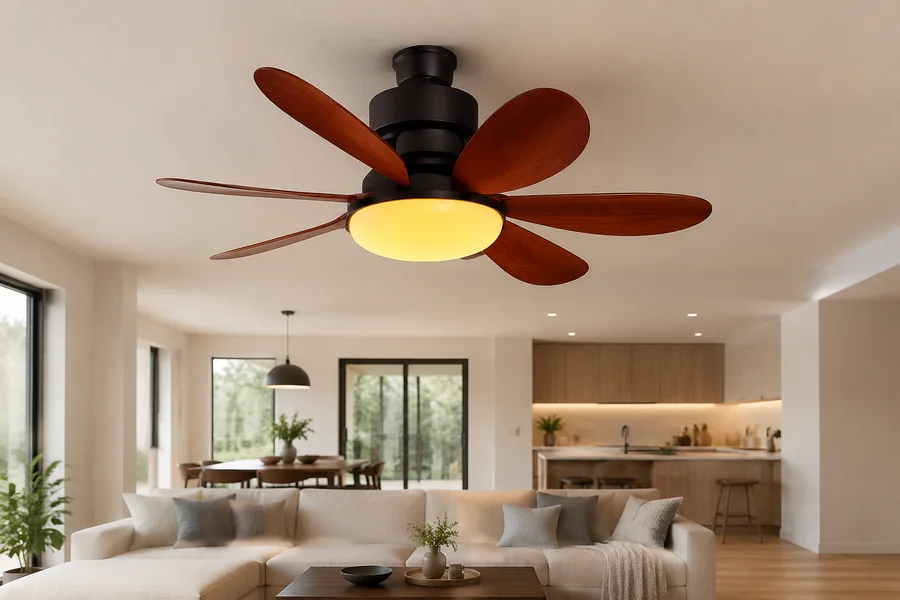
Open concept spaces behave differently because airflow does not stop at a wall. A fan may need to cool the people under it while also staying visually balanced across a kitchen, dining and living area.
1-1. Why does a missing wall change airflow?
In a closed bedroom, air movement stays mostly within one room. In an open layout, air can spread into connected zones, but furniture, ceiling beams, islands and lighting can still interrupt comfort. The result is a room that looks like one space but works like several smaller comfort areas.
This is why the room-by-room ceiling fan size guide is still useful for open spaces. It reminds buyers to judge how people use each zone, not only the total floor area.
1-2. Why can one fan feel too strong and too weak at the same time?
A large fan placed over the centre of a connected room may create strong airflow near the dining table but weak airflow near the sofa. The fan is not necessarily poor; the layout is asking one fixture to solve several jobs.
Open layouts need a comfort map. Mark where people sit, eat, cook and walk. Then choose the fan size and position that supports the most important zone without making adjacent zones uncomfortable.
1-3. Why does visual balance matter more in open rooms?
A fan in an open room is visible from several angles. If the motor body is too heavy, the blades are too wide or the light kit hangs too low, the whole ceiling can feel crowded even when the airflow is acceptable.
For open spaces, the best fan is often the one that looks calm from the entry, sofa, dining area and kitchen at the same time. Size, finish, blade shape and installed depth all become part of the sizing decision.
2. How Should You Divide an Open Concept Space Before Choosing Fan Size?
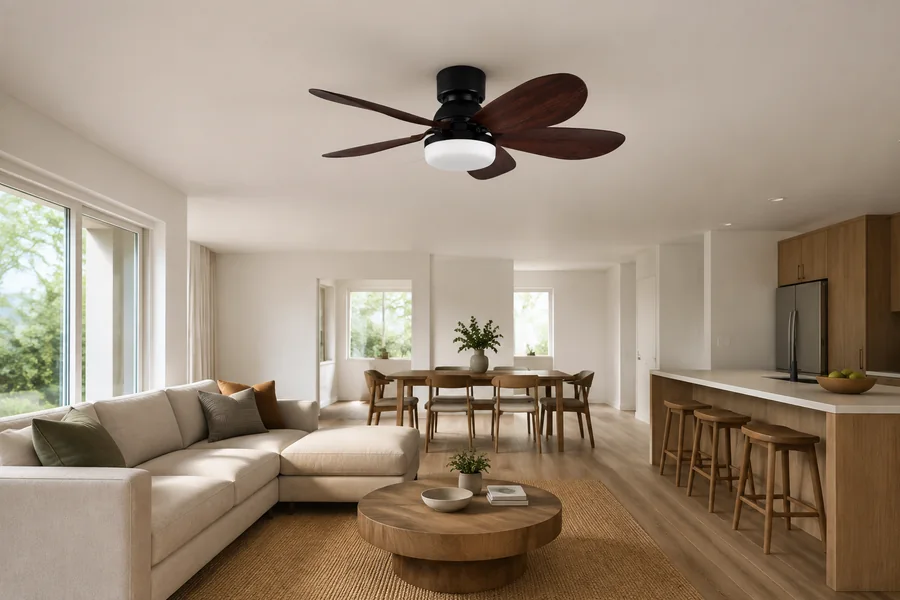
Start by dividing the room into practical zones. A connected floor plan may include a lounge, dining zone, island, hallway edge and work corner, but the fan does not need to serve all zones equally.
2-1. Which zones should be measured first?
- The primary seating or sleeping zone.
- The dining area or breakfast table.
- The kitchen island or prep path.
- Any desk, reading corner or play area.
- Tall furniture, beams and lighting fixtures.
- The actual ceiling area where a fan can be safely installed.
The primary comfort zone should lead the decision. If the sofa area is where people stay longest, fan size should be judged around that zone first, even if the room also includes a kitchen or dining area.
2-2. Should you measure total area or usable area?
Measure both, but make the final decision from usable area. Total area tells you whether the room belongs to a large-space category; usable area tells you what the fan can realistically influence from its mounting point.
The complete ceiling fan size guide is a useful starting point, but open-plan rooms need one more step: subtract the parts of the ceiling blocked by beams, pendant lights, tall cabinets or door paths.
2-3. How do furniture lines affect fan position?
Furniture creates invisible room boundaries. A sectional sofa can define the living zone, while an island defines the kitchen edge. A fan centred over the whole rectangle may miss the real activity zone if the furniture is weighted to one side.
A good layout usually places the fan where people feel airflow during daily use, not where the floor plan looks mathematically symmetrical. This is especially important in narrow open apartments and long family rooms.
3. What Fan Size Works Best for Common Open Concept Layouts?
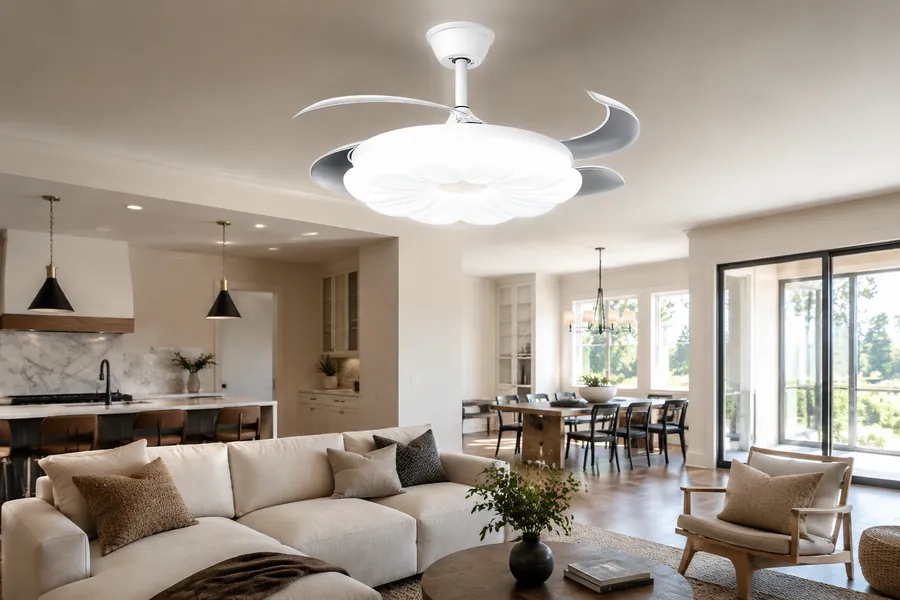
Open concept fan size depends on the zone width, ceiling height and whether the fan is expected to cover one zone or several. The table below gives a practical direction before you check product specifications.
| Open concept layout | Typical fan direction | Main decision check |
|---|---|---|
| Small studio living zone | 42 to 48 inch | Furniture zone and low ceiling |
| Living plus dining room | 52 to 60 inch | Seating width and dining comfort |
| Large great room | 60 inch or larger | Ceiling height and airflow reach |
| Long open floor plan | Two planned zones | Spacing and separate controls |
| Open kitchen and breakfast nook | Compact to medium | Cabinets, heat and task lighting |
3-1. When is a 48 inch fan enough?
A 48 inch fan can work when the open space is really a compact zone, such as a studio lounge or modest condo living area. The 48 inch ceiling fan guide helps judge this middle size when 42 inch feels small but 52 inch looks heavy.
If the fan will only serve a sofa zone rather than the whole open room, a medium size may be more comfortable than an oversized model that dominates the ceiling.
3-2. When does 52 or 56 inch make more sense?
A 52 inch fan suits many standard living zones, while a 56 inch fan can help when the zone is wider or the ceiling is higher. Compare with the 52 inch fan room guide and the 56 inch ceiling fan size guide before sizing up.
The upgrade is worthwhile only if the room can handle the blade span, fixture depth and visual weight. A larger fan in a crowded ceiling can create a worse result than a slightly smaller fan with better placement.
3-3. When should open spaces move toward 60 or 72 inch?
Very wide living rooms, lofts and commercial-style open areas may need 60 inch, 66 inch or 72 inch fans. The 60 inch guide for large rooms and 72 inch ceiling fan guide explain why large area airflow often needs more than a standard residential size.
For a product direction, a 66 inch wood ceiling fan light for wider open living areas can make sense when the room is broad but still needs a warm residential look.
4. How Does Ceiling Height Change Open Space Fan Size?
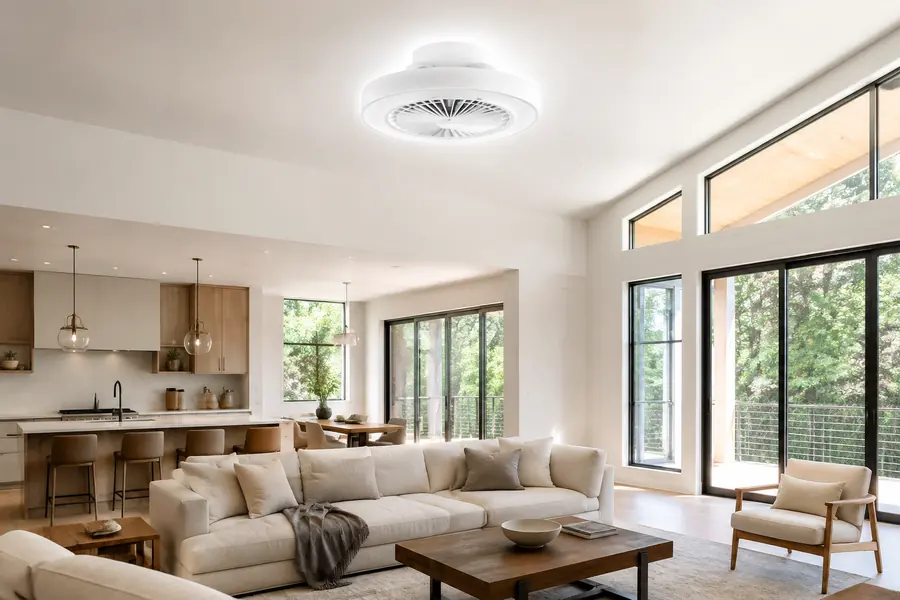
Ceiling height changes how much of the fan’s airflow reaches people. A correct blade span can still feel weak if the fan is mounted too high, or uncomfortable if the fan hangs too low over a dining table or walkway.
4-1. Why do high ceilings need more careful planning?
High ceilings create more vertical air volume. If the fan sits too close to the ceiling, air movement may stay above the occupied zone. A downrod can help bring the blades to a more useful height, but it must still look balanced in the room.
The guide to ceiling fan size for different ceiling heights explains how mounting height and blade span work together. In open spaces, that relationship matters because the fan is visible from several zones.
4-2. Can low ceilings still use open concept fans?
Yes, but the fan should usually be low-profile and visually light. A big deep fixture in a low open room can make the entire plan feel compressed, especially where the fan sits between the kitchen and living area.
If ceiling height is tight, compare options with the low ceiling fan size guide. It helps buyers judge installed depth, not just listed fan diameter.
4-3. How should sloped or beamed ceilings be handled?
Beams and slopes can limit the safe blade sweep. The fan should clear beams, lights and ceiling transitions, and the mounting hardware must suit the ceiling angle. Do not assume that a fan listed for a large room can be installed anywhere in that room.
For projects, ask the supplier for total drop, canopy dimensions, compatible downrod lengths and any slope ceiling limits before ordering samples.
5. Should One Large Fan or Several Smaller Fans Serve an Open Concept Room?
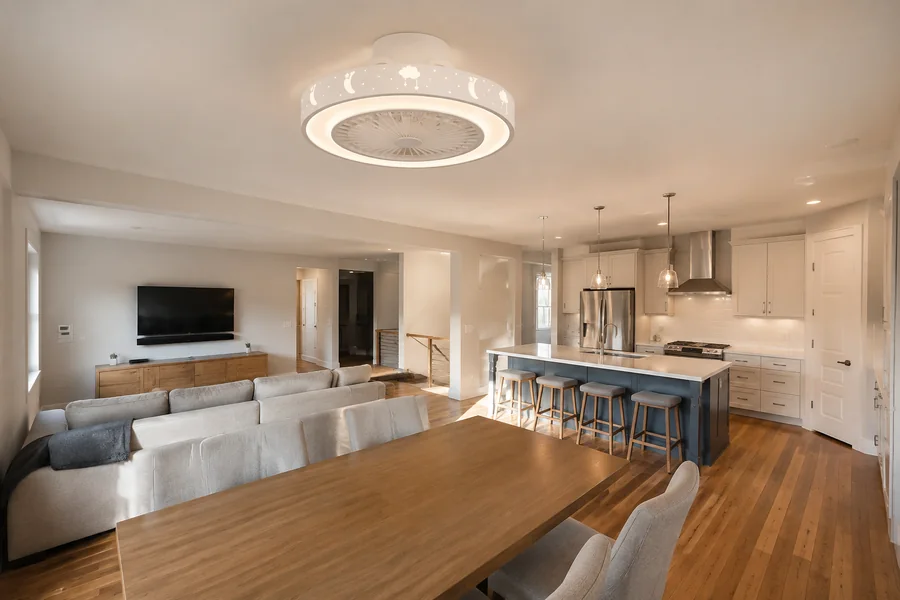
One large fan is not automatically better. Several smaller fans are not automatically better either. The answer depends on room shape, activity zones, ceiling structure and control expectations.
5-1. When is one large fan the cleaner solution?
One large fan works well when the main comfort zone is broad, open and visually central. It keeps the ceiling simple and reduces the number of controls, but it must have enough blade span and motor quality to move air comfortably at low speed.
A 60 inch gold wood fandelier ceiling fan light can be a useful reference when the room needs a larger decorative fan light rather than several smaller fixtures.
5-2. When are several smaller fans more practical?
Several smaller fans work better in long rooms, L-shaped plans or rooms where the seating zone and dining zone need different comfort levels. They can reduce dead spots and keep each fan closer to the people it serves.
The risk is visual clutter. If you use more than one fan, choose consistent finishes, similar mounting heights and separate controls so the layout feels planned instead of crowded.
5-3. How should open concept fan count be decided?
Decide fan count from zones first, then size each fan for its zone. Do not start by choosing a product and forcing the floor plan to accept it.
If the room behaves like a large commercial or hospitality space, compare it with the hotel ceiling fan project guide and restaurant ceiling fan size guide before applying ordinary home sizing rules.
6. How Much Airflow Does a Large Area Really Need?
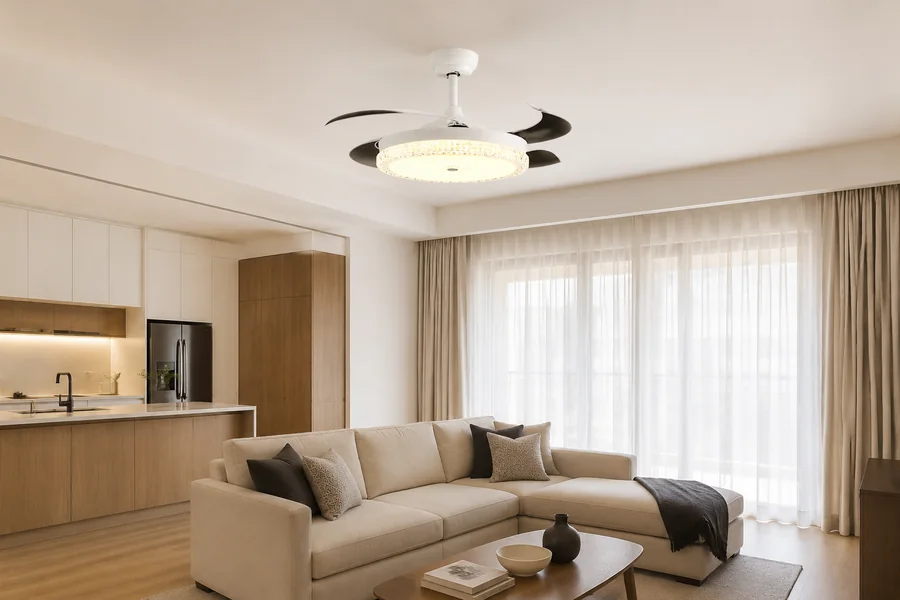
Large area airflow should feel even, not aggressive. In an open room, harsh airflow in one zone and still air in another zone usually means placement or fan count needs adjustment.
6-1. Should you choose only by CFM?
No. CFM helps compare fan output, but it does not tell you whether air reaches the right people at the right speed. The ceiling fan CFM vs size guide explains why blade diameter, motor design, speed range and installation height also matter.
A high CFM fan mounted too high or too far from the seating zone can still disappoint. A moderate fan placed correctly can feel more comfortable in daily use.
6-2. Does a bigger fan always improve airflow?
No. The ceiling fan airflow size guide shows why bigger diameter is not a universal fix. In open rooms, bigger fans can also create stronger drafts near dining tables or work areas.
Choose a larger fan when the room can use its wider air column. Choose multiple zones when one large fan would create uneven comfort.
6-3. How does thermal comfort research support fan planning?
Air movement affects how people experience warmth, which is why occupant comfort research from the Center for the Built Environment is a useful outside reference for occupant comfort and air movement research.
For product selection, this does not mean every open room needs maximum speed. It means fan planning should support comfortable perceived cooling while keeping noise and drafts under control.
Need Help Choosing the Right open concept ceiling fan?
Tell us your room size, ceiling height, airflow needs, lighting plan and order quantity. NEBOLA can help match a practical fan light solution.
Get a Quote7. How Should Fan Placement Work With Lighting and Furniture?
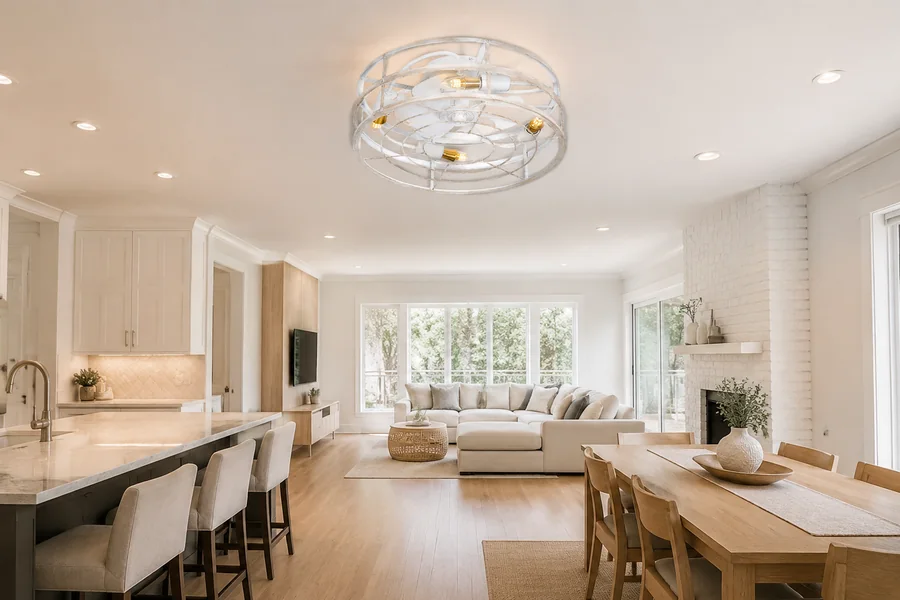
Open concept rooms often already have pendants, recessed lights, track lights or decorative fixtures. A fan should not fight the lighting plan or block sightlines between connected zones.
7-1. Where should the fan sit relative to the sofa and dining table?
Place the fan over the main comfort zone, usually the seating area or family gathering area. If the dining table has a pendant, avoid placing a fan so close that the two fixtures feel crowded or visually confused.
The living room ceiling fan size guide gives useful guidance for sofa placement, while the kitchen ceiling fan size guide explains why cooking and lighting zones need extra care.
7-2. How do cabinets and islands affect the fan?
Upper cabinets, tall appliance walls and island pendants reduce the useful fan zone. The fan should not blow directly across a cooking surface or interfere with open cabinet doors.
In many open kitchens, the best fan belongs over the living or breakfast zone, while the kitchen relies on task lighting and ventilation rather than a large central fan.
7-3. Should an open concept fan include a light?
It can, especially if the fan replaces a central ceiling light. But if the room already has layered lighting, a fan without a strong light kit may keep the ceiling cleaner.
A 54 inch black ceiling fan light with DC motor and remote can fit open living areas where integrated light and remote control are useful, but the fixture depth must still match the ceiling height.
8. Which Fan Style Fits Open Concept Interiors Best?
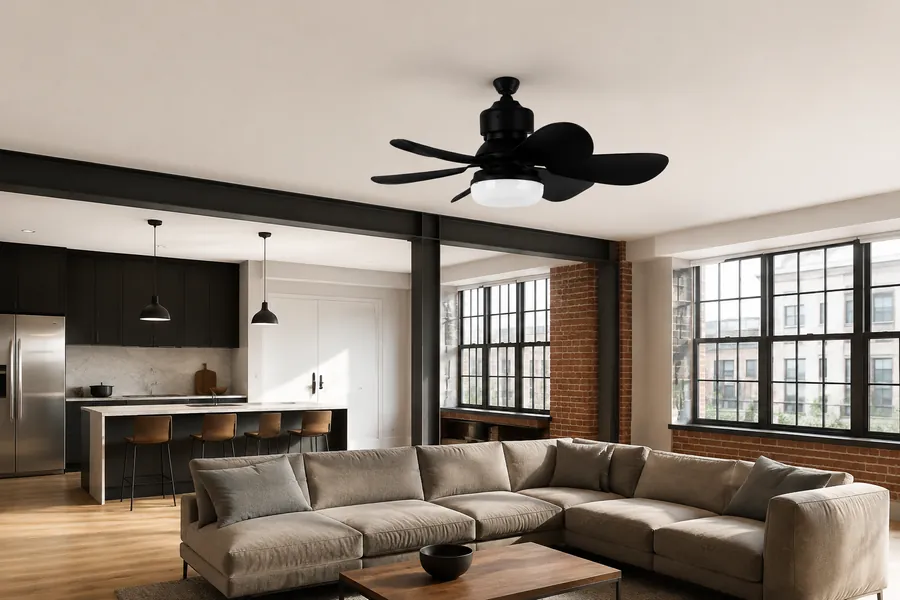
Style is not only decoration in an open room. It affects visual scale, perceived ceiling height and how well the fan coordinates with kitchen finishes, furniture and lighting.
8-1. When should you choose a visually quiet fan?
Choose a quiet visual style when the fan sits in a busy ceiling with recessed lights, beams or pendants. White or light wood finishes can reduce visual weight in low or narrow open plans.
For restrained interiors, a 52 inch wood ceiling fan without light for calm open interiors can be a useful direction when the room already has separate lighting.
8-2. When can a larger decorative fan work?
A decorative fan can work when the ceiling is high, the room has enough width and the fan aligns with the furniture style. The fan should look intentional from multiple viewpoints, not like an oversized object added later.
Warm wood, matte black, brushed metal or soft gold can all work, but the finish should connect to at least one other finish in the room.
8-3. How should apartments and compact open plans adjust style?
Compact open apartments need a lighter approach. The apartment-specific guide on apartment ceiling fan size explains why visual weight and ceiling height often matter as much as diameter.
A compact open plan may need a medium fan, but it should still feel like part of the ceiling rather than the dominant feature in the room.
9. What Buying Mistakes Make Open Concept Fans Feel Wrong?
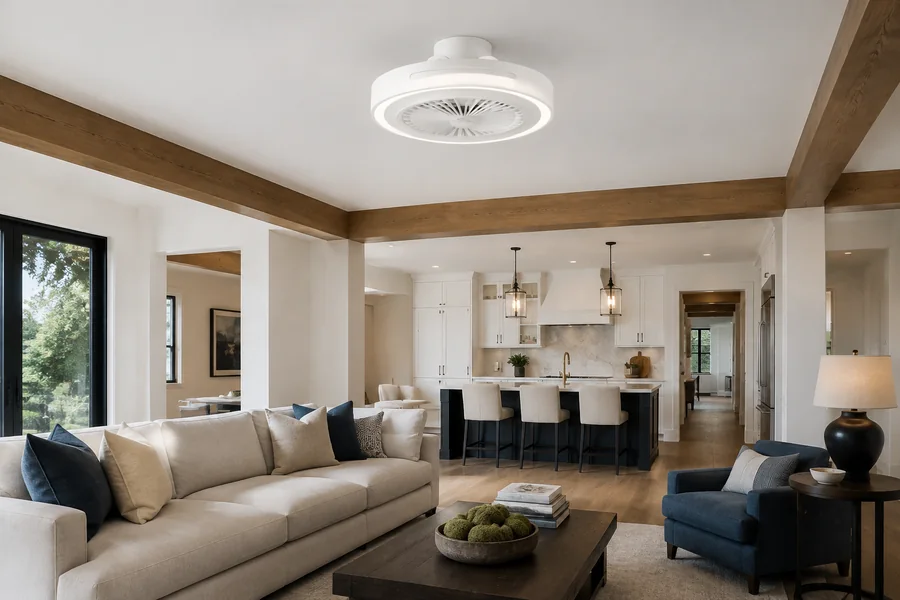
Most open concept fan mistakes come from using a normal room answer in a room that does not behave normally. A fan can be the right size on paper and still be wrong in the floor plan.
9-1. Is choosing by square footage alone a mistake?
Yes. Square footage ignores zones, ceiling height, furniture and lighting. The common ceiling fan buying mistakes article is a good checklist before ordering.
In an open plan, always ask what the fan is meant to improve. If the answer is the sofa zone, size for that zone. If the answer is the whole room, consider larger fan span or multiple fans.
9-2. Is copying bedroom sizing a mistake?
Sometimes. Bedroom sizing can help with comfort over a bed, but open rooms have more sightlines and connected activity areas. Compare bedroom guidance such as the master bedroom ceiling fan size guide only after adjusting for the open layout.
Likewise, very small room logic from the small room ceiling fan guide may be too conservative for a connected living and dining area.
9-3. Should importers over-focus on one open-space size?
No. Importers should build a balanced range because open rooms vary by country, ceiling height and interior style. The ceiling fan importer size range guide and popular ceiling fan sizes guide help connect SKU planning with real demand.
For NEBOLA-style project planning, the better range usually includes compact, medium and wider DC motor fan lights so buyers can match each open plan instead of forcing one size into every room.
10. How Can You Build a Final Open Space Fan Size Checklist?
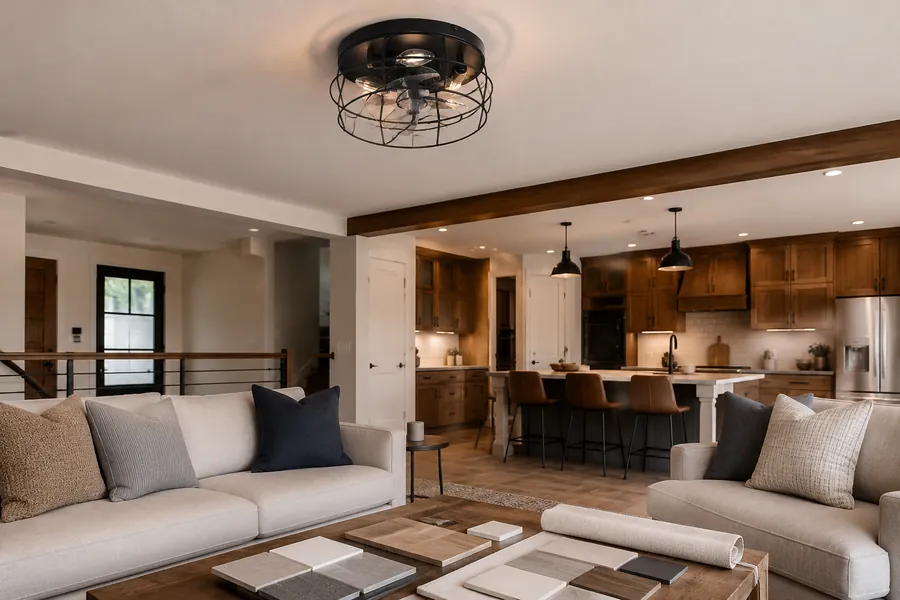
Use a final checklist before choosing an open concept ceiling fan. It keeps the decision practical and prevents a beautiful room from ending up with weak airflow or a crowded ceiling.
10-1. What should homeowners check first?
- Measure the full room and the main comfort zone.
- Check ceiling height and total fixture drop.
- Mark pendants, beams, cabinets and recessed lights.
- Decide whether one fan or multiple zones make sense.
- Compare blade span with airflow and noise.
- Choose a finish that works from several viewpoints.
If the open space includes outdoor or semi-outdoor zones, compare with the outdoor ceiling fan size guide instead of using indoor assumptions.
10-2. What should project buyers check before ordering?
Project buyers should ask for specifications, mounting options, motor data, lighting details, packaging, spare parts and sample testing. Open concept projects often need consistency across several room types, so product range planning matters.
The ceiling fan size trends 2026 guide helps connect open-plan demand with smart controls, high airflow expectations and smaller connected homes.
10-3. How should the final answer be made?
Choose the fan size that improves the real comfort zone at low or medium speed while staying visually calm. If one fan cannot cover the layout evenly, move from a single-size question to a zone-planning question.
A good open concept fan decision feels quiet in two ways: the motor is quiet, and the ceiling composition looks settled.
Before the final purchase decision, compare the plan again with the NEBOLA ceiling fan size guide. It keeps room size, ceiling height, airflow demand, product style and installation limits connected instead of treating fan diameter as a single isolated number.
Need Help Choosing the Right open concept ceiling fan?
Tell us your room size, ceiling height, airflow needs, lighting plan and order quantity. NEBOLA can help match a practical fan light solution.
Get a QuoteFAQ About Open Concept Ceiling Fan Size
Is one ceiling fan enough for an open concept room?
Yes, one ceiling fan can be enough when the main comfort zone is compact and the fan is placed correctly. It may not be enough for a long, wide or divided open layout where the sofa, dining table and kitchen need different airflow levels.
Should an open concept ceiling fan be larger than a bedroom fan?
Yes, it often should be larger because the active area is wider and air can spread into connected zones. However, ceiling height, furniture, lighting and visual scale still decide whether a larger fan is comfortable.
Can a 52 inch fan work in an open concept space?
Yes, a 52 inch fan can work in a modest open living zone or condo layout. It may be too small for a large great room, high ceiling loft or open space where one fan must cover several activity zones.
Is CFM more important than fan diameter in open spaces?
No, CFM is not more important by itself. It should be read together with fan diameter, motor quality, blade shape, speed range and mounting height so the fan supports real comfort rather than only a specification number.
Should open concept rooms use fans with lights?
Yes, fans with lights can work well when the fan replaces a central fixture or supports general room lighting. If the room already has pendants and recessed lights, a fan without a dominant light kit may look cleaner.
Do importers need several sizes for open concept ceiling fans?
Yes, importers usually need several sizes because open concept spaces vary widely by market and building type. A balanced range should include medium, large and larger decorative or high-airflow options.