

If you are choosing between a farmhouse ceiling fan and a rustic ceiling fan, start with the room feeling you want, then check size, height, airflow, and lighting. Farmhouse usually gives you a lighter, cleaner look. Rustic usually gives you more grain, contrast, and visual weight. Both can work, but the better choice depends on your living room rather than the style label.
Before you compare finishes, use the living-room ceiling fan collection to understand the available product direction. We will compare the two styles by room scale, wood tone, blade shape, light design, noise, and installation so you can make a confident choice without turning the fan into a random decoration.
| Room condition | Farmhouse direction | Rustic direction |
|---|---|---|
| 8-foot ceiling | Light finish, low profile, clean body | Slim body, restrained dark tone |
| Tall or vaulted room | Light wood with a longer downrod | Large wood span with strong material presence |
| Existing room palette | White, oak, linen, soft metal | Walnut, bronze, stone, leather |
| Lighting plan | Soft diffuser or no-light fan | Warm controlled light or layered fixtures |
How Do Farmhouse and Rustic Ceiling Fans Really Differ?
Comfort is part of the style decision, not a separate afterthought. If you want a neutral reference for how indoor comfort is discussed, you can review ASHRAE comfort guidance; we should still judge the fan in your own room, at your own sitting height, and at the speeds you will actually use.
What makes a farmhouse ceiling fan feel lighter?
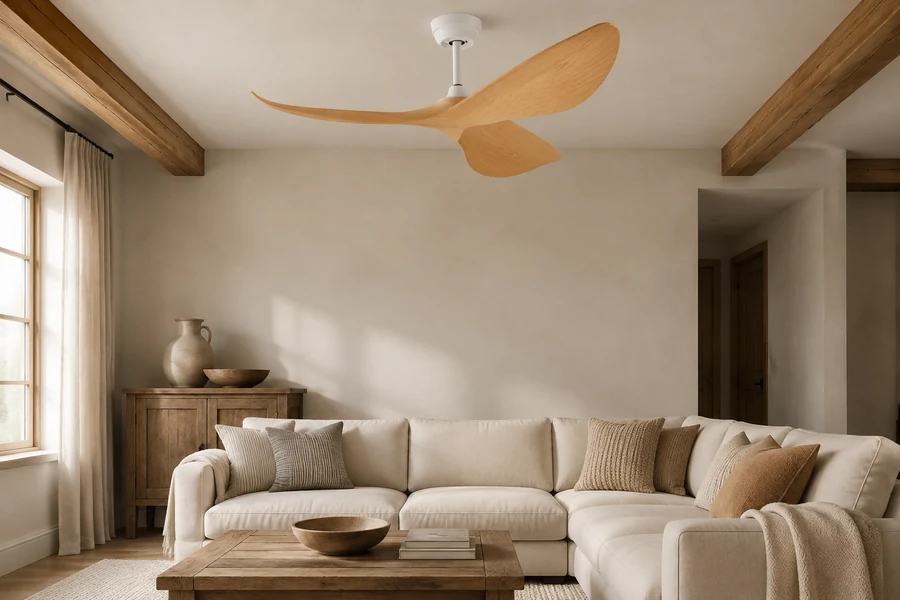
When you choose a farmhouse ceiling fan, look for a calm combination of pale wood, white, soft gray, or muted metal. The shape usually stays practical and familiar, so the fan supports the room instead of becoming the only thing you notice.
You can make the farmhouse direction feel warmer with linen, painted cabinetry, or natural flooring, but the fan should still keep a clean silhouette. A little texture helps; too much distressing, dark hardware, or decorative trim can push the room into a heavier rustic mood.
When you compare this point in your own living room, stand where you normally sit and look up at the fan position. That view tells you more than a styled product photograph because you can see whether the finish, shape, and scale support the sofa, the lighting layers, and the room’s visual weight at the same time. We should keep the practical check simple: measure first, compare the finish with the materials already in the room, and then confirm airflow and control details before we commit to the style.
What makes a rustic ceiling fan feel more substantial?
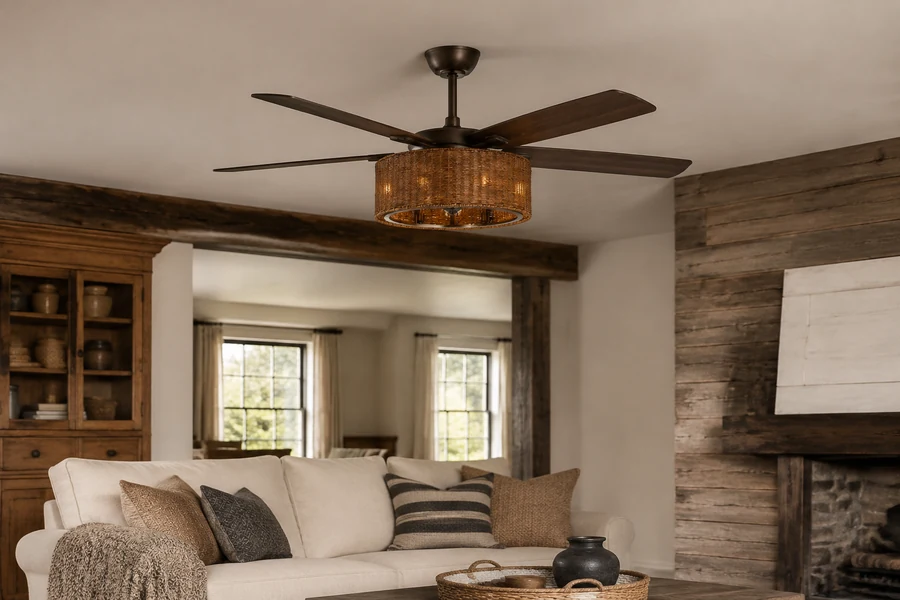
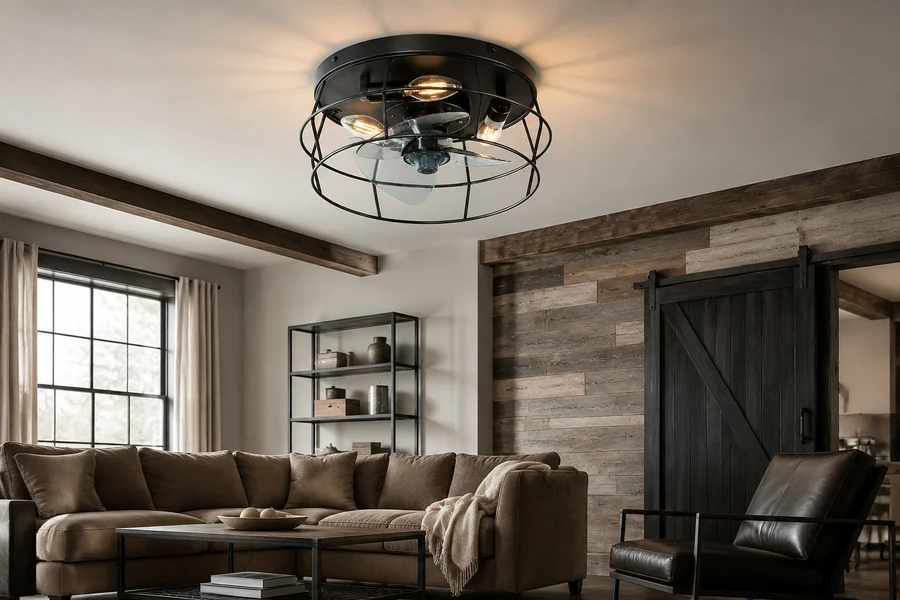
A rustic ceiling fan usually brings stronger material presence through darker wood, visible grain, aged metal, or a wider visual center. When you use this direction, the fan can anchor a large living room, especially when the room already has beams, stone, leather, or warm timber.
The trade-off is visual weight. If your ceiling is low or your furniture is delicate, a dark rustic fan may make the room feel crowded. We should treat the finish as part of the room’s balance, not as a label that automatically makes the space feel better.
When you compare this point in your own living room, stand where you normally sit and look up at the fan position. That view tells you more than a styled product photograph because you can see whether the finish, shape, and scale support the sofa, the lighting layers, and the room’s visual weight at the same time. We should keep the practical check simple: measure first, compare the finish with the materials already in the room, and then confirm airflow and control details before we commit to the style.
Which Living Room Needs Farmhouse Style and Which Needs Rustic Style?
When does farmhouse style fit your room better?
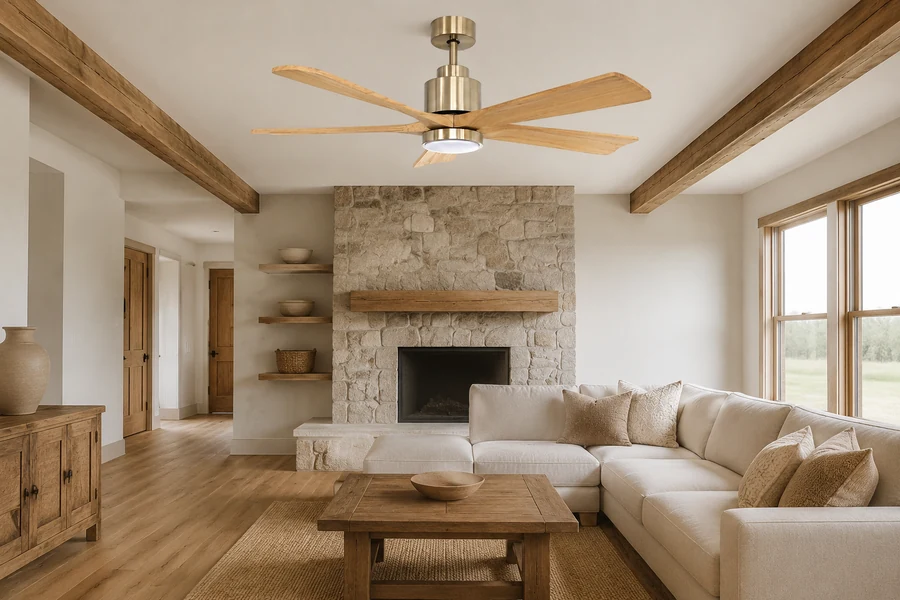
Farmhouse style usually works better when you want your living room to feel bright, relaxed, and easy to update. A pale fan can sit comfortably with white walls, soft textiles, natural oak, painted trim, and the lighter side of country design.
You can also use this direction in an open-plan room where the fan needs to connect several zones without making the ceiling feel busy. In that setting, a simple wood blade ceiling fan or light-colored fan can repeat warmth without competing with the kitchen or dining area.
When you compare this point in your own living room, stand where you normally sit and look up at the fan position. That view tells you more than a styled product photograph because you can see whether the finish, shape, and scale support the sofa, the lighting layers, and the room’s visual weight at the same time. We should keep the practical check simple: measure first, compare the finish with the materials already in the room, and then confirm airflow and control details before we commit to the style.
When does rustic style fit your room better?
Rustic style usually fits better when your room already has a strong material story. If you have a stone fireplace, exposed beams, darker flooring, or leather seating, a more substantial rustic ceiling fan can make those details feel connected.
You should be careful when the room is already visually full. In a compact living room, too much dark wood and aged metal can reduce the feeling of openness. We can keep the rustic character through blade tone while choosing a cleaner body and lighter light kit.
When you compare this point in your own living room, stand where you normally sit and look up at the fan position. That view tells you more than a styled product photograph because you can see whether the finish, shape, and scale support the sofa, the lighting layers, and the room’s visual weight at the same time. We should keep the practical check simple: measure first, compare the finish with the materials already in the room, and then confirm airflow and control details before we commit to the style.
How Should You Compare Farmhouse and Rustic Fan Finishes?
How do wood tones change the room?
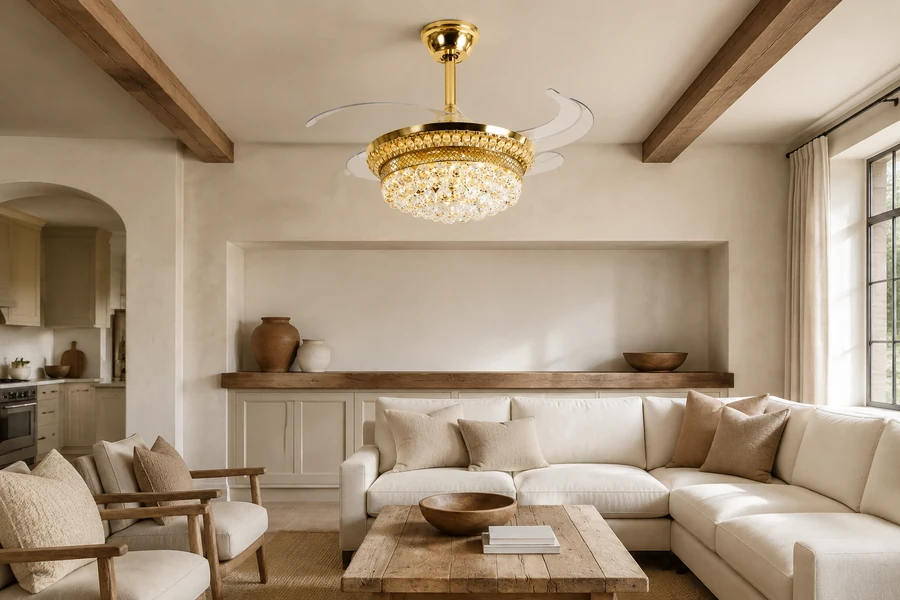
Wood tone is often the fastest way to separate the two styles. Light oak, whitewashed wood, and soft natural grain usually move the fan toward farmhouse. Deep walnut, distressed brown, or more dramatic grain usually moves it toward rustic.
You do not need to match the floor exactly. Instead, compare warmth and contrast from the main seating position. If the fan is the only dark object overhead, it may feel disconnected; if it repeats a nearby table, beam, or cabinet tone, the choice will feel more intentional.
When you compare this point in your own living room, stand where you normally sit and look up at the fan position. That view tells you more than a styled product photograph because you can see whether the finish, shape, and scale support the sofa, the lighting layers, and the room’s visual weight at the same time. We should keep the practical check simple: measure first, compare the finish with the materials already in the room, and then confirm airflow and control details before we commit to the style.
How do metal finishes change the fan’s character?
Matte white and soft brushed metal can keep a farmhouse fan quiet and approachable. Black metal, bronze, or aged finishes can make a rustic ceiling fan feel more grounded, especially when the room has darker hardware elsewhere.
We should also check the light kit because the metal around the diffuser is visible from below. A rustic blade paired with a very glossy chrome ring can feel confused. The fan should tell one material story from the canopy to the lowest point.
When you compare this point in your own living room, stand where you normally sit and look up at the fan position. That view tells you more than a styled product photograph because you can see whether the finish, shape, and scale support the sofa, the lighting layers, and the room’s visual weight at the same time. We should keep the practical check simple: measure first, compare the finish with the materials already in the room, and then confirm airflow and control details before we commit to the style.
Does a Wood Blade Ceiling Fan Need to Be the Room’s Main Feature?
When should the wood blades stay quiet?
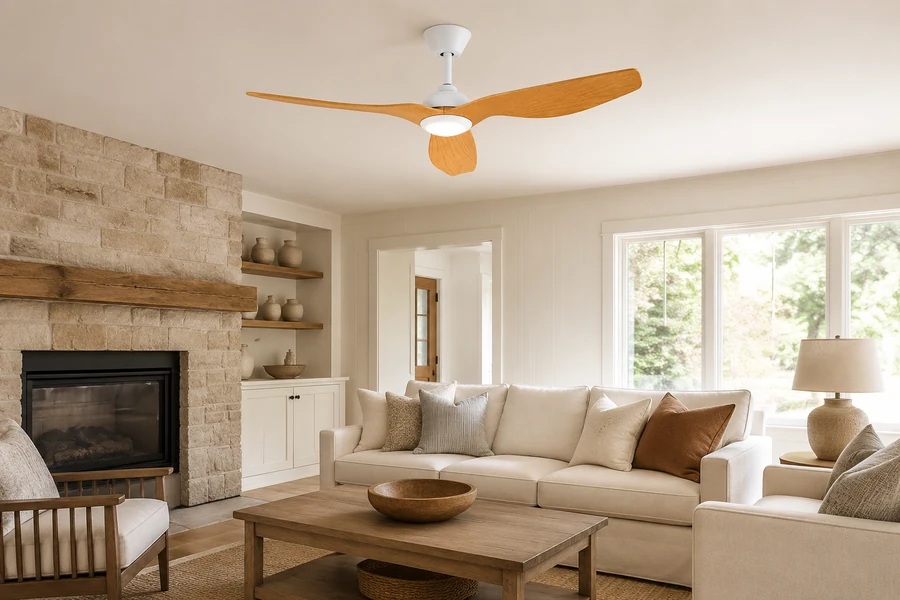
If your living room already has patterned upholstery, a large fireplace, or strong artwork, you may want the wood blades to stay quiet. A simple profile and controlled grain can add warmth without creating another focal point above the room.
This approach works especially well when you want the fan to run for long periods without constantly drawing your eye. The room can still feel warm and farmhouse-inspired, but the ceiling remains visually calm.
When you compare this point in your own living room, stand where you normally sit and look up at the fan position. That view tells you more than a styled product photograph because you can see whether the finish, shape, and scale support the sofa, the lighting layers, and the room’s visual weight at the same time. We should keep the practical check simple: measure first, compare the finish with the materials already in the room, and then confirm airflow and control details before we commit to the style.
When can the fan become a stronger focal point?
You can let the fan become a stronger feature when the ceiling feels empty and the rest of the room uses restrained shapes. A wider wood blade ceiling fan can then bring proportion and warmth to the space, provided the blade span serves the seating area correctly.
The strongest focal-point choices still need practical restraint. We should confirm airflow, low-speed noise, light glare, and mounting height before allowing the finish to lead the decision. A beautiful fan that hangs too low or moves too little air will not feel successful in daily use.
When you compare this point in your own living room, stand where you normally sit and look up at the fan position. That view tells you more than a styled product photograph because you can see whether the finish, shape, and scale support the sofa, the lighting layers, and the room’s visual weight at the same time. We should keep the practical check simple: measure first, compare the finish with the materials already in the room, and then confirm airflow and control details before we commit to the style.
How Do Room Size and Ceiling Height Affect the Style Choice?
What should you choose for a standard-height living room?
For an 8-foot ceiling, you should start with the full fixture height and mounting style before comparing finishes. This 8-foot ceiling guide explains why a low profile or flush mount can protect headroom, while a compact wood blade fan can still bring warmth.
Farmhouse finishes often feel easier in a standard-height room because pale colors keep the ceiling open. Rustic finishes can also work, but you may need a slimmer body or lighter blade tone so the room does not feel visually compressed.
When you compare this point in your own living room, stand where you normally sit and look up at the fan position. That view tells you more than a styled product photograph because you can see whether the finish, shape, and scale support the sofa, the lighting layers, and the room’s visual weight at the same time. We should keep the practical check simple: measure first, compare the finish with the materials already in the room, and then confirm airflow and control details before we commit to the style.
What should you choose for a high or vaulted ceiling?
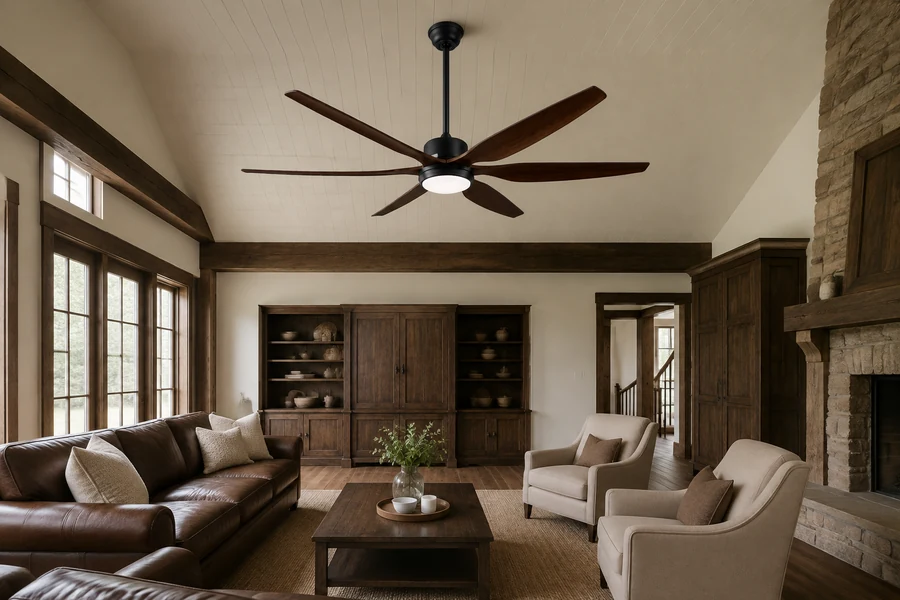
If your living room is tall, a downrod changes both airflow and appearance. Before you choose a large rustic fan, review this high-ceiling sizing guide and compare the fan’s blade span with the occupied seating zone.
You should also check the downrod guide because a fan that sits near the ceiling peak may look attractive but do very little for comfort below. A farmhouse fan can suit a vaulted room too, especially when the finish keeps the large volume feeling light.
When you compare this point in your own living room, stand where you normally sit and look up at the fan position. That view tells you more than a styled product photograph because you can see whether the finish, shape, and scale support the sofa, the lighting layers, and the room’s visual weight at the same time. We should keep the practical check simple: measure first, compare the finish with the materials already in the room, and then confirm airflow and control details before we commit to the style.
What Blade Span and Pitch Should You Check Before Choosing?
How do you choose blade span for your living room?
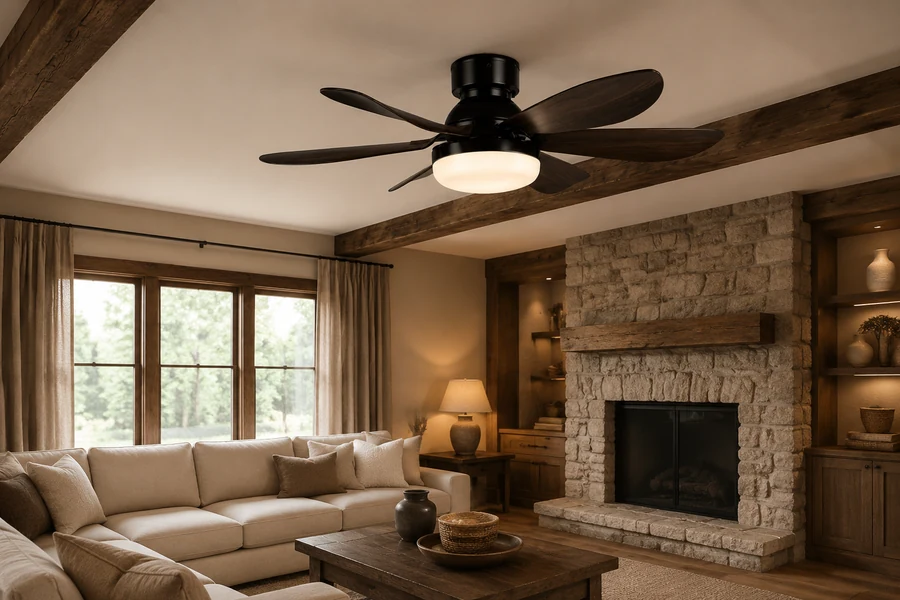
Start with the width of the main seating zone, not only the entire open-plan footprint. A 52-inch wood blade ceiling fan can work well in many medium living rooms, while a larger room may need a wider fan or more than one airflow zone.
If you are unsure about the size jump, compare this living-room size comparison with your own layout. The goal is to keep the fan visually balanced while still moving air where you sit, read, watch TV, or gather.
When you compare this point in your own living room, stand where you normally sit and look up at the fan position. That view tells you more than a styled product photograph because you can see whether the finish, shape, and scale support the sofa, the lighting layers, and the room’s visual weight at the same time. We should keep the practical check simple: measure first, compare the finish with the materials already in the room, and then confirm airflow and control details before we commit to the style.
Why does blade pitch matter for a style-led choice?
Blade pitch affects how the fan moves air, so you should not choose a wood blade ceiling fan by grain and color alone. This blade-pitch guide helps you see why two similar-looking fans can feel different when running.
We should balance pitch with motor strength, speed control, and room height. A strongly pitched blade may feel more forceful, while a shallow pitch may suit a quieter room. The right choice depends on how much air movement you want at your normal sitting height.
When you compare this point in your own living room, stand where you normally sit and look up at the fan position. That view tells you more than a styled product photograph because you can see whether the finish, shape, and scale support the sofa, the lighting layers, and the room’s visual weight at the same time. We should keep the practical check simple: measure first, compare the finish with the materials already in the room, and then confirm airflow and control details before we commit to the style.
Should Your Farmhouse or Rustic Ceiling Fan Include a Light?
When does a fan light make more sense?
A fan light makes sense when one central ceiling fixture needs to provide both airflow and general illumination. You can compare the practical trade-offs in this fan-light comparison, then decide whether the light should be the room’s main layer or a supporting layer.
For a farmhouse room, a soft diffuser and warm-neutral light often protect the relaxed mood. For a rustic room, a more substantial shade or darker trim may fit, but the light still needs to avoid glare across the seating area.
When you compare this point in your own living room, stand where you normally sit and look up at the fan position. That view tells you more than a styled product photograph because you can see whether the finish, shape, and scale support the sofa, the lighting layers, and the room’s visual weight at the same time. We should keep the practical check simple: measure first, compare the finish with the materials already in the room, and then confirm airflow and control details before we commit to the style.
When is a fan without light the cleaner choice?
A fan without light is often cleaner when you already have recessed lights, a pendant, or several floor and table lamps. This lets the fan focus on airflow and gives you more control over the room’s lighting composition.
If you choose this route, you should still plan the visual relationship between the fan and nearby fixtures. A plain fan can look intentional when the lighting is layered; it can look unfinished when the ceiling depends on it for the only source of brightness.
When you compare this point in your own living room, stand where you normally sit and look up at the fan position. That view tells you more than a styled product photograph because you can see whether the finish, shape, and scale support the sofa, the lighting layers, and the room’s visual weight at the same time. We should keep the practical check simple: measure first, compare the finish with the materials already in the room, and then confirm airflow and control details before we commit to the style.
How Can You Keep a Farmhouse or Rustic Fan Comfortable Every Day?
How much attention should you give noise?
Style does not matter much if the motor interrupts conversation or television. Use this noise guide to compare low-speed sound, motor behavior, blade balance, and the room’s normal acoustic conditions.
We should also remember that a large open room can make mechanical noise travel farther. A stable DC motor, smooth speed changes, and correct installation can make a rustic or farmhouse fan feel much more refined than the finish alone suggests.
When you compare this point in your own living room, stand where you normally sit and look up at the fan position. That view tells you more than a styled product photograph because you can see whether the finish, shape, and scale support the sofa, the lighting layers, and the room’s visual weight at the same time. We should keep the practical check simple: measure first, compare the finish with the materials already in the room, and then confirm airflow and control details before we commit to the style.
How should you plan the light output and color?
If your fan includes an LED light, compare lumen output, dimming, diffuser comfort, and color temperature rather than wattage alone. This LED lighting guide and the color-temperature guide can help you avoid a light that feels too cold or too weak.
Your room’s wall color, flooring, daylight, and lamps all affect the result. We should judge the fan light in the evening as well as during the day because the wrong output can make a warm farmhouse room feel flat or make a rustic room feel harsh.
When you compare this point in your own living room, stand where you normally sit and look up at the fan position. That view tells you more than a styled product photograph because you can see whether the finish, shape, and scale support the sofa, the lighting layers, and the room’s visual weight at the same time. We should keep the practical check simple: measure first, compare the finish with the materials already in the room, and then confirm airflow and control details before we commit to the style.
Which NEBOLA Product Directions Match Farmhouse and Rustic Rooms?
When does a farmhouse product direction work well?
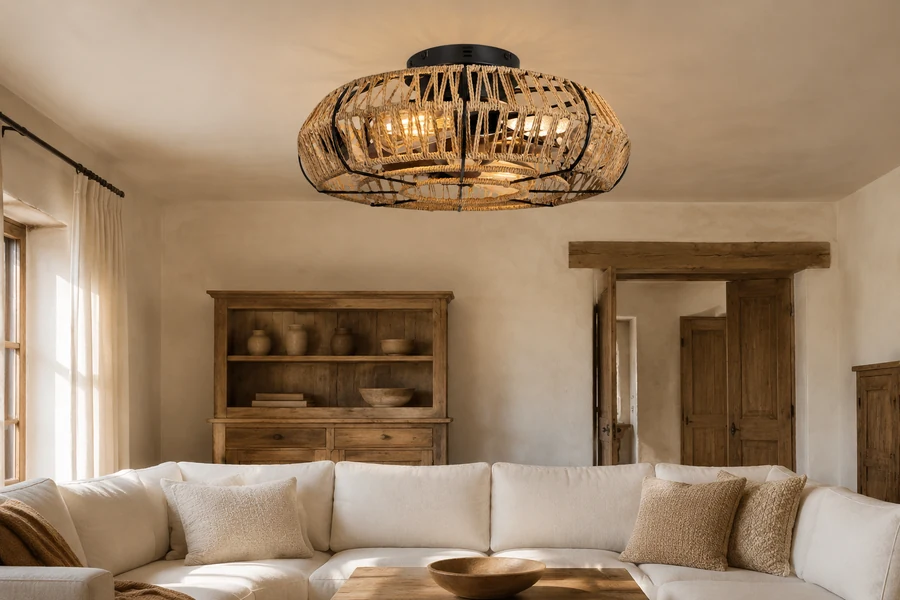
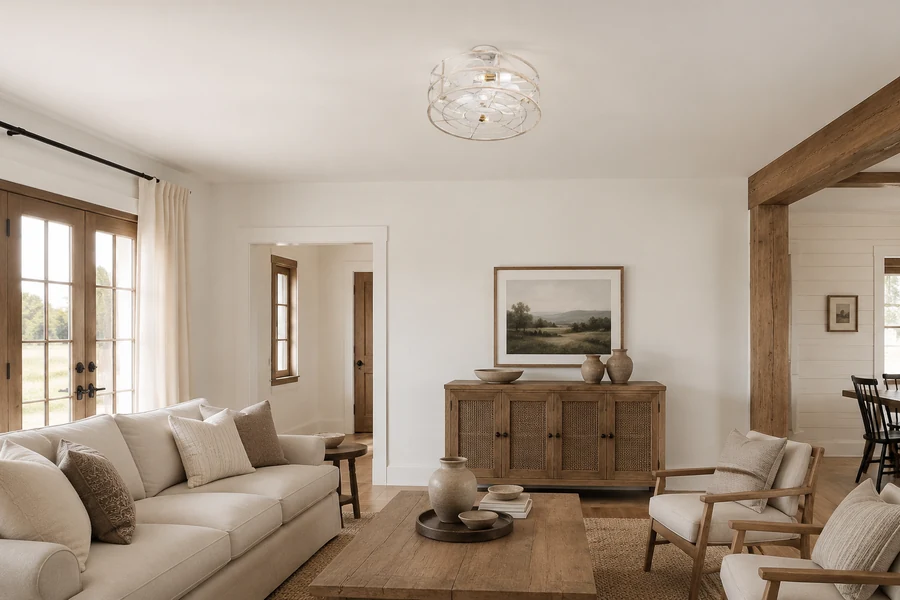
If you want a lighter, relaxed ceiling, you can start with the farmhouse fan option. Its rattan and flush-mount direction can suit a room where you want texture without a heavy silhouette.
You should still confirm the exact size, mounting depth, controls, and light configuration for your project. A farmhouse finish works best when the product also fits your ceiling and the way you use the room every day.
When you compare this point in your own living room, stand where you normally sit and look up at the fan position. That view tells you more than a styled product photograph because you can see whether the finish, shape, and scale support the sofa, the lighting layers, and the room’s visual weight at the same time. We should keep the practical check simple: measure first, compare the finish with the materials already in the room, and then confirm airflow and control details before we commit to the style.
When does a larger wood direction work better?
For a medium living room that needs a stronger natural material signal, you can review the 52-inch wood fan. The no-light format gives you more freedom when lamps or recessed lighting already carry the room.
If you want a more flexible material conversation, the rattan fan option can bring texture without relying on heavy dark wood. We should compare blade span, motor performance, and finish samples before choosing by appearance alone.
When you compare this point in your own living room, stand where you normally sit and look up at the fan position. That view tells you more than a styled product photograph because you can see whether the finish, shape, and scale support the sofa, the lighting layers, and the room’s visual weight at the same time. We should keep the practical check simple: measure first, compare the finish with the materials already in the room, and then confirm airflow and control details before we commit to the style.
How Can You Make the Farmhouse or Rustic Choice With Confidence?
What should you decide first?
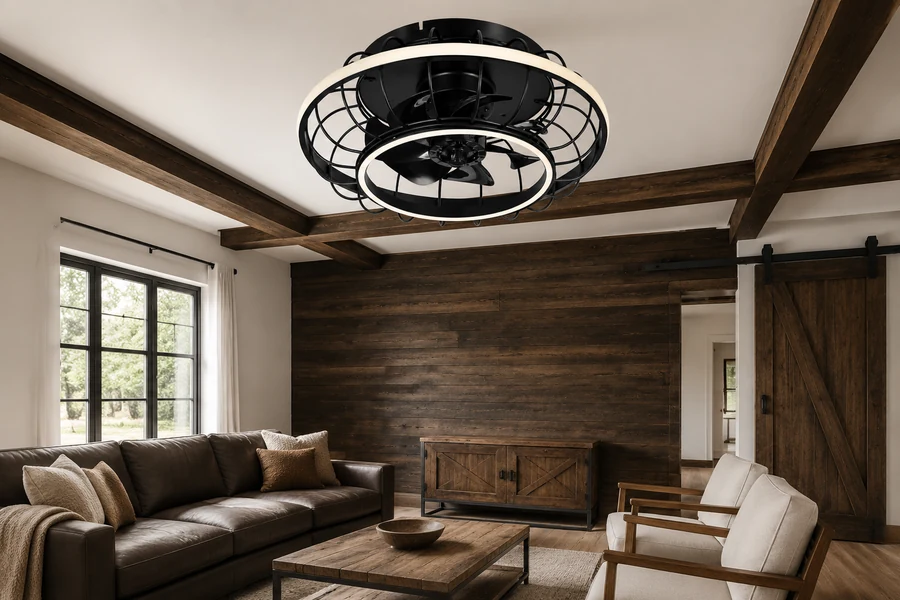
Start with the feeling you want when you sit in the room: bright and relaxed, or grounded and substantial. Then check ceiling height, seating-zone size, existing wood tones, lighting layers, and the amount of visual weight your room can handle.
You can use the broader living-room fan collection as a starting point, but do not let the category label make the decision for you. We should choose the room outcome first and the product details second.
When you compare this point in your own living room, stand where you normally sit and look up at the fan position. That view tells you more than a styled product photograph because you can see whether the finish, shape, and scale support the sofa, the lighting layers, and the room’s visual weight at the same time. We should keep the practical check simple: measure first, compare the finish with the materials already in the room, and then confirm airflow and control details before we commit to the style.
What should you check before you place the order?
Before you place the order, confirm blade span, total drop, motor type, speed range, light output, color temperature, control method, certification direction, spare parts, and installation support. These details protect the comfort you expected from the style choice.
We should also ask how the fan will look when it is off. Farmhouse and rustic rooms both benefit from material honesty, but the finish should feel consistent from the blades to the canopy. The best choice gives you warmth, airflow, and a ceiling that still feels balanced months later.
For related planning, you can also review 9-foot ceiling guide, sloped-ceiling guide, cathedral-ceiling setup, lumen guide, fandelier comparison, modern style guide, style difference guide, premium-fan guide before you finalize the room plan.
When you compare this point in your own living room, stand where you normally sit and look up at the fan position. That view tells you more than a styled product photograph because you can see whether the finish, shape, and scale support the sofa, the lighting layers, and the room’s visual weight at the same time. We should keep the practical check simple: measure first, compare the finish with the materials already in the room, and then confirm airflow and control details before we commit to the style.
If you are looking for a better ceiling fan light solution for your project, NEBOLA can provide one-stop support from product selection to customization. We focus on ceiling fan light R&D and manufacturing, helping brands, importers, and distributors find products that better match real space needs.
NEBOLA Ceiling Fan Light Support
Ready to Choose a Farmhouse or Rustic Ceiling Fan?
Share your room size, ceiling height, style direction, and lighting needs with us. We can help you compare practical fan light configurations.
FAQ
Is a farmhouse ceiling fan the same as a rustic ceiling fan?
No, farmhouse style usually feels lighter, cleaner, and more connected to painted wood or simple rural materials, while rustic style often uses stronger grain, darker finishes, and a more rugged visual weight. You can blend the two, but you should decide which feeling your room needs first.
Can a wood blade ceiling fan work in a modern living room?
Yes, a wood blade ceiling fan can work in a modern living room when the grain is restrained, the blade shape is clean, and the fan size matches the seating zone. You should avoid mixing a very traditional cage or ornate motor body with an otherwise minimal room.
Does a farmhouse fan always need a light?
No, a farmhouse fan does not always need a light. You can choose a fan without light when your room already has recessed lighting, pendants, or lamps, but you should still check whether the fan body and blade finish fit the existing fixtures.
Is a rustic ceiling fan better for a large living room?
No, rustic style is not automatically better for a large living room. You still need the right blade span, ceiling height, airflow, and visual scale. A large room can use a rustic fan, but a small fan with a heavy finish may look undersized and feel ineffective.
Can I use a flush mount farmhouse fan on an 8-foot ceiling?
Yes, you can use a flush mount farmhouse fan on an 8-foot ceiling when the total drop and blade clearance meet the installation requirements. You should check the full fixture height and not judge the choice only from a product photo.
Should wood fan blades match my furniture exactly?
No, your wood fan blades do not need to match your furniture exactly. A close relationship in warmth, grain direction, or finish is usually enough. Exact matching can make the room feel overly coordinated, while a controlled contrast can feel more natural.