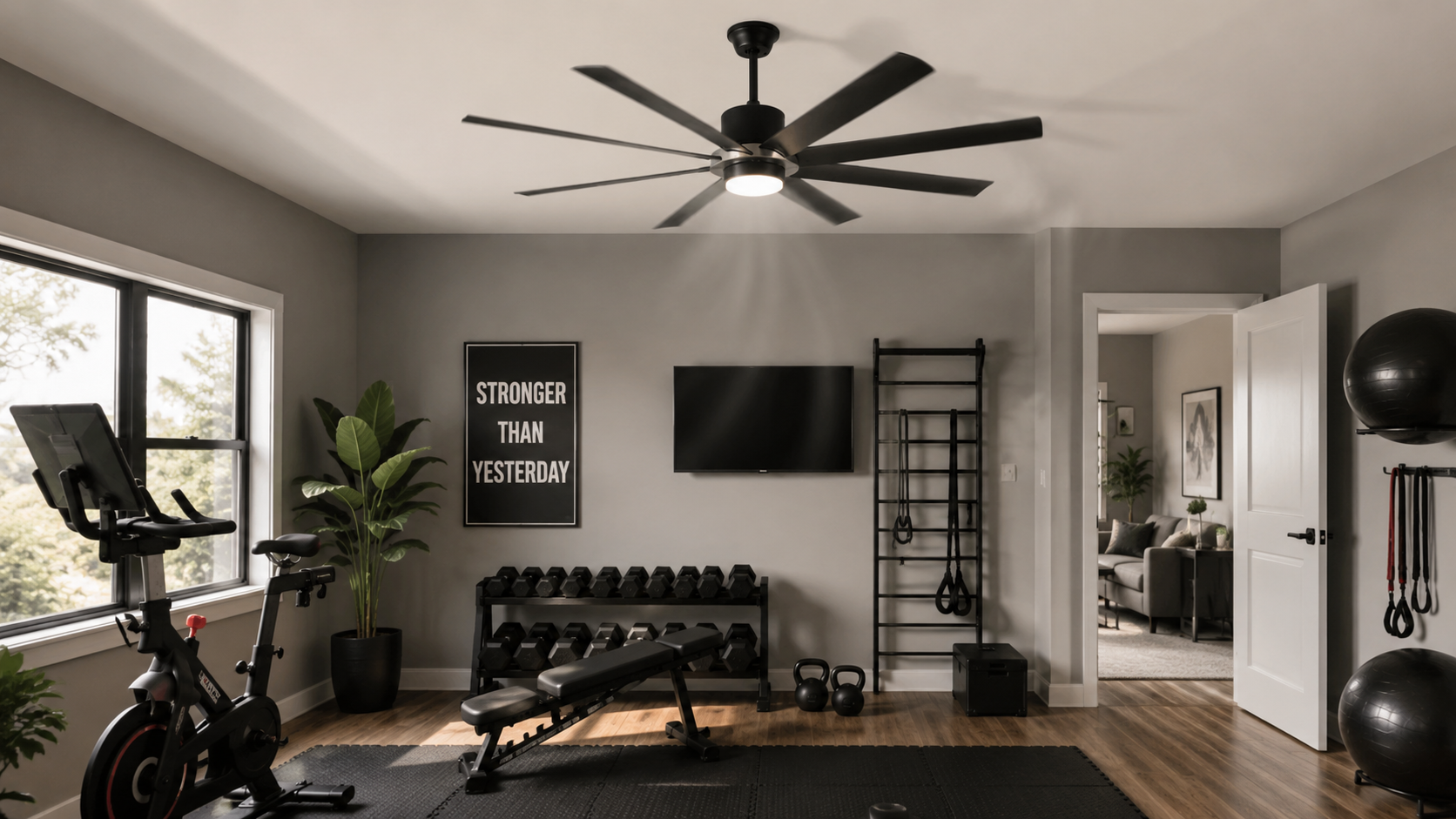


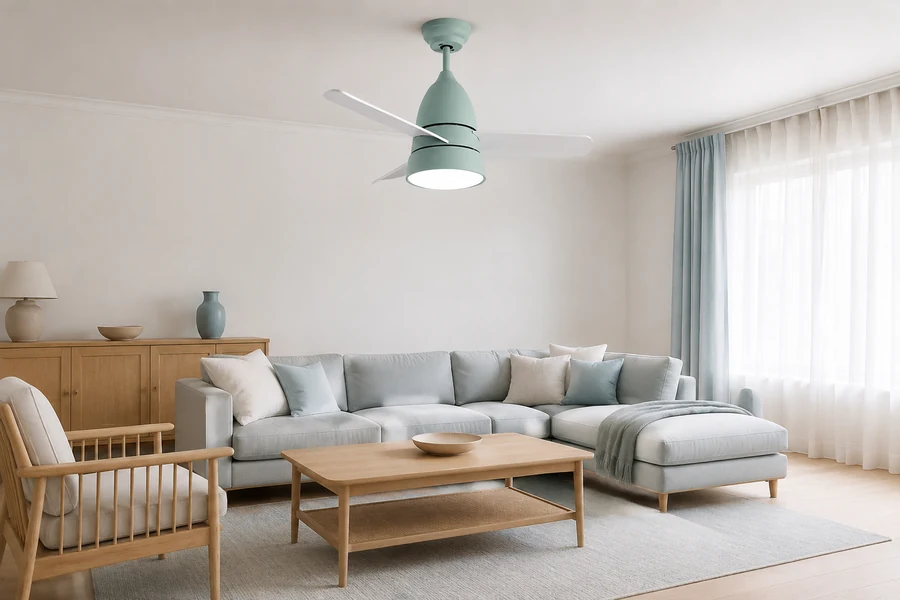
To choose between a Scandinavian ceiling fan, a mid century modern ceiling fan, and a coastal ceiling fan, start with the feeling your home needs. Scandinavian style keeps the ceiling calm and practical. Mid-century brings stronger shape and warm material contrast. Coastal style adds relaxed texture and lightness. None is automatically better; the right direction depends on your room, ceiling, and existing finishes.
Use the living-room ceiling fan collection as a product starting point, then compare proportion, blade shape, light quality, mounting height, airflow, and noise. We will make the style differences concrete so you can choose a fan that feels connected to your home instead of simply matching a trend word.
| Style | Visual language | Best material direction | Watch for |
|---|---|---|---|
| Scandinavian | Light, calm, restrained | White, pale wood, soft gray | Too much decoration or glare |
| Mid-century | Structured, warm, shaped | Walnut, brass, controlled metal | Overly nostalgic details |
| Coastal | Relaxed, airy, textured | Rattan, light wood, matte white | Literal nautical styling |
How Do Scandinavian, Mid-Century, and Coastal Ceiling Fans Differ?
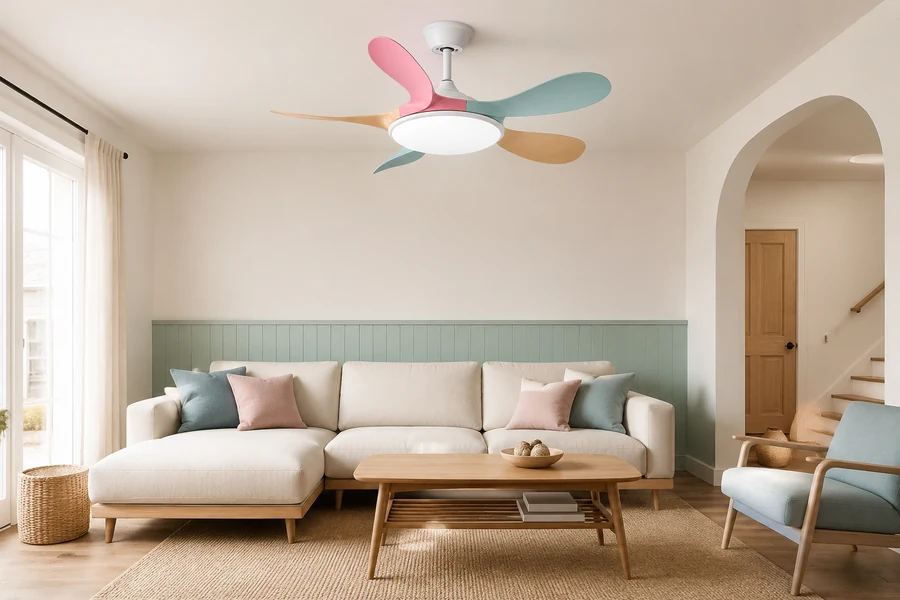
When you compare historical style references with your own home, you can use Met mid-century design background as background for mid-century design language, then make the final choice from your room’s proportions, materials, lighting, and daily comfort.
What makes Scandinavian fan design feel calm?
A Scandinavian ceiling fan usually keeps the shape simple, the finish light, and the visual weight low. When you bring this direction into your home, the fan should support daylight, practical storage, natural materials, and an uncluttered ceiling.
The important point is not that every surface must be white. You can use pale wood or soft gray, but the product needs clean edges and a quiet silhouette. We should avoid adding decoration just because the room feels simple.
For your home, the useful test is whether this choice still feels natural when the room is being used normally, not only when everything is perfectly styled. Look at the fan from the sofa, the dining table, and the main entrance, then ask whether the shape, material, and light make the room feel calmer, warmer, or more open. We can change small decorative details later, but the fan’s proportion, mounting height, blade movement, and light comfort will stay visible every day.
What makes mid-century modern fan design feel intentional?
A mid century modern ceiling fan often uses a clear silhouette, warm wood, controlled metal, and a little more visual character. You can let the fan act as a design object, but the proportions still need to feel useful rather than nostalgic for its own sake.
The design history behind mid-century furniture and objects is useful context, We should borrow the discipline of the era without copying every period detail. You can also compare this choice with our farmhouse versus rustic comparison before you settle on a wood finish. You can also compare this choice with our farmhouse versus rustic comparison before you settle on a wood finish.
For your home, the useful test is whether this choice still feels natural when the room is being used normally, not only when everything is perfectly styled. Look at the fan from the sofa, the dining table, and the main entrance, then ask whether the shape, material, and light make the room feel calmer, warmer, or more open. We can change small decorative details later, but the fan’s proportion, mounting height, blade movement, and light comfort will stay visible every day.
Which Style Fits Your Home’s Existing Materials?
When should you choose Scandinavian style?
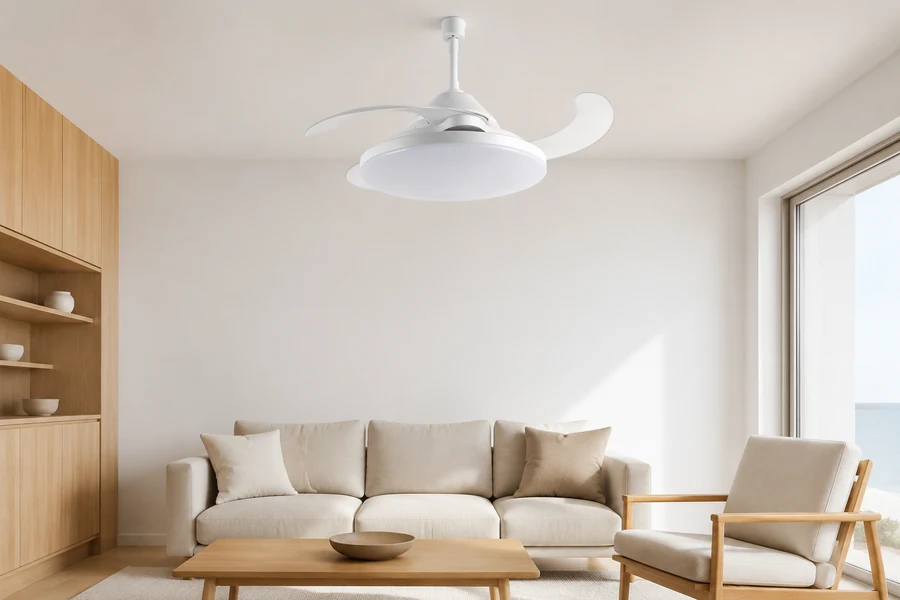
Choose Scandinavian when your home already uses pale walls, light oak, soft textiles, clean storage, and simple lighting. A white or pale wood fan can continue that visual rhythm without becoming a separate statement.
You can also use this style in a small apartment because the lighter finish helps protect openness. The fan still needs the right blade span and total drop, but the visual effect is usually easier to manage in a compact room.
For your home, the useful test is whether this choice still feels natural when the room is being used normally, not only when everything is perfectly styled. Look at the fan from the sofa, the dining table, and the main entrance, then ask whether the shape, material, and light make the room feel calmer, warmer, or more open. We can change small decorative details later, but the fan’s proportion, mounting height, blade movement, and light comfort will stay visible every day.
When should you choose mid-century or coastal style?
Choose mid-century when your room has walnut, tapered furniture, brass, black accents, or a stronger interest in shape. Choose coastal when the room feels lighter, more relaxed, and connected to linen, rattan, pale timber, or soft blue-gray tones.
We should not use coastal details to hide a poor fit. If the fan is too large, too low, too noisy, or too bright, the room will not feel relaxed. The style must work together with your real ceiling and daily routine.
For your home, the useful test is whether this choice still feels natural when the room is being used normally, not only when everything is perfectly styled. Look at the fan from the sofa, the dining table, and the main entrance, then ask whether the shape, material, and light make the room feel calmer, warmer, or more open. We can change small decorative details later, but the fan’s proportion, mounting height, blade movement, and light comfort will stay visible every day.
How Do Blade Shape and Wood Finish Change the Style?
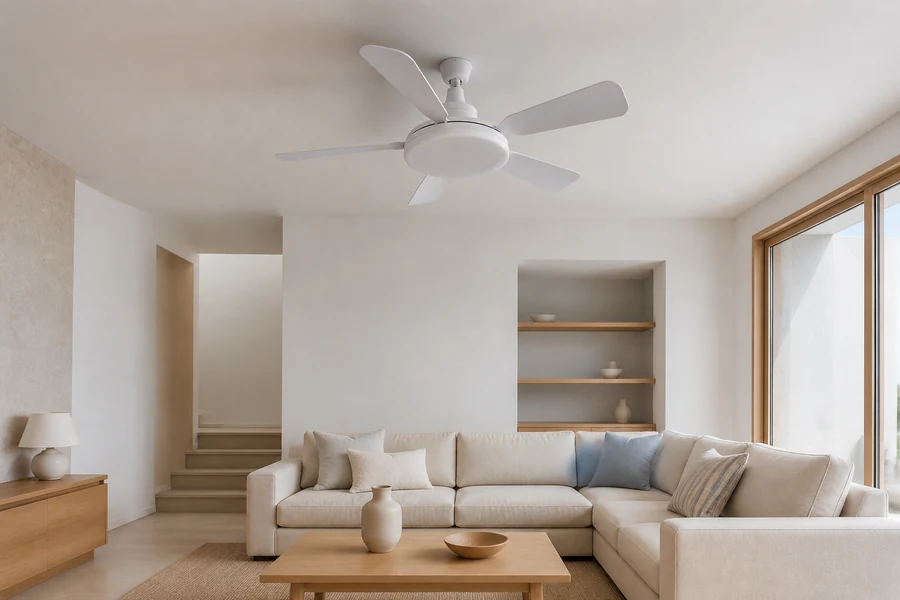
What blade shape works for Scandinavian rooms?
For a Scandinavian room, a thin, smooth blade profile usually feels more natural than a heavily shaped or distressed blade. You want enough material warmth to keep the room from feeling cold, but not so much grain that the ceiling becomes busy.
A white ceiling fan with a subtle blade contrast can also work well. We should compare the blade edge from below because that is the view you will live with most often, not the dramatic angle shown in a catalog photo.
For your home, the useful test is whether this choice still feels natural when the room is being used normally, not only when everything is perfectly styled. Look at the fan from the sofa, the dining table, and the main entrance, then ask whether the shape, material, and light make the room feel calmer, warmer, or more open. We can change small decorative details later, but the fan’s proportion, mounting height, blade movement, and light comfort will stay visible every day.
What blade shape works for mid-century and coastal rooms?
Mid-century rooms can support a more sculpted wood blade or a stronger center body when the rest of the furniture has clear lines. Coastal rooms usually benefit from softer, wider, or lightly textured blades that suggest natural materials without using obvious beach symbols.
If you use a wood ceiling fan, check whether the grain looks printed, overly dark, or too rustic for the room. A controlled finish gives you more flexibility when you change rugs, upholstery, or wall color later.
For your home, the useful test is whether this choice still feels natural when the room is being used normally, not only when everything is perfectly styled. Look at the fan from the sofa, the dining table, and the main entrance, then ask whether the shape, material, and light make the room feel calmer, warmer, or more open. We can change small decorative details later, but the fan’s proportion, mounting height, blade movement, and light comfort will stay visible every day.
How Should You Choose the Fan Light for Each Style?
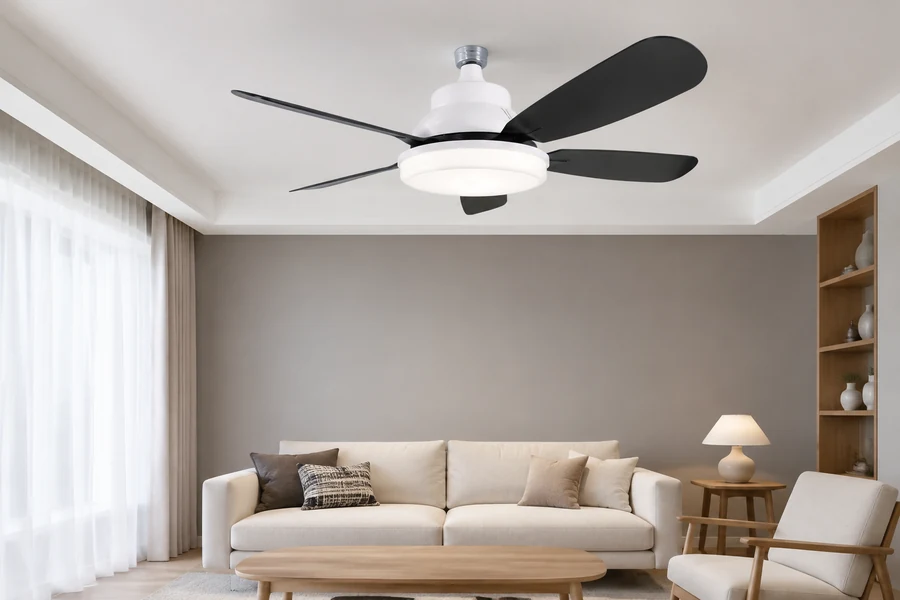
What kind of light suits Scandinavian design?
A Scandinavian fan light should feel soft, even, and easy to control. You can use integrated LED lighting when the diffuser does not create glare and the light temperature supports pale surfaces, natural wood, and evening comfort.
Review the LED lighting guide before choosing by wattage. If the room already has a pendant or wall lights, a dimmable fan light may be better as a supporting layer than as the only source of brightness.
For your home, the useful test is whether this choice still feels natural when the room is being used normally, not only when everything is perfectly styled. Look at the fan from the sofa, the dining table, and the main entrance, then ask whether the shape, material, and light make the room feel calmer, warmer, or more open. We can change small decorative details later, but the fan’s proportion, mounting height, blade movement, and light comfort will stay visible every day.
What kind of light suits mid-century and coastal design?
Mid-century spaces can handle a little more contrast through warm metal or a shaped diffuser, while coastal spaces usually look better with soft diffusion and a lighter visual frame. In both cases, the light should support the room rather than turn the fan into a glowing object.
You can compare brightness with this lumen guide and compare warm versus neutral output in the color-temperature guide. We should judge the result with your actual wall paint and evening lamps.
For your home, the useful test is whether this choice still feels natural when the room is being used normally, not only when everything is perfectly styled. Look at the fan from the sofa, the dining table, and the main entrance, then ask whether the shape, material, and light make the room feel calmer, warmer, or more open. We can change small decorative details later, but the fan’s proportion, mounting height, blade movement, and light comfort will stay visible every day.
What Fan Size and Mounting Height Should You Use?
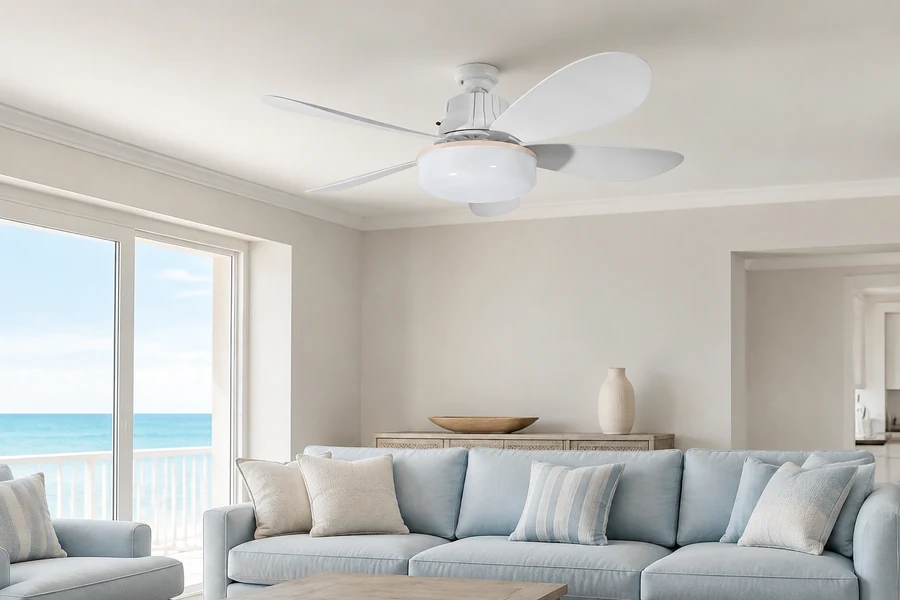
What should you do in a low or standard-height room?
For an 8-foot ceiling, start with the 8-foot ceiling guide and measure the full fixture depth. Scandinavian and coastal styles often benefit from a clean low-profile body, while a mid-century fan needs enough room to show its silhouette without hanging too low.
You should compare the fan’s lowest point, not only the canopy. A light kit, decorative hub, or extended blade bracket can change the practical drop and the visual feeling of the room.
For your home, the useful test is whether this choice still feels natural when the room is being used normally, not only when everything is perfectly styled. Look at the fan from the sofa, the dining table, and the main entrance, then ask whether the shape, material, and light make the room feel calmer, warmer, or more open. We can change small decorative details later, but the fan’s proportion, mounting height, blade movement, and light comfort will stay visible every day.
What should you do in a tall or sloped room?
In a tall room, use the high-ceiling sizing guide and the downrod guide before you decide on style. A fan that hangs too high may look proportionate from below but fail to create useful air movement.
If the ceiling slopes, review the sloped-ceiling guide and the cathedral-ceiling setup. The mounting system becomes part of the design because an angled canopy can make a refined room feel unfinished.
For your home, the useful test is whether this choice still feels natural when the room is being used normally, not only when everything is perfectly styled. Look at the fan from the sofa, the dining table, and the main entrance, then ask whether the shape, material, and light make the room feel calmer, warmer, or more open. We can change small decorative details later, but the fan’s proportion, mounting height, blade movement, and light comfort will stay visible every day.
How Do You Balance Style With Airflow and Noise?
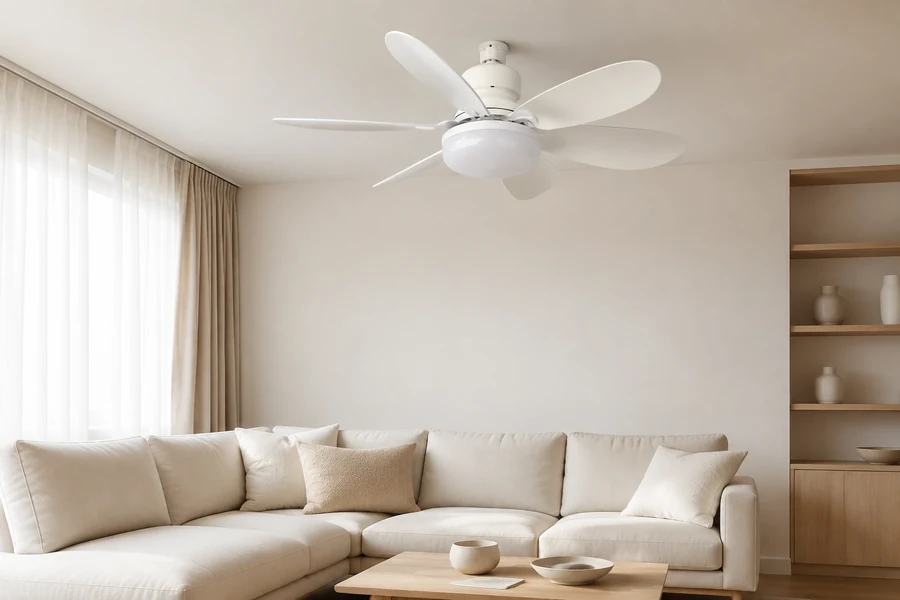
How should you compare airflow instead of blade appearance?
You should compare blade span, pitch, motor type, and speed range together. This blade-pitch guide explains why similar-looking fans can create different air movement, so a beautiful blade is not enough evidence.
For a calm Scandinavian room, you may prefer smooth low-speed airflow. For a larger mid-century or coastal living room, you may need stronger coverage. We should match the fan to where you sit, not to the largest measurement on the floor plan.
For your home, the useful test is whether this choice still feels natural when the room is being used normally, not only when everything is perfectly styled. Look at the fan from the sofa, the dining table, and the main entrance, then ask whether the shape, material, and light make the room feel calmer, warmer, or more open. We can change small decorative details later, but the fan’s proportion, mounting height, blade movement, and light comfort will stay visible every day.
How much noise is acceptable in a living room?
Use this noise guide to think about low-speed hum, wobble, control sounds, and how the room carries noise. A fan can look perfect and still feel wrong if you hear a persistent hum while reading, watching TV, or talking.
We should also consider installation quality. A stable support point, balanced blades, and correct assembly can protect the experience across all three styles. The finish sets the mood, but smooth operation decides whether you enjoy living with it.
For your home, the useful test is whether this choice still feels natural when the room is being used normally, not only when everything is perfectly styled. Look at the fan from the sofa, the dining table, and the main entrance, then ask whether the shape, material, and light make the room feel calmer, warmer, or more open. We can change small decorative details later, but the fan’s proportion, mounting height, blade movement, and light comfort will stay visible every day.
Can You Mix Scandinavian, Mid-Century, and Coastal Details?
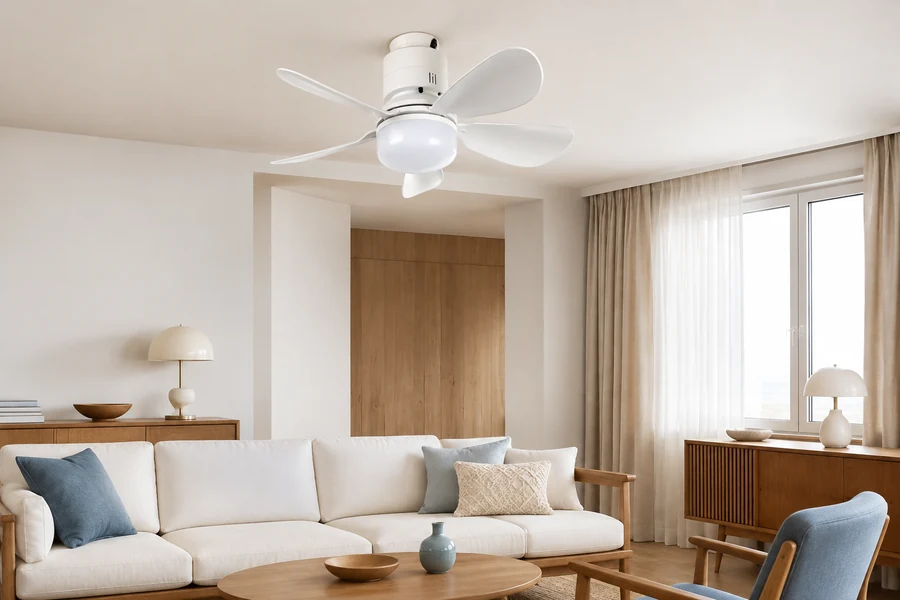
How can you combine two styles without losing direction?
Choose one primary style and one supporting influence. For example, you can use a Scandinavian room with mid-century wood warmth, or a coastal room with a cleaner modern blade shape. One style should control the silhouette while the second adds texture or color.
We should keep the fan as the bridge. If the room already has rounded furniture and warm wood, a simple wood ceiling fan can connect the two directions. If the room already has strong texture, choose a quieter fan body so the ceiling does not become overloaded.
For your home, the useful test is whether this choice still feels natural when the room is being used normally, not only when everything is perfectly styled. Look at the fan from the sofa, the dining table, and the main entrance, then ask whether the shape, material, and light make the room feel calmer, warmer, or more open. We can change small decorative details later, but the fan’s proportion, mounting height, blade movement, and light comfort will stay visible every day.
Which combinations usually become too busy?
A common problem is mixing ornate mid-century cues, distressed coastal texture, and strong Scandinavian minimalism on one fixture. The result can feel like several product stories were combined without a clear reason.
You can prevent this by limiting the material count and repeating one finish elsewhere. A controlled wood tone, a soft metal, and a simple diffuser are usually enough. We do not need a literal theme object for the room to feel coastal or mid-century.
For your home, the useful test is whether this choice still feels natural when the room is being used normally, not only when everything is perfectly styled. Look at the fan from the sofa, the dining table, and the main entrance, then ask whether the shape, material, and light make the room feel calmer, warmer, or more open. We can change small decorative details later, but the fan’s proportion, mounting height, blade movement, and light comfort will stay visible every day.
Which NEBOLA Product Directions Fit These Three Styles?
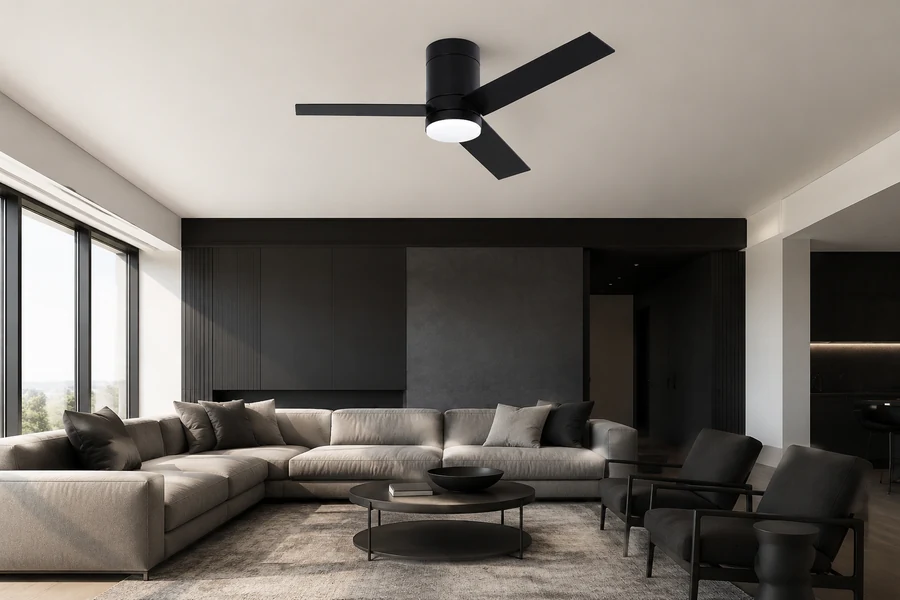
Which option can support a Scandinavian room?
For a clean Scandinavian direction, you can review the white fan-light option. Its slim white profile can suit a room where you want practical light and airflow without adding a heavy ceiling object.
You should still confirm the room size, mounting depth, light output, and control configuration. Scandinavian style depends on restraint, so a product that feels too deep or too bright can weaken the result even if the color is correct.
For your home, the useful test is whether this choice still feels natural when the room is being used normally, not only when everything is perfectly styled. Look at the fan from the sofa, the dining table, and the main entrance, then ask whether the shape, material, and light make the room feel calmer, warmer, or more open. We can change small decorative details later, but the fan’s proportion, mounting height, blade movement, and light comfort will stay visible every day.
Which options can support coastal or mid-century warmth?
For natural texture, you can look at the rattan direction. For a stronger decorative statement, the wood fandelier direction can suit a larger room with enough ceiling height and visual breathing space.
We should compare the product’s real proportions with your room before deciding. A decorative fan can become the main feature, while a rattan or lighter fan can support the room more quietly. The correct choice depends on the amount of presence you want overhead.
For your home, the useful test is whether this choice still feels natural when the room is being used normally, not only when everything is perfectly styled. Look at the fan from the sofa, the dining table, and the main entrance, then ask whether the shape, material, and light make the room feel calmer, warmer, or more open. We can change small decorative details later, but the fan’s proportion, mounting height, blade movement, and light comfort will stay visible every day.
How Can You Choose the Right Style for Your Home?
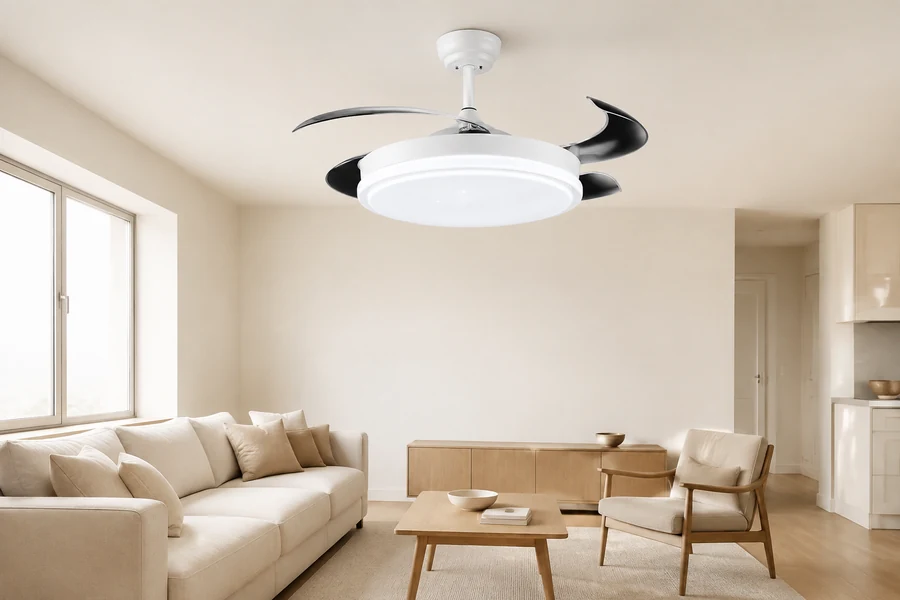
What should you decide before looking at product photos?
Start with the atmosphere you want: calm and light, warm and structured, or relaxed and textured. Then note your ceiling height, the main seating zone, existing wood tones, lighting layers, and whether you want the fan to blend in or act as a focal point.
You can browse the living-room fan collection after that first decision. We should use product pages to confirm fit and specifications, not to decide the whole room style from a single staged image.
For your home, the useful test is whether this choice still feels natural when the room is being used normally, not only when everything is perfectly styled. Look at the fan from the sofa, the dining table, and the main entrance, then ask whether the shape, material, and light make the room feel calmer, warmer, or more open. We can change small decorative details later, but the fan’s proportion, mounting height, blade movement, and light comfort will stay visible every day.
What checks keep the choice practical?
Before ordering, compare blade span, total drop, motor noise, airflow at low and high speed, light output, color temperature, control method, installation support, and spare parts. These checks protect you from choosing a style that works only in a photograph.
The strongest fan choice looks natural when it is off and feels comfortable when it is running. Whether you choose Scandinavian, mid-century, or coastal, we want the product to support the home you actually live in rather than a theme you have to maintain.
For related planning, you can also review 9-foot ceiling guide, fan-light comparison, fandelier comparison, modern style guide, style difference guide, premium-fan guide before you finalize the room plan.
For your home, the useful test is whether this choice still feels natural when the room is being used normally, not only when everything is perfectly styled. Look at the fan from the sofa, the dining table, and the main entrance, then ask whether the shape, material, and light make the room feel calmer, warmer, or more open. We can change small decorative details later, but the fan’s proportion, mounting height, blade movement, and light comfort will stay visible every day.
If you are looking for a better ceiling fan light solution for your project, NEBOLA can provide one-stop support from product selection to customization. We focus on ceiling fan light R&D and manufacturing, helping brands, importers, and distributors find products that better match real space needs.
NEBOLA Ceiling Fan Light Support
Ready to Match a Ceiling Fan Style to Your Home?
Share your room size, ceiling height, style direction, and lighting needs with us. We can help you compare practical fan light configurations.
FAQ
Is a Scandinavian ceiling fan always white?
No, a Scandinavian ceiling fan does not have to be white. White, pale wood, soft gray, and muted natural finishes can all work when the shape stays clean and the room keeps a calm, functional mood.
Can a mid century modern ceiling fan use wood blades?
Yes, a mid century modern ceiling fan can use wood blades when the grain, hub, and metal finish are controlled. You should look for a balanced silhouette rather than an overly rustic or distressed surface.
Is a coastal ceiling fan only suitable for beach houses?
No, a coastal ceiling fan can work in many homes when you use light materials, relaxed proportions, and restrained texture. You do not need obvious nautical details to create a coastal feeling.
Should a Scandinavian fan have an integrated light?
Yes, an integrated light can fit Scandinavian design when the diffuser is soft, the glare is controlled, and the light supports the room’s practical needs. You can also choose a fan without light if your lighting layers are already complete.
Can I combine mid-century and coastal fan styles?
Yes, you can combine mid-century and coastal directions when you keep one clear bridge, such as warm wood, soft brass, or a simple rounded silhouette. Too many unrelated details can make the ceiling feel confused.
Is a wood ceiling fan better than a metal fan for these styles?
No, a wood ceiling fan is not automatically better. Wood adds warmth and texture, while metal can provide cleaner contrast. You should choose the material that balances your existing furniture, flooring, and ceiling height.