

Ceiling fan size demand changes by country because homes, ceiling heights, climate, voltage expectations and buying habits are not the same. A size that sells well in the US may feel too large in a compact European apartment, while an Australian buyer may care more about summer airflow, outdoor rooms and practical coverage. If you are planning a range, start with the wider NEBOLA ceiling fan size guide so blade span, airflow, room type and ceiling height stay aligned.
This market guide explains how US ceiling fan sizes, European ceiling fan sizes and Australia ceiling fan demand compare. It also shows how importers can build a smarter range without copying one country’s catalogue into another market.
1. Why Do Ceiling Fan Sizes Change by Country?
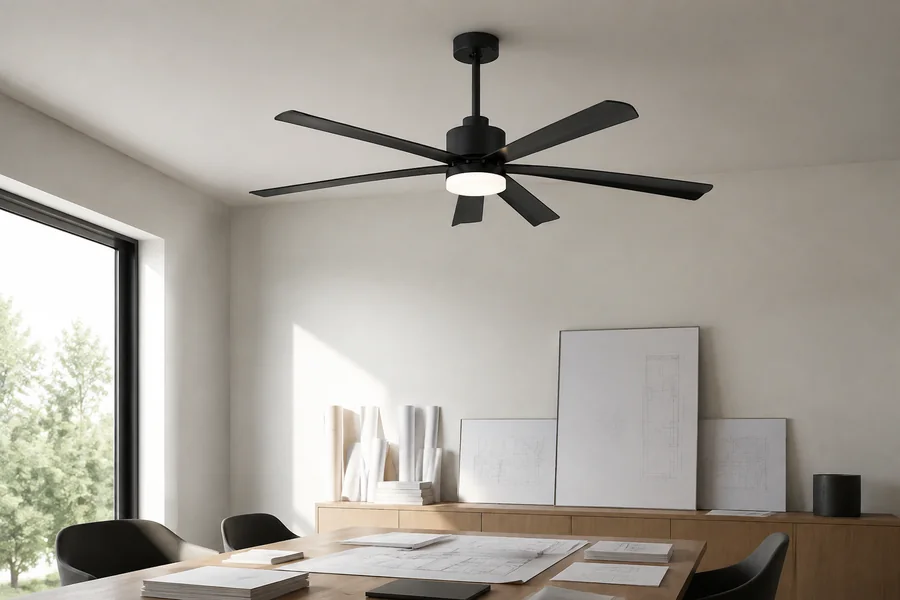
Country-based fan sizing is not only a matter of inches and centimetres. It is shaped by building style, room proportions, energy habits, climate and how people use ceiling fans in daily life.
1-1. How do room layouts shape demand?
US homes often have larger living rooms, primary bedrooms and open-plan areas, so 52 inch, 56 inch and larger fans can feel normal. In many European apartments, bedrooms and kitchens are smaller, ceilings may be lower, and buyers often prefer compact fan lights that do not dominate the room.
Australia sits between these patterns. Many homes use fans heavily in bedrooms, living rooms, patios and covered outdoor spaces, so demand often includes both standard indoor sizes and larger airflow-focused models.
1-2. Why does climate change the size mix?
In hot and humid climates, shoppers usually care more about airflow coverage. Larger fans may sell well because people use them for long running hours and comfort support. In cooler or mixed climates, fans may be chosen more for style, lighting and occasional summer use.
For importers, climate should influence assortment depth. A market with long hot summers can support more high-airflow models, while a cooler urban market may need more quiet, compact and design-led options.
2. What Ceiling Fan Sizes Are Popular in the US?
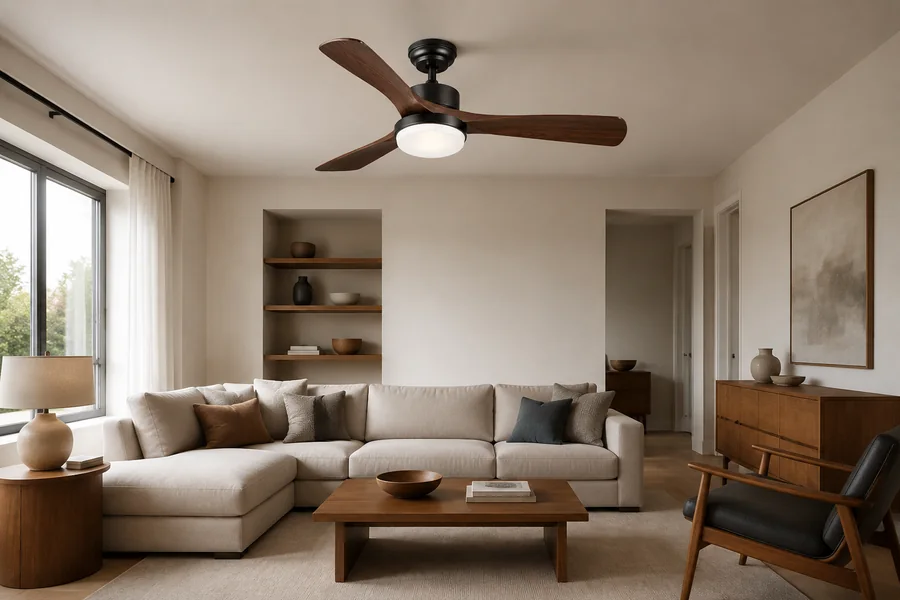
The US market is broad, but it often starts from a familiar centre: 52 inch ceiling fans. This size is widely recognised by consumers and works across many standard bedrooms and living rooms.
2-1. Is 52 inch still the main US size?
Yes, 52 inch remains one of the safest sizes for the US because it fits many medium rooms. It is large enough to look useful, but not so large that it feels commercial. A 52 inch wood ceiling fan can suit buyers who want a simple fan without integrated lighting.
However, 52 inch should not be treated as universal. Small bedrooms, kitchens and home offices may need smaller sizes, while open living rooms may need 56 inch, 60 inch or multiple fans.
2-2. When do US buyers move above 52 inch?
US buyers often move above 52 inch when the room is open, the ceiling is higher, or the fan needs to cover a large seating zone. Great rooms, large bedrooms, garages and covered patios often push demand toward 56 to 72 inch models.
For range planning, keep a clear ladder. A 52 inch model can cover standard demand, a 56 or 60 inch model can bridge into larger rooms, and a 70 inch or 72 inch model can serve large spaces and commercial-style interiors.
3. What Ceiling Fan Sizes Are Common in Europe?
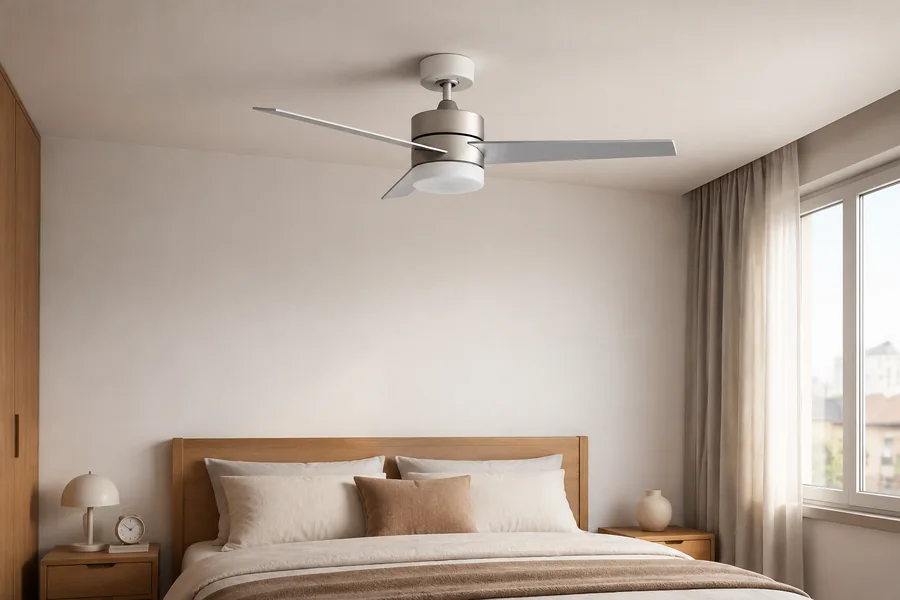
European ceiling fan sizes often need a more restrained approach. Compact apartments, smaller bedrooms, low ceilings and modern minimal interiors can make large fans feel visually heavy.
3-1. Why do compact fan lights matter in Europe?
Many European buyers want a fan that also works as a ceiling light. In small rooms, the ceiling often has only one central electrical point, so a shallow fan light can solve two needs without adding another fixture.
This is where smaller diameters, flush-mount bodies and quiet DC motors become important. European buyers may reject a fan that looks too large even if the blade span is technically suitable.
3-2. Which sizes should importers test first?
For European residential markets, 36 inch, 42 inch, 48 inch and selected 52 inch products are often safer starting points than a range built around very large fans. The goal is not to avoid large fans entirely, but to reserve them for open-plan rooms, villas and hospitality spaces.
If your range includes fan lights, check fixture depth carefully. A fan that looks compact in a product photo can still feel too deep in an apartment with a low ceiling.
4. How Is Australia Ceiling Fan Demand Different?
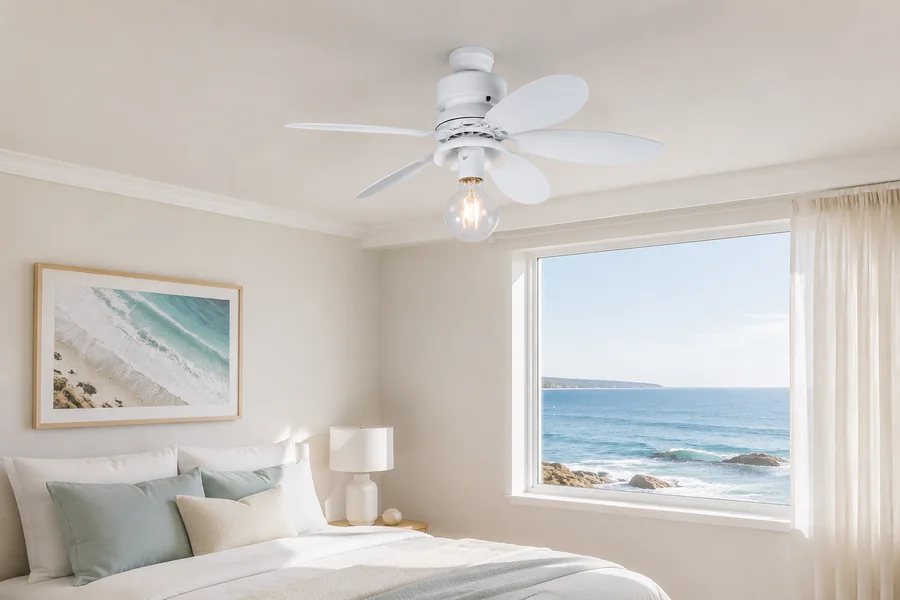
Australia has strong ceiling fan demand because fans are common in bedrooms, living rooms, outdoor covered areas and warm-weather homes. Buyers often expect practical airflow, not just decorative lighting.
4-1. Why does Australia need airflow-focused sizing?
In many Australian homes, fans support comfort through long warm seasons. This encourages demand for wider blade spans, efficient motors and products that can run quietly for long hours.
Australian building guidance also recognises practical fan coverage. The ABCB NCC page on ceiling fans shows how fan diameter can be tied to room area, which is a useful reminder that size should be checked against usable space.
4-2. How should outdoor and semi-outdoor demand affect the range?
Covered patios, verandas and alfresco spaces are important in Australia. These areas may need larger fans, outdoor-appropriate finishes and stable mounting. A fan that works indoors may not be the right choice for heat, humidity, dust or coastal exposure.
For importers, Australia often needs a wider size mix than a compact apartment market. Include bedroom sizes, living-room sizes and larger fans for covered outdoor or large open spaces.
5. How Should Importers Compare Inches, Centimetres and Buyer Expectations?
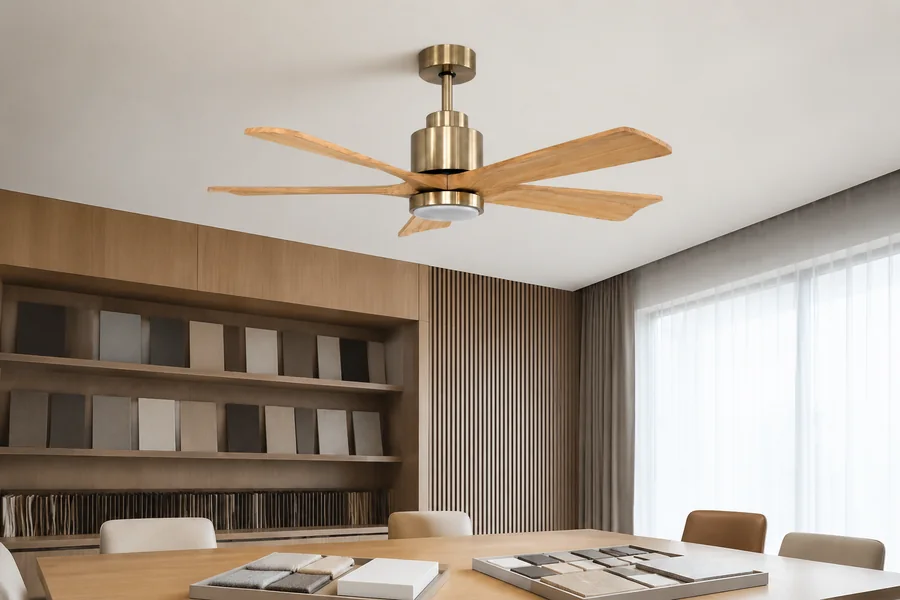
A size range must be easy for local buyers to understand. Some markets think in inches, while others compare centimetres or product categories.
5-1. Should listings show both units?
Yes, listings should show both units when selling across markets. A 52 inch fan is about 132 cm, and a 48 inch fan is about 122 cm. Showing both helps buyers compare products without confusion.
Do not rely only on a converted number. Add room-use language such as small bedroom, medium living room, large lounge or covered patio. This makes the size feel practical rather than abstract.
5-2. Why should the same diameter not mean the same product?
Two fans with the same diameter can perform differently. Blade pitch, motor type, blade shape, RPM range and light kit depth can change comfort and noise. That is why CFM versus size matters for serious buying decisions.
The market label may say 52 inch, but buyers still need to know whether the fan is made for quiet bedrooms, large living rooms, outdoor use or commercial duty.
Need the Right Ceiling Fan for a Home, Project, or Commercial Space?
Tell us your space type, ceiling height, airflow needs, lighting options, certification direction, and order plan. We’ll help match the right solution.
Get a Quote6. Which Sizes Should a Global Ceiling Fan Range Include?
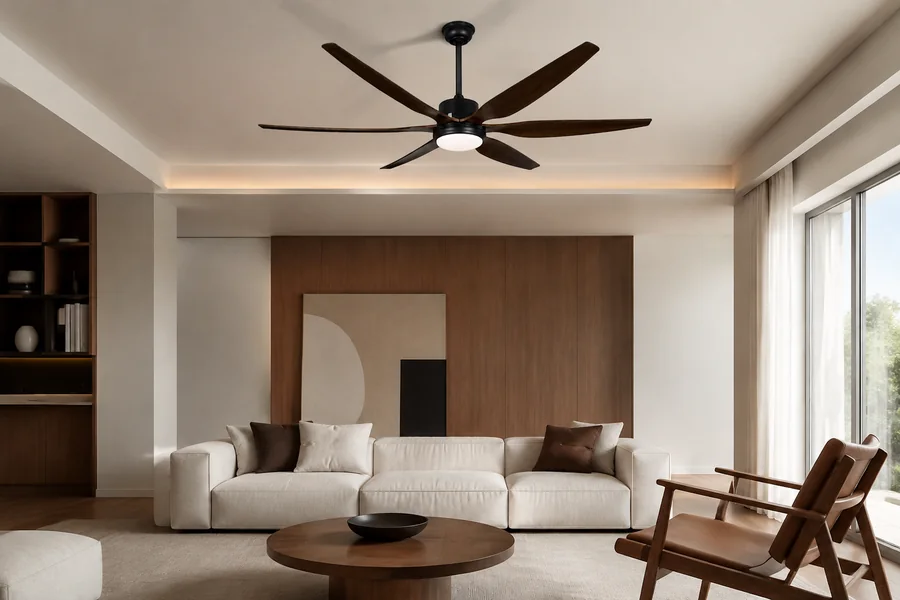
A global range should not be a random list of models. It should be a planned ladder that lets distributors answer real room needs without overstocking weak sizes.
6-1. What is a safe residential size ladder?
A practical residential ladder can include compact 20 to 36 inch fan lights, 42 inch small-room fans, 48 inch medium-room fans, 52 inch standard fans and 56 to 60 inch large-room models. This gives buyers clear steps instead of too many similar products.
For design-led markets, add finish variety carefully. White, black, wood tone and selected decorative models can cover most demand without creating too much inventory pressure.
6-2. When should commercial sizes be added?
Commercial or large-space sizes should be added when the market includes warehouses, gyms, restaurants, showrooms, workshops or large villas. A 70 inch industrial warehouse fan belongs in a different buying path from a bedroom fan light.
Do not force commercial fans into small residential categories. Larger products need clearer clearance, mounting and airflow explanations.
7. How Should Product Style Change by Region?
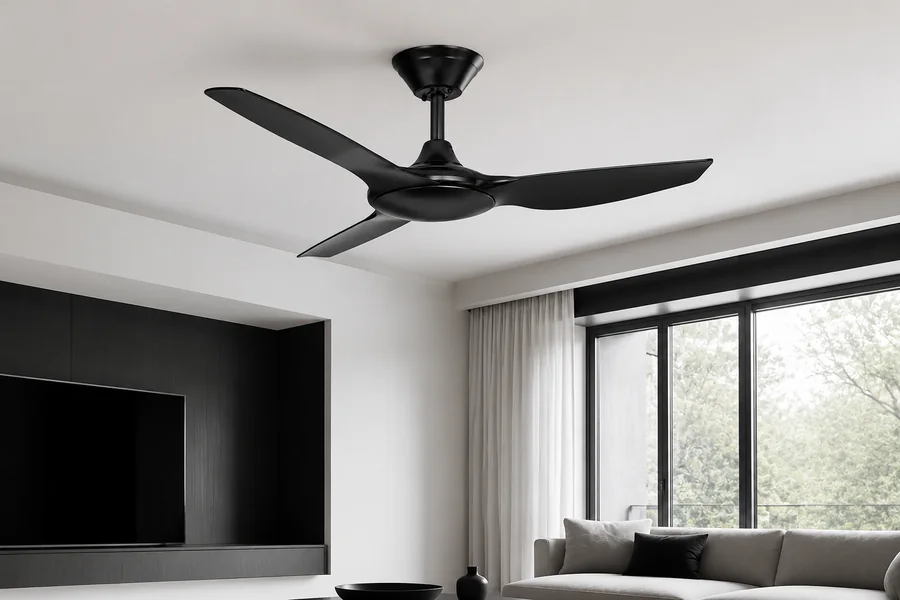
Size is only one part of market fit. Style can decide whether a fan looks natural in a local home.
7-1. What styles fit the US market?
The US market accepts a wide spread: farmhouse wood, black modern, brushed nickel, white low-profile, outdoor bronze and large living-room fans. A 54 inch black fan light can serve buyers who want a strong modern look with lighting and remote control.
US listings should often explain room size, ceiling height, mounting type and control features together. Buyers expect practical details before choosing.
7-2. What styles fit Europe and Australia?
Europe often rewards cleaner, smaller and more integrated designs. Thin fan lights, neutral finishes and quiet operation are important because the fan may sit in a compact room.
Australia can support both simple indoor fans and stronger outdoor-oriented designs. Wood tones, white coastal looks, black modern fans and durable finishes can all work, but the product must match the room and climate.
8. What Mistakes Do Importers Make When Copying One Market to Another?
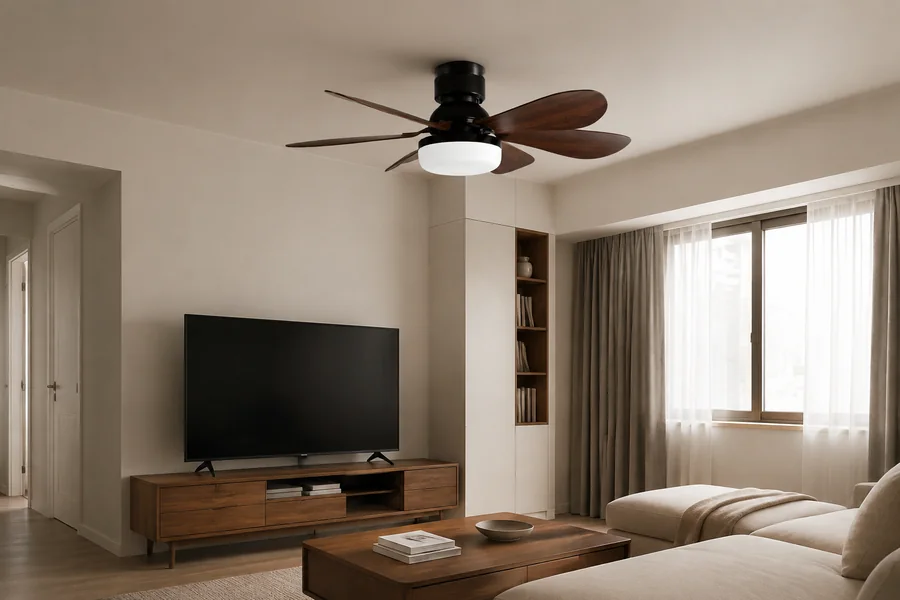
The biggest mistake is assuming one best-selling size will work everywhere. A fan range should be adapted, not copied.
8-1. Is copying US sizes into Europe a risk?
Yes, it can create oversize inventory. Large US-style fans may look attractive in product photos, but they can feel too wide in smaller European rooms. This often leads to slow-moving SKUs.
Before ordering, compare the topic with the small room fan guide and low ceiling size guide so compact homes are not ignored.
8-2. Is under-sizing Australia a risk?
Yes, under-sizing can be a problem in warm climates and larger homes. A fan that looks tidy but moves too little air may not meet buyer expectations.
For bigger Australian rooms or open areas, review the large room fan guide and airflow size guide before locking the assortment.
9. Which Internal Size Guides Help Build a Better Range?
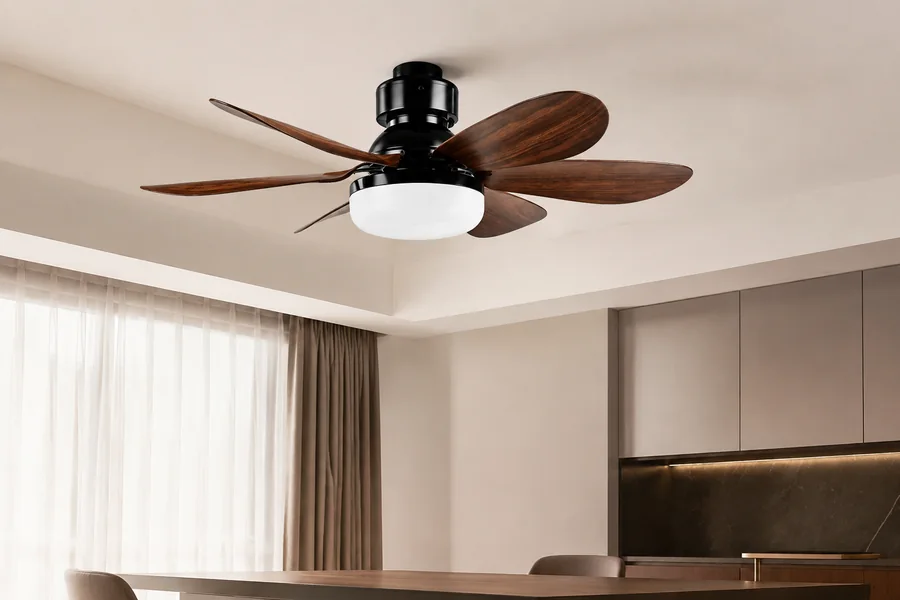
A strong internal linking plan should help readers move from country-level demand to practical room-level choices. Use short, clear anchor text so the paragraph still reads naturally.
9-1. Which room guides should buyers compare?
Buyers can start with size basics, the room-by-room guide, 42 vs 52 inches, bedroom sizing, living room sizing and ceiling height.
For application-specific decisions, compare outdoor sizing, restaurant sizing, office sizing, garage sizing and kitchen sizing.
9-2. Which market and future-demand guides matter?
Importers should also review hotel projects, range planning, global sizes, buying mistakes and 2026 size trends.
For newer size-specific content, compare 52 inch rooms, 48 inch rooms, 56 inch rooms, 72 inch fans, apartment sizing, open concept spaces, large-space layout and fan light size.
10. How Should You Build a Country-Based Ceiling Fan Size Strategy?
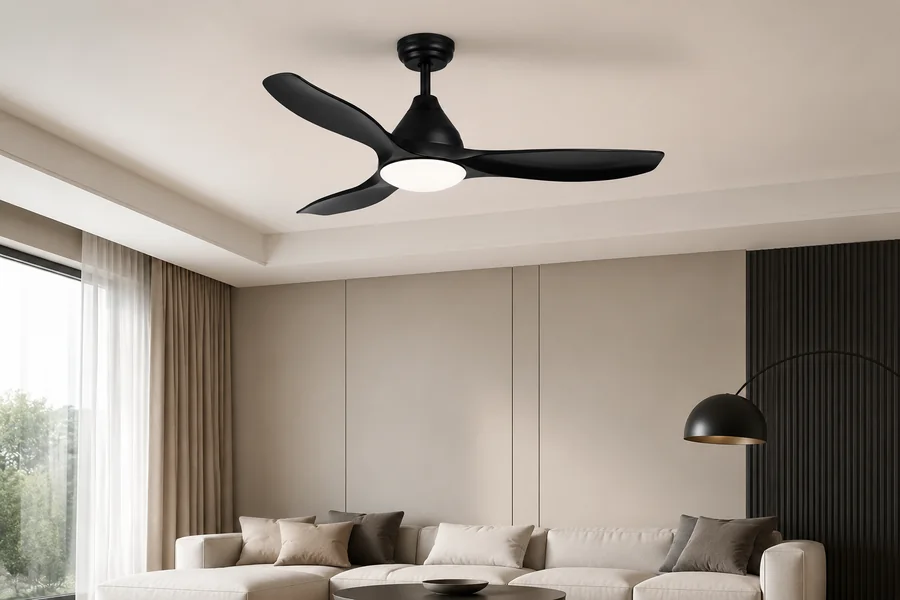
A country-based strategy should start from real rooms, then narrow into products. NEBOLA usually advises buyers to build ranges around size steps, installation type, airflow performance and visual style together.
10-1. What should be tested before bulk ordering?
Test at least one compact fan light, one 42 to 48 inch model, one 52 inch standard fan, one 56 to 60 inch large-room fan and one larger commercial or outdoor-capable option if the target market needs it. Sample testing should include low-speed noise, remote control feel, light quality, packaging and installation clarity.
Ask the supplier for consistent product data. Blade span, total height, motor type, light wattage, lumen output, CCT options, carton size and certification direction should be easy to compare.
10-2. How should the final assortment stay flexible?
Use the first order to test demand instead of trying to cover every possible room. If the US side sells more 52 and 56 inch models, expand those finishes. If Europe sells more flush fan lights, deepen compact designs. If Australia pulls larger outdoor-friendly products, add durable finishes and high-airflow options.
For a wider planning path, return to the NEBOLA ceiling fan size guide before finalising the range. It helps connect country demand with real room size, height, airflow and installation needs.
Need the Right Ceiling Fan for a Home, Project, or Commercial Space?
Tell us your space type, ceiling height, airflow needs, lighting options, certification direction, and order plan. We’ll help match the right solution.
Get a QuoteFAQ
Is a 52 inch ceiling fan the safest size for the US market?
Yes, a 52 inch ceiling fan is often the safest starting size for the US market because it fits many standard bedrooms and living rooms. It should still be supported by smaller and larger options, because kitchens, offices, patios and open rooms need different coverage.
Are European ceiling fan sizes usually smaller than US sizes?
Yes, European ceiling fan sizes often trend smaller because many homes and apartments have compact rooms, lower ceilings and simpler ceiling layouts. This does not mean large fans cannot sell in Europe, but importers should not make oversized models the centre of the range too early.
Is Australia ceiling fan demand more airflow-focused?
Yes, Australia ceiling fan demand is often more airflow-focused because fans are used heavily in warm weather, bedrooms, living rooms and covered outdoor areas. Buyers may expect stronger practical comfort rather than only decorative lighting.
Should importers show both inches and centimetres in listings?
Yes, importers should show both inches and centimetres when selling across countries. It reduces confusion and helps buyers compare a 48 inch, 52 inch or 56 inch fan with local room-size expectations.
Can one ceiling fan size range work for every country?
No, one ceiling fan size range rarely works perfectly for every country. A better approach is to keep a shared core range, then adjust compact models, large-room models, finishes and outdoor options by market.
Should external market rules replace room-by-room sizing?
No, external market rules should not replace room-by-room sizing. Country trends are useful for assortment planning, but the final product must still match the actual room area, ceiling height, mounting type, airflow target and visual scale.